


The benefits of therapy include relief from symptoms like depression and anxiety, practical skills you keep using after treatment ends, better relationships, and a lower chance that problems come back. Research shows most people who stay in therapy improve, and the gains tend to last. Therapy works best when you and your therapist trust each other and agree on your goals.
This chapter is part of our guide to the types of therapy, and it covers what therapy does for a person rather than how each method works. We see these benefits every week in our online therapy in California, where clients join individual and group therapy over live video from home.
Key Takeaways
- Therapy helps relieve symptoms, improve daily life, and lower the chance that problems return.
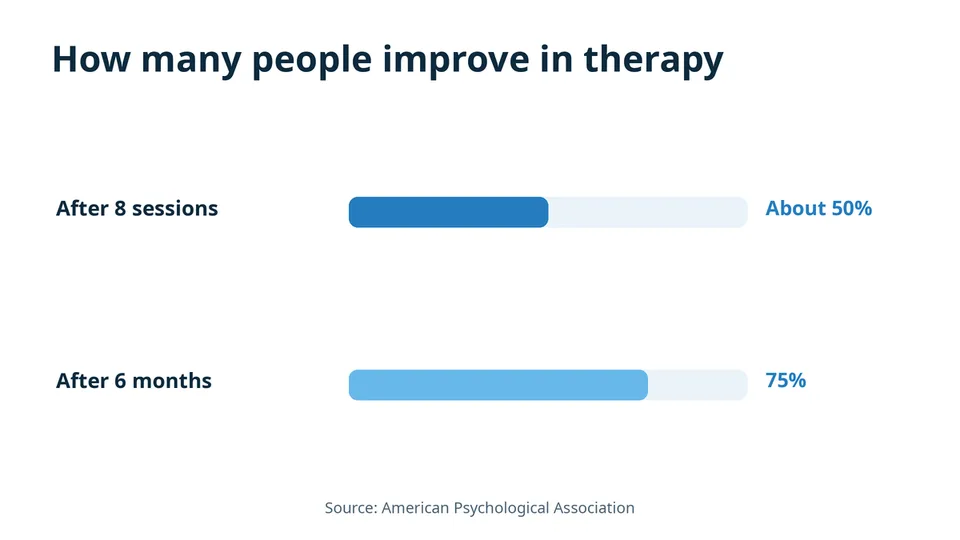
- In research reviewed by the American Psychological Association, about half of people improved after eight sessions and 75% after six months.
- The skills you learn in therapy keep working after treatment ends.
- The relationship with your therapist is one of the biggest reasons therapy works.
- In addiction treatment, counseling and other behavioral therapies are the most common form of care.
What Are the Main Benefits of Therapy
The main benefits of therapy fall into three groups. You feel better, you function better, and you stay well longer. The National Institute of Mental Health describes the goals of psychotherapy as relief from symptoms, keeping up or improving daily functioning, and a better quality of life.1 That covers a lot of ground, from sleeping through the night to holding a job to getting along with your family.
The American Psychological Association reviewed the research. It named these as the benefits therapy is meant to bring:2
- Relief from symptoms such as sadness, worry or anger
- Fewer episodes of those symptoms in the future
- A better quality of life
- Better functioning at work, at school and in relationships
- More healthy life choices

Those benefits show up for people with very different problems. Therapy is used for depression, anxiety, trauma, grief, family conflict, and substance use, and many people who start for one reason find it helps with others too.
How Well Does Therapy Work
Therapy works for most people who give it a real try. The American Psychological Association points to a classic study in which about half of people improved after eight sessions and 75% had improved after six months.3 Some people feel relief within six to 12 visits, while others need longer, depending on the problem and their goals.
The gains also tend to hold. The APA's review found that people in therapy learn skills they keep using after treatment ends, and that the benefits of therapy can continue after treatment ends.2 That doesn't mean therapy replaces medicine. For many conditions the two work well together, and the National Institute of Mental Health notes that therapy can help with problems that remain even when medicine relieves symptoms.1
It's also fair to say what therapy doesn't do. It isn't instant, it doesn't work the same for everyone, and it asks you to show up and take part. If you're wondering whether a virtual setting changes the results, our chapter on whether online therapy is effective looks at that research.
Why Is Therapy Important
Therapy is important because it gives you a place to work on a problem with someone trained to help, instead of carrying it alone. Many people put off getting help, and problems like depression, anxiety, or substance use tend to spread into work, sleep, health, and family while they wait. Therapy gives that problem a name, a plan and a person on your side.
It also changes what you can do on your own. A good therapist doesn't just listen; they help you build habits and coping skills you'll use the next time life gets hard.3 The APA review found that therapy also lowers how much people use other medical care overall, which suggests the benefits reach well past the therapy room.2
Here's how those benefits look in daily life:
| Area of Life | What Therapy Can Help With |
|---|---|
| Mood and thoughts | Fewer days of sadness, worry or racing thoughts |
| Relationships | Clearer communication and fewer repeat arguments |
| Daily life | Getting back to work, school, sleep and routine |
| Coping | Skills to handle stress, cravings and strong emotions |
| The future | A lower chance that the same problems return |
Why the Relationship With Your Therapist Matters
The relationship between you and your therapist is one of the strongest reasons therapy works. Psychologists call it the therapeutic alliance, meaning a working partnership built on trust and shared goals.2 The APA describes therapy as a collaboration in which you help set the goals and give feedback on what is and isn't helping.3
The APA's review found that several forms of therapy can help. The best fit depends on your condition, goals and preferences. That's why it helps to know a little about each approach. You can read what CBT is, what DBT is, and how motivational interviewing works in the other chapters of this guide.
Clear goals make the partnership stronger. When you and your therapist agree on what you're working toward, it's easier to tell whether therapy is helping. Our post on setting treatment goals shows how to put those goals into words.
Benefits of Therapy in Addiction Recovery
In addiction recovery, therapy is the main tool, not an extra. The National Institute on Drug Abuse says behavioral therapies, including individual, family, and group counseling, are the most commonly used forms of drug addiction treatment.4 They help people change how they think about and respond to drugs and alcohol, and they build the skills to handle stress and triggers without using.
Therapy also works on what sits underneath the drinking or drug use. Many people in treatment are also living with depression, anxiety, or trauma, and therapy can address both at once. NIDA notes that staying in treatment long enough matters, with most people needing at least three months to cut back or stop their use.
The benefits often show up in this order for people in recovery:
- Feeling less alone, often within the first few groups
- Understanding what sets off cravings and old habits
- Practicing new ways to respond to stress and triggers
- Repairing trust with family and the people closest to you
- Leaving with a written plan for staying well
The Different Ways Therapy Helps
Therapy comes in more than one format, and each one brings its own benefits. One-on-one individual therapy gives you private time to work on things you may not want to share in a group. Group therapy shows you that other people are dealing with the same things, and it gives you practice being honest in front of others.
Family therapy brings the people closest to you into the work. Our online family therapy helps families understand what their loved one is going through and how to support them without taking on the whole weight. A strong support system is one of the benefits that keeps paying off after treatment ends.
Therapy also works best alongside the basics: sleep, food, movement, and time to rest. Our post on what self care is covers the daily habits that help therapy stick.
How Therapy Works at Promising Outlook
At Promising Outlook, therapy is built into every program. Groups meet Monday through Friday over live video, with a morning group at 9:00 a.m., a midday group at 12:00 p.m., and two evening groups at 5:00 p.m. Every client also has individual therapy with a therapist and one-on-one counseling with a counselor available each week, and family therapy is open when you're ready and have signed a release.
Group starts with a check-in, and if someone brought up something hard the day before, the group asks how it went. At the end, the group decides together what it wants to talk about tomorrow. Our clinicians are paid above market so they can keep their full attention on the people in front of them, and the group belongs to the clients.
If you're ready to see what therapy can do for you, call us. A real person will answer, day or night. We're in network with Aetna, Blue Shield, Cigna, Health Net, Tricare, and United, and you can verify your insurance before your first group. You can also learn more about our virtual therapy in California.
Frequently Asked Questions
What are the benefits of therapy?
Therapy can relieve symptoms like depression, anxiety, and anger, improve how you function at work and at home, strengthen relationships, and lower the chance that problems come back. You also learn coping skills you can keep using after treatment ends. Most people who stay in therapy see real improvement.
Why is therapy important?
Therapy gives you a trained person to work through a problem with, so you aren't carrying it alone. Untreated depression, anxiety, or substance use tends to spread into sleep, work, health, and family. Therapy gives you a plan and skills to handle what comes next, which is why it matters.
How long does it take for therapy to work?
It depends on the person and the problem. Some people notice relief within six to 12 visits, and research reviewed by the American Psychological Association found about half improved after eight sessions. Others need several months or longer, especially when working on addiction or long-standing problems.
Is therapy better than medication?
Neither is better for everyone. Therapy can teach skills you keep using after it ends. Depending on the condition and your needs, therapy, medication, or a combination may help. A prescriber and therapist can help you decide what fits your situation.
Can therapy help with addiction?
Yes. Counseling and other behavioral therapies are the most common form of addiction treatment. Therapy helps you understand your triggers, handle cravings and stress, repair relationships, and treat depression or anxiety that may be feeding the substance use. Most people need at least three months of treatment to see lasting change.
What makes therapy work?
One of the biggest factors is the relationship between you and your therapist. Therapy works best when you trust each other, agree on your goals, and both take an active part. Showing up regularly and practicing skills between visits also makes a large difference in how much you get out of it.
Sources
- National Institute of Mental Health. Psychotherapies. 2024.
- American Psychological Association. Recognition of Psychotherapy Effectiveness. 2012.
- American Psychological Association. Understanding psychotherapy and how it works. 2023.
- National Institute on Drug Abuse. Principles of Drug Addiction Treatment: A Research-Based Guide (Third Edition). 2018.
