Self care means taking the time to do things that help you live well and improve your physical and mental health. It's less about spa days and more about the basics: sleep, food, movement, rest, connection and saying no when you're stretched thin. Done consistently, those small habits help you handle stress, protect your mood and, for people in recovery, stay sober.
Self care supports treatment but doesn't replace it. If you're struggling with your mood, anxiety or substance use, our virtual mental health treatment can help you build both, by live video for adults across California.
Key Takeaways
- The National Institute of Mental Health defines self care as taking time to do things that help you live well.
- Self care can help you manage stress, lower your risk of illness and increase your energy.
- Small daily acts, like regular sleep and short walks, matter more than occasional big gestures.
- In recovery, poor self care is one of the earliest warning signs of relapse.
- Seek professional help if distressing symptoms last two weeks or more, and reach out sooner if symptoms worsen or interfere with daily life.
What Is Self Care Really
The National Institute of Mental Health puts it simply: self care means taking the time to do things that help you live well and improve both your physical health and mental health.1 That covers your body, your mind, your relationships and your environment.
Taking care of yourself isn't selfish, and it isn't the same as indulgence. A bubble bath can be part of it, but so can paying a bill you've been avoiding, going to bed on time or turning down an invitation when you need rest. The test is whether something helps you function and feel better over time, not just for the next hour.
Why Is Self Care Important
The importance of self care comes down to what it protects. The NIMH notes that self care can help you manage stress, lower your risk of illness and increase your energy, and that even small acts of self care in daily life can have a big impact.1 It also says self care can help support treatment and recovery for people living with a mental illness.
Think of self care as maintenance. Cars run better with regular oil changes, and people run better with regular rest, meals and connection. When those slip, stress builds, mood drops and old coping habits start to look appealing.
The Different Kinds of Self Care
Care for yourself touches every part of life. It helps to think about it in a few areas, so you can notice which ones you're neglecting. The table below shows common examples.
| Area | What It Covers | Examples |
|---|---|---|
| Physical | Your body's basic needs | Sleep, regular meals, water, movement, medical checkups |
| Emotional | Understanding and handling feelings | Journaling, therapy, naming feelings, crying when you need to |
| Mental | Calming and refocusing your mind | Mindfulness, challenging negative thoughts, reading, learning |
| Social | Connection and support | Calling a friend, going to a group, setting boundaries |
| Practical | Keeping life manageable | Budgeting, planning your week, cleaning a small space |
Simple Self Care Habits to Start With
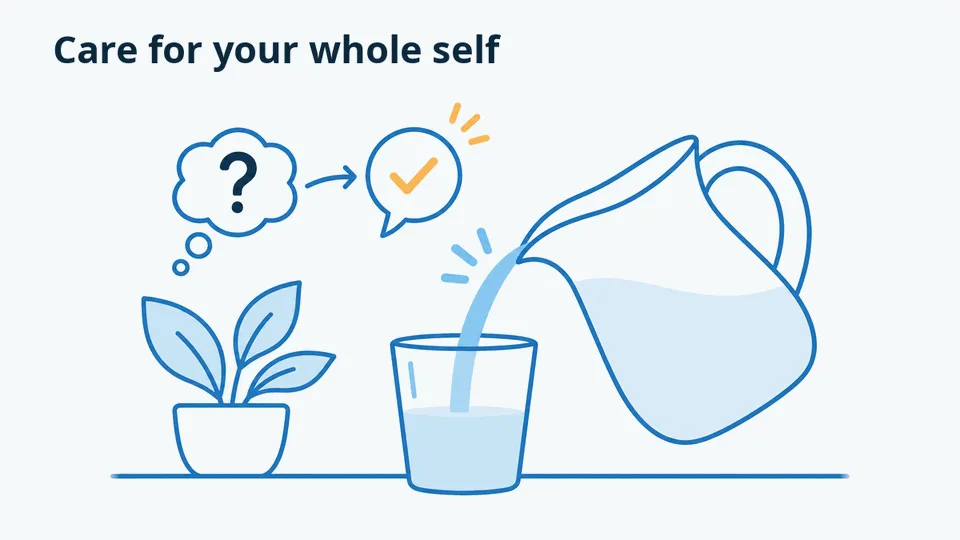
You don't need a big plan. The NIMH suggests several self care habits that help many people.1 Pick one or two to start, then add more as they become routine:
- Get regular exercise, even a short daily walk.
- Eat regular, balanced meals and stay hydrated.
- Make sleep a priority with a steady schedule and less screen time before bed.
- Try a relaxing activity, like breathing exercises or meditation.
- Set goals and priorities, and learn to say no when you have too much on your plate.
- Practice gratitude by noticing a few good things each day.
- Focus on positivity by noticing and challenging negative thoughts.
- Stay connected with friends or family who support you.
Movement deserves special mention because the research on it is so strong. Our post on whether exercise helps mental health covers what the studies show.
Self Care in Recovery
In recovery, self care isn't optional. It's one of the main ways people stay sober. Dr. Steven Melemis, writing in the Yale Journal of Biology and Medicine, describes poor self care as the common thread in emotional relapse, the first stage of relapse that starts long before any drinking or using.2 He lists practicing self care among his five rules of recovery.
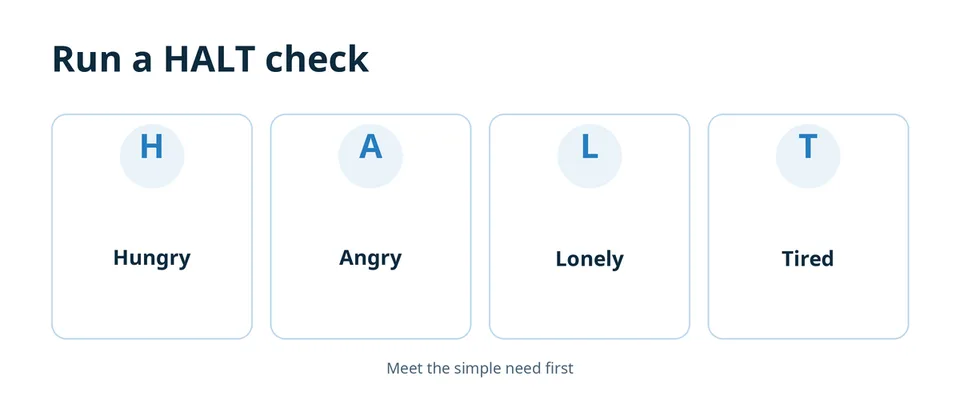
Melemis also points to the HALT check, which stands for hungry, angry, lonely and tired, as a simple reminder of poor self care. When any of those builds up, defenses drop and cravings get stronger. Fixing the simple need, by eating, resting, reaching out or dealing with the anger, often takes the edge off.
Many people in early recovery feel they don't deserve rest or fun, or they swing into overworking to make up for lost time. Both are risky. Recovery needs room for rest, enjoyment and relationships, not just effort. Our chapter on how to stay sober explains how self care fits into each stage of recovery.
Self Care and Stress
Stress is one of the biggest threats to both mental health and sobriety, and self care is one of the best buffers against it. Steady sleep, regular meals, movement and time to unwind lower your overall stress level, so hard days don't hit as hard.
When stress is high, self care is usually the first thing to go, which is exactly when it matters most. Building it into your routine ahead of time makes it more likely to stick. Our chapter on how to reduce stress walks through daily habits that help.
Building a Self Care Plan
A simple written plan makes self care easier to keep up, especially during hard weeks. Keep it short and realistic. These steps can help you build one:
- Notice which areas of self care you tend to neglect first under stress.
- Pick one daily habit for your body, like a set bedtime or a morning walk.
- Pick one daily habit for your mind, like three minutes of slow breathing.
- Pick one weekly habit for connection, like a call with a friend or a group.
- Name one thing you'll say no to so you have room for the rest.
- Check in once a week to see what's working and adjust.
Expect to miss days. Self care is something you practice, and there's no way to fail at it. Coming back to it after a rough week counts just as much as a perfect streak.
When Self Care Isn't Enough
Good habits help, but they can't fix everything. The NIMH advises seeking professional help if severe or distressing symptoms have lasted two weeks or more.1 Watch for trouble sleeping, changes in appetite, trouble getting out of bed because of mood, trouble focusing, loss of interest in things you usually enjoy or not being able to do usual tasks.
Needing help isn't a failure of self care. In fact, reaching out for help is one of the most important forms of self care there is. Structured programs like our outpatient program combine professional care with the daily habits that keep you well.
Self Care at Promising Outlook
At Promising Outlook, we build self care into treatment from the first week. In group, clients build daily routines, practice HALT checks and learn to notice when their self care is slipping. Care includes group therapy, individual therapy, family therapy and medication management, by live video for adults across California.
Groups meet Monday through Friday at 9:00 a.m., 12:00 p.m. and 5:00 p.m. Treatment length varies. Clients leave with an aftercare plan and a relapse prevention plan that includes their self care routine.
Call us and a real person will answer, day or night. Same-day starts are often possible. You can also verify your insurance online. We're in network with Aetna, Blue Shield, Cigna, Health Net, Tricare and United.
Frequently Asked Questions
What is self care?
Self care means taking the time to do things that help you live well and improve your physical and mental health. It includes basics like sleep, regular meals, movement, rest, connection and setting limits, not just treats or pampering. Small daily habits matter most.
Why is self care important?
Self care helps you manage stress, lower your risk of illness and keep your energy up. It also supports treatment and recovery for people living with mental health conditions or addiction. When self care slips, stress and old coping habits tend to come back.
What are some examples of self care?
Examples include going to bed on time, eating regular meals, taking a daily walk, practicing slow breathing, journaling, calling a friend, going to a support group, saying no to extra commitments and keeping up with doctor visits.
What does self care look like in recovery?
In recovery, self care means protecting the basics that keep you steady, like sleep, food, movement, rest and connection. It also means running a HALT check for hunger, anger, loneliness and tiredness. Poor self care is often the first sign of emotional relapse.
Is self care selfish?
No. Taking care of yourself helps you show up better for the people and responsibilities you care about. Running on empty leads to burnout, irritability and, for people in recovery, a higher risk of relapse. Self care keeps you able to give.
When should I get help instead of just doing self care?
If distressing symptoms like poor sleep, appetite changes, low mood, trouble concentrating or loss of interest have lasted two weeks or more, reach out to a professional. Seek help sooner if symptoms worsen or interfere with daily life. Asking for help is part of good self care.
Sources
- National Institute of Mental Health. Caring for Your Mental Health.
- Melemis SM. Relapse Prevention and the Five Rules of Recovery. Yale Journal of Biology and Medicine, 2015.