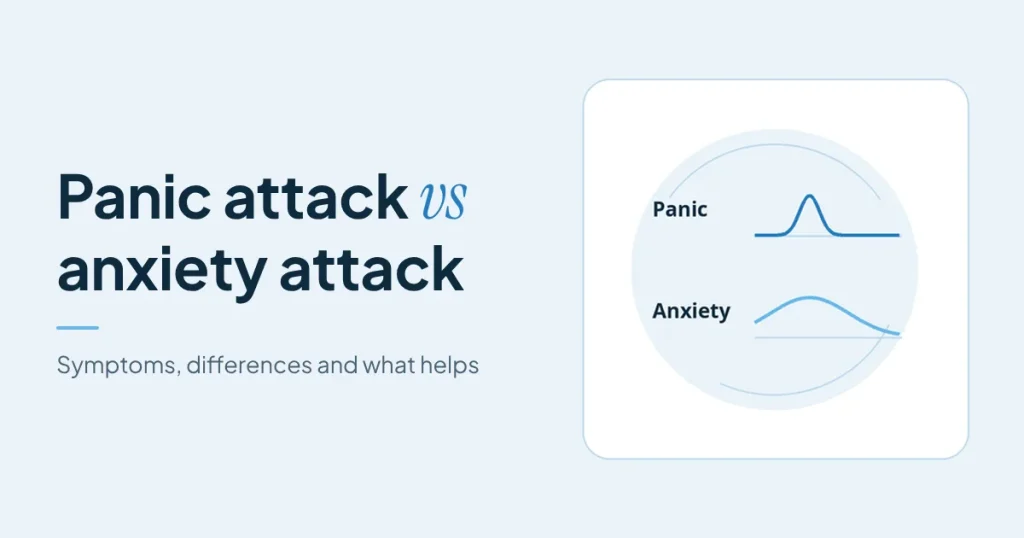
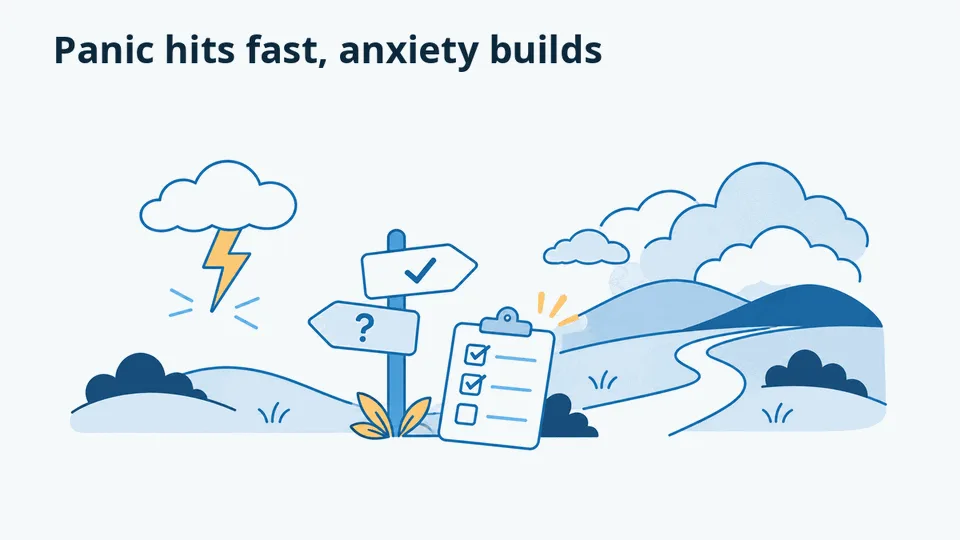
The main difference in a panic attack vs anxiety attack is speed and intensity. A panic attack hits suddenly, often out of nowhere, and peaks within minutes with intense fear and strong physical symptoms like a racing heart and trouble breathing. What people call an anxiety attack usually builds more gradually in response to a worry or stressor, but people use the term for experiences of varying intensity and duration.
Both feel awful, and both are treatable. If panic or anxiety is getting in the way of your life, our virtual anxiety treatment helps adults across California get relief by live video.
Key Takeaways
- A panic attack is a sudden wave of intense fear, often with no clear trigger, that peaks within minutes.
- "Anxiety attack" isn't a formal diagnosis, but people use it for a buildup of anxiety tied to a worry or stressor.
- The NIMH says panic attacks themselves are not life threatening, though they can feel like a heart attack.
- Chest pain with shortness of breath, arm or jaw pain or sweating needs emergency care when you're not sure what's happening.
- Cognitive behavioral therapy is considered the gold standard therapy for panic disorder.
What Is a Panic Attack
The National Institute of Mental Health describes a panic attack as a sudden wave of fear or discomfort or a sense of losing control, even when there's no clear danger or trigger.1 The Mayo Clinic adds that panic attack symptoms usually peak within minutes, and that people often feel tired and worn out afterward.2
The NIMH lists common physical symptoms, including a pounding or racing heart, sweating, trembling, trouble breathing, chest pain and stomach pain or nausea. Many people also feel a sense of doom or fear of dying or losing control. An attack usually lasts a few minutes but can go on for up to an hour or longer.
A single panic attack isn't a disorder. The NIMH explains that panic disorder involves repeated, unexpected attacks plus ongoing worry about future attacks or changes in behavior to avoid them.
What People Mean by an Anxiety Attack
"Anxiety attack" isn't a clinical term, but it's how many people describe a period of building anxiety that feels overwhelming. It usually grows in response to a specific worry, like a test, a hard conversation or money trouble, and it can rise and fall over minutes to hours. Learning how to reduce stress day to day often lowers how often these episodes happen.
The NIMH explains that anxiety tends to involve a persistent feeling of apprehension or dread, and it can affect both mind and body with worry, tension, headaches and lost sleep.3 During what people call an anxiety attack, symptoms may include racing thoughts, restlessness, muscle tension, irritability and a fast heartbeat, but usually without the sudden peak of terror that marks a panic attack.
Panic Attack vs Anxiety Attack Side by Side
The two overlap, and some people experience both. Looking at them side by side makes the difference between a panic attack and an anxiety attack easier to see. The table below compares them.
| Feature | Panic Attack | Anxiety Attack |
|---|---|---|
| How it starts | Suddenly, often with no clear trigger | Gradually, usually tied to a worry or stressor |
| Intensity | Intense fear, often a sense of doom | Ranges from mild to severe, usually less intense |
| Timing | Peaks within minutes, often over in under an hour | Can build and linger for hours or longer |
| Physical symptoms | Racing heart, chest pain, shortness of breath, trembling, sweating, dizziness | Muscle tension, restlessness, fast heartbeat, stomach upset, fatigue |
| Thoughts | Fear of dying, losing control or going crazy | Worry and racing thoughts about a specific concern |
| Formal diagnosis | Yes, can be part of panic disorder | No, but often part of an anxiety disorder |
Is It a Panic Attack or Something Medical
Panic attacks can feel exactly like a heart attack, and that's frightening. The Mayo Clinic notes that panic attack symptoms can resemble other serious health problems, such as a heart attack, so it's important to get checked if you aren't sure what's causing them.2
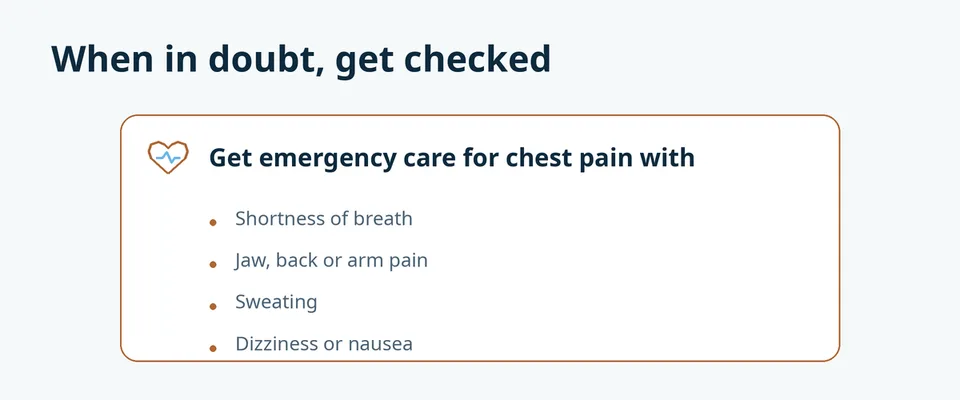
When in doubt, treat it as an emergency. The Mayo Clinic advises getting emergency help right away for chest pain, especially with shortness of breath, jaw or back pain, pain spreading to the shoulder and arm, sweating, dizziness or nausea.4 It's always better to be checked and find out it was panic than to wait during a heart problem.
What to Do During a Panic or Anxiety Attack
When an attack hits, the goal is to ride it out and help your body settle. Remind yourself that the feeling is temporary and that panic attacks themselves aren't dangerous, as the NIMH notes.1 These steps help many people:
- Name it: "This is panic, and it will pass."
- Breathe slowly, in for four counts and out for six, from your belly.
- Ground yourself by naming five things you see, four you hear and three you can touch.
- Relax your shoulders, jaw and hands one at a time.
- Stay where you are if it's safe, rather than running away from the feeling.
- When it passes, rest and drink some water.
Avoid reaching for alcohol or someone else's pills to calm down. The NIMH notes that panic disorder is commonly associated with alcohol and substance misuse. Substances may dull the feeling for a moment but tend to make anxiety worse over time.
Why Panic and Anxiety Happen
There's rarely one cause. The Mayo Clinic lists possible contributors to panic attacks, including genetics, major stress, a temperament that's sensitive to physical stress signals and changes in how parts of the brain work.2 It notes that risk rises with a family history of panic disorder, major life changes, traumatic events, smoking or heavy caffeine use and a history of childhood abuse.
Ongoing stress plays a big role in both panic and anxiety. Our chapter on how stress affects the body explains how a constantly activated stress response can set the stage for anxiety symptoms.
Treatment for Panic and Anxiety
Panic and anxiety respond well to treatment. The NIMH calls cognitive behavioral therapy the gold standard psychotherapy for panic disorder, and explains that exposure therapy, a CBT method, helps people face the situations and body sensations they've been avoiding.1 Our chapter on what cognitive behavioral therapy is explains how it works.
Medication can help too. The NIMH notes that SSRI and SNRI antidepressants can ease panic symptoms, though they may take several weeks to work, and that beta-blockers can reduce physical symptoms like a racing heart. It adds that benzodiazepines can quickly reduce symptoms but carry risks of tolerance and dependence, so they're usually prescribed for short periods. Our psychiatric medication management helps clients find the right fit, with extra care for anyone in recovery from substance use.
Help for Panic and Anxiety at Promising Outlook
Promising Outlook treats panic disorder and anxiety by live video for adults across California. Care includes group therapy, individual therapy using cognitive behavioral approaches, family therapy and medication management. When anxiety comes with drinking or drug use, the same team treats both.
Groups meet Monday through Friday at 9:00 a.m., 12:00 p.m. and 5:00 p.m. Treatment length varies. Clients leave with an aftercare plan. Same-day starts are often possible.
Call us and a real person will answer, day or night. You can also verify your insurance online. We're in network with Aetna, Blue Shield, Cigna, Health Net, Tricare and United.
Frequently Asked Questions
What is the difference between a panic attack and an anxiety attack?
A panic attack comes on suddenly, often without a clear trigger, and peaks within minutes with intense fear and strong physical symptoms. An anxiety attack usually builds more gradually in response to a worry or stressor but the term can describe experiences of varying intensity and duration.
How long does a panic attack last?
Most panic attacks last a few minutes, with symptoms peaking within minutes. Some can last up to an hour or longer. Afterward, many people feel tired and worn out. Panic symptoms can resemble a medical emergency. Seek emergency care for new or severe chest pain, trouble breathing or fainting.
Can a panic attack feel like a heart attack?
Yes. Chest pain, a racing heart, shortness of breath and dizziness can happen in both. If you're not sure, especially with chest pain plus shortness of breath, arm or jaw pain, sweating or nausea, get emergency care right away to rule out a heart problem.
What should I do during a panic attack?
Remind yourself it's panic and it will pass. Breathe slowly from your belly, ground yourself by naming what you see and hear, relax your muscles one area at a time and stay where you are if it's safe. Afterward, rest and drink water.
Can anxiety turn into a panic attack?
Yes. Building anxiety can sometimes tip into a full panic attack, especially when stress is high or sleep is poor. Learning skills to calm anxiety early, like slow breathing and challenging anxious thoughts, can help keep it from escalating.
What is the best treatment for panic attacks?
Cognitive behavioral therapy, including exposure therapy, is considered the gold standard. SSRI or SNRI antidepressants can also help, and beta-blockers may ease physical symptoms. Benzodiazepines work quickly but carry dependence risks and are usually only short term.
Sources
- National Institute of Mental Health. Panic Disorder: What You Need to Know.
- Mayo Clinic. Panic Attacks and Panic Disorder: Symptoms and Causes. 2026.
- National Institute of Mental Health. I'm So Stressed Out! Fact Sheet.
- Mayo Clinic News Network. The Stressors of Stress on Your Body and Behavior.