You may have a drinking problem if you often drink more than you meant to, can't cut back when you try, or keep drinking even though it's hurting your health, work or relationships. These can be signs of alcohol use disorder, which a clinician can assess and classify as mild, moderate or severe. If you're asking yourself "do I have a drinking problem," that question alone is worth taking seriously. This guide can help you reflect, but it can't diagnose you.
Help is available at every stage, not just when things get bad. Our online alcohol treatment helps adults across California cut back or stop drinking by live video, while they keep up with work and family.
Key Takeaways
- Alcohol use disorder is a medical condition. It doesn't mean something is wrong with your character.
- Clinicians use 11 questions to assess it, and two or more symptoms in the past year can point to a problem.
- Severity is rated mild with 2 to 3 symptoms, moderate with 4 to 5 and severe with 6 or more.
- Heavy drinking means 4 or more drinks on any day or 8 or more a week for women, and 5 or more on any day or 15 or more a week for men.
- Many people recover, and medications, therapy and support groups all help.
What Doctors Mean by a Drinking Problem
The National Institute on Alcohol Abuse and Alcoholism describes alcohol use disorder as a medical condition in which a person has trouble stopping or controlling their drinking despite harm to their social life, work or health.1 It covers what people often call alcohol abuse, alcohol dependence or alcoholism.
Using medical terms helps take some of the shame out of it. Alcohol use disorder isn't about willpower or morals. It's a condition that changes the brain over time, and like other health conditions, it responds to treatment.
"Am I an Alcoholic?"
Many people search that exact question. Clinicians don't use labels like that anymore, because they tend to stop people from getting help. What matters isn't a label but whether drinking is causing problems in your life, and how much.
The NIAAA explains that alcohol use disorder can be mild, moderate or severe, depending on how many symptoms someone has.1 Even a mild problem is worth addressing early, when change is often easier.
The 11 Questions Doctors Ask
A health care provider might ask these questions to assess alcohol use disorder. The NIAAA lists them as symptoms to consider over the past year.1 In the past year, have you:
- Had times when you drank more, or longer, than you meant to?
- Wanted to cut down or stop, or tried to, but couldn't?
- Spent a lot of time drinking, being sick or getting over the aftereffects?
- Wanted a drink so badly you couldn't think of anything else?
- Found that drinking or being sick from drinking often got in the way of home, family, work or school?
- Kept drinking even though it was causing trouble with family or friends?
- Given up or cut back on activities you cared about so you could drink?
- More than once gotten into risky situations while or after drinking, like driving or unsafe sex?
- Kept drinking even though it made you feel depressed or anxious, worsened another health problem or caused memory blackouts?
- Had to drink much more than before to get the effect you want, or found your usual amount had less effect?
- Had withdrawal symptoms as alcohol wore off, like trouble sleeping, shakiness, sweating, nausea, a racing heart or seizures, or sensed things that weren't there?
Count how many apply to you. The NIAAA rates severity by the number of symptoms, as shown below.
| Number of Symptoms | Severity |
|---|---|
| 2 to 3 | Mild alcohol use disorder |
| 4 to 5 | Moderate alcohol use disorder |
| 6 or more | Severe alcohol use disorder |
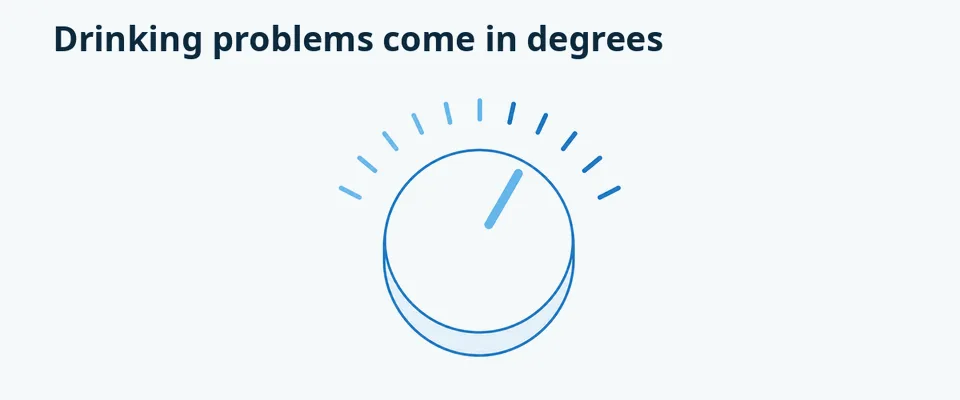
Only a health professional can make a diagnosis. But if two or more of these fit, it's a good reason to talk with a doctor or treatment program.
How Much Is Too Much
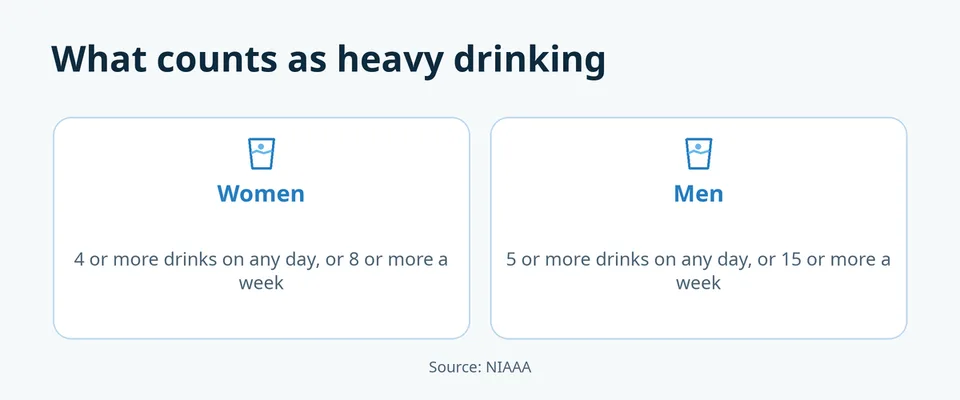
Amount isn't the whole picture, but it matters. The NIAAA defines heavy drinking as 4 or more drinks on any single day or 8 or more drinks per week for women, and 5 or more drinks on any single day or 15 or more per week for men.2 It notes that heavy drinking is especially risky and should be avoided.
The U.S. Dietary Guidelines advise adults who choose to drink to limit intake to 1 drink or less in a day for women and 2 or less for men, on any single day rather than as an average. A standard drink contains about 14 grams of pure alcohol, and the NIAAA notes that the alcohol in a single poured drink can vary a lot.
Other Signs of a Drinking Problem
Beyond the formal questions, everyday signs of a drinking problem often show up first. They tend to build slowly, so they're easy to explain away. Watch for patterns like these:
- Drinking to cope with stress, anxiety, sadness or sleep.
- Hiding how much you drink or drinking alone often.
- Feeling defensive or annoyed when people mention your drinking.
- Needing a drink to relax at the end of every day.
- Making rules about drinking that you keep breaking.
- Waking up with regret about what you said or did.
- Loved ones expressing worry about your drinking.
Risk Factors for Alcohol Problems
Some people are more vulnerable to developing a drinking problem than others. The NIAAA points to several risk factors.1 Starting to drink before age 15 is linked to a higher chance of alcohol use disorder later. Family history matters, and the NIAAA estimates heritability at about 60%.
Mental health plays a role too. The NIAAA notes that depression, PTSD and ADHD are associated with a higher risk, and that people with a history of childhood trauma are more vulnerable. If drinking is tangled up with depression or anxiety, treating both together tends to work best.
A Safety Note About Stopping
If you drink heavily every day or have had withdrawal symptoms before, don't stop suddenly on your own. MedlinePlus, from the National Library of Medicine, explains that severe alcohol withdrawal can cause confusion, hallucinations and seizures, and that death is possible, especially with delirium tremens.3 Talk with a doctor or treatment program first so withdrawal can be managed safely. Our chapter on detox vs rehab explains when medical detox is needed.
What to Do If You Think You Have a Drinking Problem
Recognizing a problem is the hardest step, and you've already started. The next steps are simpler than they look. The NIAAA notes that many people with alcohol use disorder do recover, and that treatment with behavioral therapies, mutual-support groups and medication can help.1 Here's where to begin:
- Talk with your doctor or a treatment program about what you've noticed.
- Get medical advice before stopping if you drink heavily every day.
- Ask about medication, since naltrexone, acamprosate and disulfiram are FDA-approved for alcohol use disorder.
- Find a treatment level that fits your life, such as an outpatient program.
- Tell one person you trust what you're working on.
If you feel unsure about changing, that's normal. Motivational interviewing is a counseling approach built for that mixed feeling, and our chapter on what motivational interviewing is explains how it helps. When you're ready, our guide to how to get sober walks through the first steps.
Help for Drinking at Promising Outlook
Promising Outlook treats alcohol use disorder by live video for adults across California, with group therapy, individual therapy, family therapy and medication management. Our Vivitrol treatment program offers monthly naltrexone injections for people who want help with cravings. We don't provide detox, but we'll help you find it if you need it first.
Groups meet Monday through Friday at 9:00 a.m., 12:00 p.m. and 5:00 p.m., including evening options for people who work. Our admissions team can often start you the same day. For a closer look at the process, see how to get into rehab.
Call us and a real person will answer, day or night. You can also verify your insurance online. We're in network with Aetna, Blue Shield, Cigna, Health Net, Tricare and United.
Frequently Asked Questions
How do I know if I have a drinking problem?
Look at whether you often drink more than you planned, can't cut back, crave alcohol, or keep drinking despite problems with health, work or relationships. Clinicians use 11 questions, and two or more symptoms in the past year can point to alcohol use disorder. A professional can give you a real assessment.
What are the signs of a drinking problem?
Common signs include drinking more or longer than intended, failed attempts to cut back, cravings, needing more to feel the effect, withdrawal symptoms, drinking to cope with stress or sleep, hiding how much you drink and loved ones expressing concern.
How many drinks a week is too many?
The NIAAA defines heavy drinking as 8 or more drinks a week, or 4 or more on any day, for women, and 15 or more a week, or 5 or more on any day, for men. The U.S. Dietary Guidelines suggest 1 drink or less a day for women and 2 or less for men.
Can you have a drinking problem without drinking every day?
Yes. Many people with alcohol use disorder don't drink daily. Binge drinking, losing control once you start, or drinking that causes problems at work or home can all point to a problem, even if there are days or weeks without alcohol.
Is it safe to stop drinking on my own?
It depends. If you drink heavily every day or have had shakes, sweating, hallucinations or seizures when you stopped before, get medical help first, because alcohol withdrawal can be dangerous. If you drink less, a doctor can still help you plan the safest approach.
What is the treatment for a drinking problem?
Treatment usually combines behavioral therapy, support groups and, for many people, medication such as naltrexone, acamprosate or disulfiram. Outpatient programs let you get help while you keep working. Many people with alcohol use disorder recover, even after setbacks.
Sources
- National Institute on Alcohol Abuse and Alcoholism. Understanding Alcohol Use Disorder.
- National Institute on Alcohol Abuse and Alcoholism. Drink Sizes and Drinking Levels.
- MedlinePlus, National Library of Medicine. Alcohol withdrawal.