


Yes, live video therapy can be effective for several common mental health conditions. Research comparing live video therapy with in-person therapy has found little to no difference in how much symptoms improve, especially for anxiety, depression and PTSD. For opioid use disorder, telehealth during the pandemic was linked to people staying in treatment longer and having fewer overdoses. It isn't the right fit for everyone, though.
This chapter is part of our guide to what IOP is, and it walks through the research honestly, including where in-person care may still be better. We see this every day in our online therapy in California, where groups and individual therapy happen over live video.
Key Takeaways
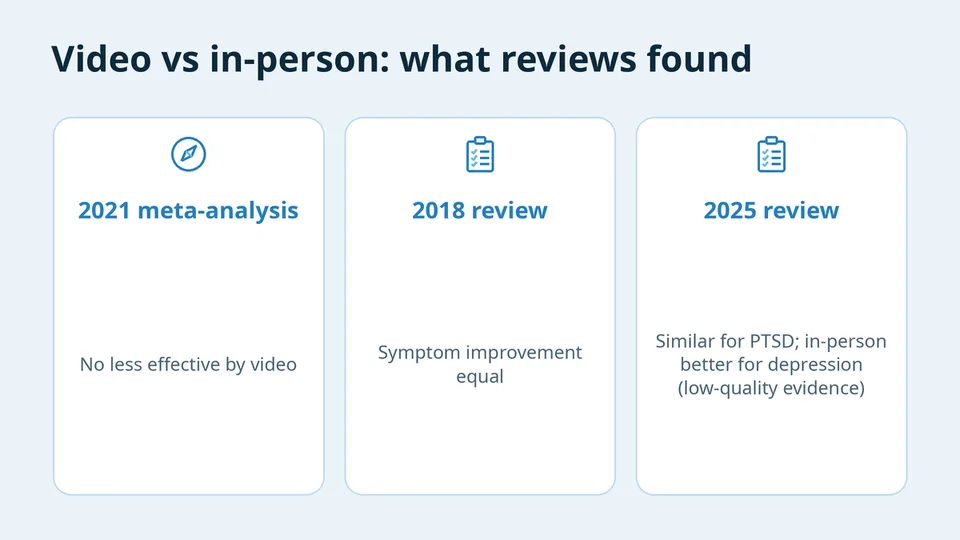
- A 2021 meta-analysis found therapy is no less effective by video than in person, with the strongest results for CBT.
- A 2018 review found symptom improvement by video was as good as in person, though the therapy relationship scored somewhat lower.
- One 2025 review found in-person care did better for depression, based on low-quality evidence.
- For opioid use disorder, telehealth was linked to staying on medication longer and lower odds of overdose.
- People who need medical detox, crisis care or a safe place to live may need in-person care first.
Is Online Therapy Effective for Mental Health
Live video therapy with a licensed clinician can help with several conditions studied in clinical trials. A 2021 meta-analysis in Clinical Psychology and Psychotherapy pooled studies of video therapy and concluded that, clinically, therapy is no less efficacious by video than in person.1 The effects were strongest for cognitive behavioral therapy and for anxiety, depression and PTSD.
An earlier review reached a similar answer from a different angle. Researchers looked at 12 studies and found that symptom reduction with video therapy was noninferior to face-to-face therapy, meaning it wasn't meaningfully worse.2 That's the result that matters most to someone deciding whether to try it.
Here's how the main findings line up:
| Study | What It Compared | What It Found |
|---|---|---|
| Fernandez and colleagues, 2021 | Video vs in-person therapy across conditions | No less effective by video; strongest for CBT |
| Systematic review, 2018 | Video vs in-person on symptoms and the therapy relationship | Symptom improvement equal; relationship rated somewhat lower |
| Kelber and colleagues, 2025 | Video vs in-person for PTSD, depression and anxiety | Little or no difference for PTSD; in-person better for depression, low-quality evidence |
Does Online Therapy Work as Well as In-Person
For most people, online therapy works about as well as in-person therapy, but the research isn't unanimous. A 2025 systematic review found only small differences, if any, between video and in-person care for PTSD.3 The same review found in-person delivery did better for depression, though the authors rated that evidence as low quality.
The therapy relationship is the other place where video may fall a little short. The 2018 review found that the working alliance between therapist and client was rated somewhat lower by video, though every study reported a good alliance overall.2 Since the relationship is one of the strongest reasons therapy works, it's worth paying attention to whether you feel connected to your therapist and your group.
Taken together, the research supports video therapy as a real option in its own right. It also suggests checking in honestly after a few weeks. If you don't feel connected or your symptoms aren't improving, tell your team so they can adjust your care.
Telehealth for Substance Abuse
Research supports some uses of telehealth in substance use treatment, including care for opioid use disorder. A 2022 study in JAMA Psychiatry by NIH and other federal researchers looked at more than 175,000 Medicare beneficiaries treated for opioid use disorder before and during the pandemic.4 Telehealth for opioid use disorder was associated with better medication retention and lower odds of a medically treated overdose. The observational study could not establish cause and effect.
That study shows an association, not proof that telehealth caused the better outcomes, and it covered Medicare beneficiaries only. Still, the authors said the results support keeping expanded telehealth and medication access in place. The finding about retention matters because staying in treatment longer is one of the clearest predictors of recovery.
Many people also find it easier to show up. There's no drive after work, no parking lot where someone might see your car, and no need to arrange childcare for a commute. For people in rural areas or without reliable transportation, video can be the difference between getting treatment and not getting it.
Who Online Therapy Suits Best
Online therapy suits people who are medically stable, have a private place to talk and a working phone or computer, and want treatment that fits around their life. It also suits people who would otherwise put off care because of distance, work, childcare or stigma. These are some signs that virtual care is likely to fit:
- You can join from a quiet, private spot most days
- You're not at risk of dangerous withdrawal
- You have a stable place to live
- You're comfortable talking on camera, or willing to get comfortable
- Getting to an in-person program would be hard to keep up
Virtual care works for both therapy and structured programs. Our chapters on PHP vs IOP and evening IOP explain how those levels run by video.
Who May Need In-Person Care
Some people need in-person care, at least to start. Being honest about that is part of making virtual treatment work. In-person or higher-level care is usually the safer choice for:
- People who need medical detox from alcohol, benzodiazepines or opioids
- People in a mental health crisis or at risk of harming themselves
- People without a safe or stable place to live
- People who have no private place to join
- People who have tried virtual care and haven't felt connected or improved
Promising Outlook doesn't provide detox or residential care. When someone needs that first, we say so plainly and help them find it, and many people step down to a virtual program afterward. Our guide to inpatient vs outpatient rehab explains how to tell which level you need.
How to Get the Most Out of Online Therapy
Online therapy works best when you treat it like an appointment, not a phone call you take while doing something else. Small habits make a big difference in how much you get out of each group or visit. These steps help:
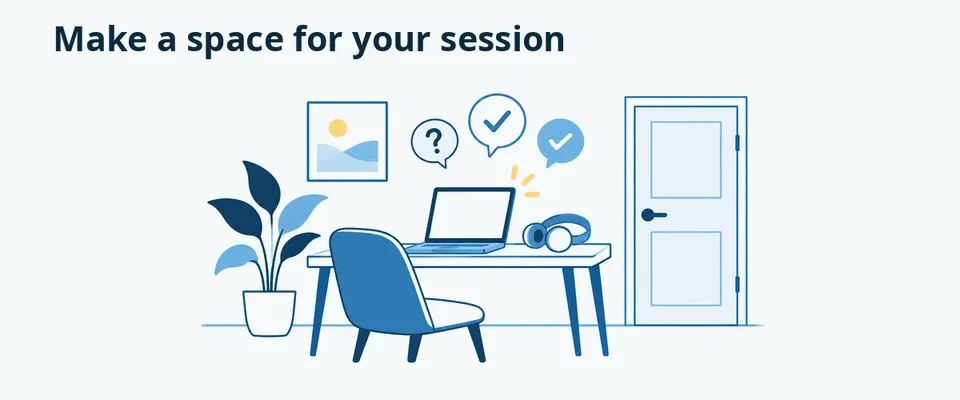
- Join from the same private spot each time, with the door closed.
- Use headphones so others in your home can't hear the group.
- Keep your camera on so your therapist and group can see how you're doing.
- Close other apps and put your phone on silent if you're joining from a computer.
- Tell your team right away if technology or privacy becomes a problem.
The same principles that make therapy work in person apply by video: showing up, being honest and practicing between visits. Our chapters on the benefits of therapy and the types of therapy explain what that work looks like.
Virtual Treatment at Promising Outlook
Promising Outlook is a Joint Commission accredited virtual program for adults across California. Clients join groups on a Google Meet link from a phone or computer, Monday through Friday, choosing a morning group at 9:00 a.m., a midday group at 12:00 p.m. or one of two evening groups at 5:00 p.m. Our virtual treatment programs include intensive outpatient, partial hospitalization and outpatient care.
Virtual doesn't mean alone. Each group starts with a check-in, and if someone brought up something hard the day before, the group asks how it went. You'll have your counselor's and therapist's contact information from day one, and our virtual IOP in California includes individual therapy, family therapy and medication management.
Call us and a real person will answer, day or night. We'll talk through whether virtual care fits you, and if it doesn't, we'll help you find what does. You can also verify your insurance online.
Frequently Asked Questions
Is online therapy effective?
Yes, for most people. Research comparing live video therapy with in-person therapy has found little to no difference in symptom improvement, especially for anxiety, depression and PTSD and for cognitive behavioral therapy. One review found in-person care did better for depression, based on low-quality evidence, so check how you're doing after a few weeks.
Does online therapy work for addiction?
Research supports it, especially for opioid use disorder. A large 2022 study found people who received telehealth for opioid use disorder stayed on their medications longer and had lower odds of overdose. Virtual care isn't a substitute for medical detox, which some people need first.
Is video therapy as good as in-person?
For most people, symptom improvement is about the same. Some research finds the relationship with the therapist is rated a little lower by video, though still good overall. If you don't feel connected or aren't improving after a few weeks, talk with your team about adjusting your care.
Who should not do online therapy?
People who need medical detox, are in a mental health crisis, don't have a safe place to live, or have no private place to join may need in-person or higher-level care first. Many of them can step down to virtual care once they're more stable.
Is group therapy effective online?
Many people find group works well by video, and it can be easier to attend consistently because there's no commute. What makes group work is the same online as in person: regular attendance, honest participation and a clinician who keeps the group focused and safe.
How do I make online therapy private?
Join from the same quiet room with the door closed, use headphones so others can't hear, and let people at home know you'll be unavailable during group. If you can't find privacy at home, a parked car or another private spot can work. Tell your team if privacy becomes a problem.
Sources
- Fernandez E, et al. Live psychotherapy by video versus in-person: A meta-analysis of efficacy and its relationship to types and targets of treatment. Clinical Psychology and Psychotherapy, 2021.
- Clinical Psychology and Psychotherapy. Working alliance and outcome effectiveness in videoconferencing psychotherapy: A systematic review and noninferiority meta-analysis. 2018.
- Kelber MS, et al. Evidence-based telehealth interventions for post-traumatic stress disorder, depression, and anxiety: A systematic review and meta-analysis. Journal of Telemedicine and Telecare, 2025.
- National Institutes of Health. Telehealth improves treatment for opioid use disorder. 2022.
