Yes, exercise helps mental health. Large reviews of hundreds of studies find that regular physical activity reduces symptoms of depression, anxiety and stress, and researchers now suggest it be considered alongside therapy and medication. Walking, jogging, yoga and strength training all help, and some studies found larger improvements at higher intensities. Exercise works best alongside treatment, not as a replacement for it.
If you're living with depression or anxiety, movement can be one part of a bigger plan. Our virtual mental health treatment helps adults across California build that plan, by live video.
Key Takeaways
- A 2024 BMJ review of 218 trials found exercise is an effective treatment for depression.
- Walking or jogging, yoga and strength training showed some of the strongest effects, especially at higher intensity.
- A review covering 1,039 trials found medium effects of physical activity on depression and anxiety.
- A meta-analysis of 22 studies found exercise raised abstinence rates in people with substance use disorders.
- Exercise supports treatment. It doesn't replace therapy or medication for serious symptoms.
What the Research Says About Exercise and Mental Health
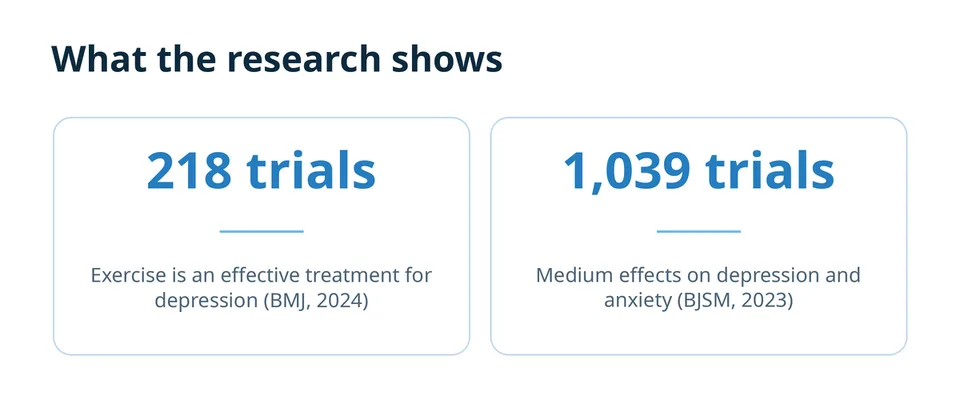
The evidence on exercise and mental health has grown a lot in recent years. A 2024 systematic review and network meta-analysis in The BMJ included 218 studies with 14,170 participants with depression.1 It concluded that exercise is an effective treatment for depression, and that walking or jogging, yoga and strength training were more effective than other exercises, particularly when intense.
The authors suggested these forms of exercise could be considered alongside psychotherapy and antidepressants as core treatments for depression. They also noted that certainty in the evidence was low for walking or jogging and very low for other types, mainly because few trials had low risk of bias. In plain terms, the benefit looks real, but more high-quality studies would help.
A second large review, published in the British Journal of Sports Medicine in 2023, looked at 97 reviews covering 1,039 trials and more than 128,000 people.2 It found that physical activity had medium effects on both depression and anxiety, and concluded it should be a mainstay approach for managing depression, anxiety and psychological distress. It also noted that many of the included reviews were rated low in quality.
Which Types of Exercise Help Most
You don't need a specific sport to benefit. The BMJ review found moderate reductions in depression for several kinds of activity, and the table below summarizes them.1
| Type of Exercise | What the BMJ Review Found | Good For |
|---|---|---|
| Walking or jogging | Moderate reduction in depression, one of the strongest effects | Easy to start, no equipment |
| Yoga | Moderate reduction and well tolerated | People who like gentle movement and breathing |
| Strength training | Moderate reduction and well tolerated | Building confidence and physical strength |
| Mixed aerobic exercise | Moderate reduction | Variety, cycling, swimming, dance |
| Tai chi or qigong | Moderate reduction | Slow, mindful movement |
The review also found that effects were proportional to the intensity prescribed, so more vigorous activity tended to help more. The British Journal of Sports Medicine review agreed, finding that higher intensity physical activity was associated with greater improvements in symptoms.2
How Does Exercise Help Mental Health
Researchers are still working out exactly why exercise helps, but several explanations fit together. Exercise changes brain chemistry, improves sleep and gives a sense of progress and control. It also often brings people outside or into contact with others, which helps mood too.
For many people, the psychological side matters as much as the physical. Finishing a walk or lifting a little more than last week builds confidence. Exercise also breaks up rumination, the repetitive negative thinking common in depression and anxiety, by giving your attention something else to focus on.
Exercise also helps with stress, which feeds both anxiety and substance use. Our chapter on how to reduce stress explains how movement fits with other daily habits.
Exercise and Addiction Recovery
Exercise can play a helpful role in recovery from addiction as well. A 2014 meta-analysis in PLOS ONE combined 22 studies and found that physical exercise increased abstinence rates among people with substance use disorders.3 Exercise also gives structure to free time, a healthy way to handle cravings and stress, and a source of natural reward that doesn't come from a substance.
That matters because depression and addiction often travel together. Our chapter on depression and substance abuse explains how the two feed each other, and why treating both, with exercise as one support, works best.
Exercise Supports Treatment Without Replacing It
As strong as the evidence is, exercise isn't a substitute for professional care when symptoms are serious. Depression can make it hard to get out of bed, let alone go for a run. If you're struggling with severe depression, thoughts of self-harm, heavy drinking or drug use, treatment comes first, and exercise can grow alongside it.
For depression specifically, our online depression therapy in California combines therapy and medication when needed. For worry and panic, our virtual anxiety treatment uses cognitive behavioral approaches that pair well with regular movement.
How to Start Exercising When You Don't Feel Like It
Low energy and low motivation are common symptoms of depression, so starting can feel impossible. The trick is to start smaller than you think you need to. The British Journal of Sports Medicine review found that interventions of 12 weeks or less showed some of the largest effects on depression, so you don't need a lifelong plan to begin.2 These steps help many people get going:
- Pick one activity you don't hate, like walking, dancing or stretching.
- Start with 10 minutes, three times a week.
- Schedule it like an appointment, at the same time each day.
- Find a buddy or a group for accountability.
- Track it on a calendar and notice how you feel afterward.
- Add a few minutes or a little more intensity every week or two.
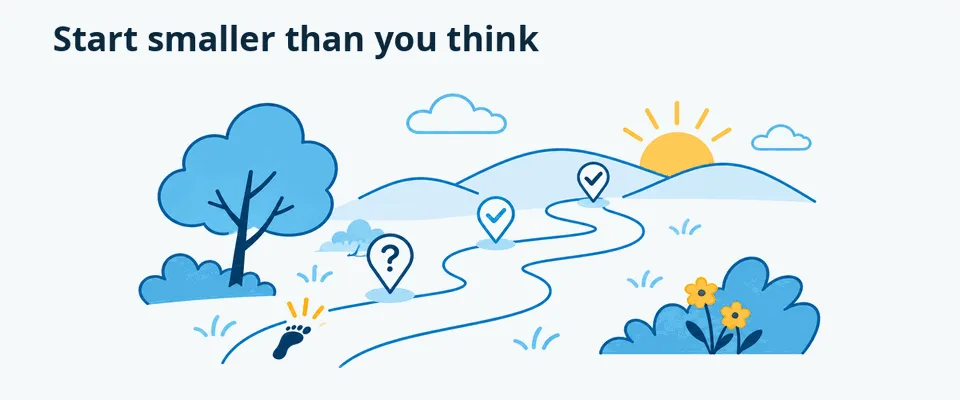
Check with your doctor before starting vigorous exercise if you have heart problems, other health conditions or have been inactive for a long time. And go easy on yourself. Missing a day isn't failure. Getting back to it is what counts.
Making Exercise Part of Self-Care
Exercise works best as one piece of a broader routine that includes sleep, regular meals, time with people you trust and time to rest. Together, those habits protect mood and make it easier to handle hard days. Our post on what self-care really means explains how to build that routine.
Building Healthy Habits at Promising Outlook
At Promising Outlook, we help adults across California treat depression, anxiety and substance use by live video, and we encourage healthy routines like regular movement as part of every plan. Care includes group therapy, individual therapy, family therapy and medication management.
Groups meet Monday through Friday at 9:00 a.m., 12:00 p.m. and 5:00 p.m. Treatment length varies. Clients leave with an aftercare plan that includes the daily habits that keep them well.
Call us and a real person will answer, day or night. Same-day starts are often possible. You can also verify your insurance online. We're in network with Aetna, Blue Shield, Cigna, Health Net, Tricare and United.
Frequently Asked Questions
Does exercise really help mental health?
Yes. Large reviews of hundreds of studies show regular physical activity reduces symptoms of depression, anxiety and stress. A 2024 BMJ review of 218 trials concluded exercise is an effective treatment for depression and could be considered alongside therapy and medication.
What type of exercise is best for depression?
In the 2024 BMJ review, walking or jogging, yoga and strength training were among the most effective, especially at higher intensity. Yoga and strength training were also well tolerated. The best exercise is one you'll actually keep doing.
How much exercise do I need for mental health benefits?
Even short programs help. One large review found interventions of 12 weeks or less had some of the largest effects on depression. Start with 10 minutes a few times a week and build up gradually. Choose an intensity you can manage and build up gradually.
Can exercise help with addiction recovery?
It can. A meta-analysis of 22 studies found some exercise interventions were associated with higher abstinence rates. The studies varied in the substances and populations they examined. Exercise also helps manage stress and cravings, fills free time and improves mood, which all support recovery alongside treatment.
Can exercise replace therapy or medication?
Not for serious symptoms. Exercise is a powerful support, but people with moderate to severe depression, anxiety or substance use usually need professional treatment too. Exercise works best as part of a plan that includes therapy and, when needed, medication.
How do I start exercising when I'm depressed?
Start very small, like a 10-minute walk three times a week. Pick something you don't dislike, schedule it, find a buddy if you can and track how you feel afterward. Build slowly, and treat missed days as normal rather than as failure.
Sources
- Noetel M, et al. Effect of Exercise for Depression: Systematic Review and Network Meta-Analysis of Randomised Controlled Trials. BMJ, 2024.
- Singh B, et al. Effectiveness of Physical Activity Interventions for Improving Depression, Anxiety and Distress: An Overview of Systematic Reviews. British Journal of Sports Medicine, 2023.
- Wang D, et al. Impact of Physical Exercise on Substance Use Disorders: A Meta-Analysis. PLOS ONE, 2014.