


The most reliable way to reduce stress is to build a few steady habits: regular sleep, daily movement, clear boundaries, less caffeine and alcohol, and a relaxation practice like slow breathing. These habits lower your baseline stress over weeks and months, so hard days hit less hard. Quick stress relief techniques help in the moment, but daily habits do the heavy lifting.
This chapter is part of our guide to stress management skills. If stress has turned into constant worry, our online anxiety treatment can help, by live video for adults across California.
Key Takeaways
- Lowering stress over time depends mostly on daily habits, not one-time fixes.
- The CDC recommends seven or more hours of sleep and about two and a half hours of activity a week.
- Relaxation techniques trigger the relaxation response, which slows heart rate and lowers blood pressure.
- NCCIH notes relaxation techniques work best when practiced regularly with good nutrition, exercise and social support.
- Boundaries around work, news and other people's demands protect your energy.
How to Reduce Stress With Daily Habits
Stress builds up in the body over time, and it comes down the same way. A single bubble bath or day off can feel good, but it won't undo months of short sleep, no movement and constant pressure. What lowers stress for the long run is a handful of small habits repeated almost every day.
The CDC's guidance on managing stress focuses on these everyday basics: sleep, physical activity, balanced meals, limiting alcohol, taking breaks from the news and staying connected.1 None of them is dramatic. Together, they change how your body responds to the next stressful event. That matters, because our chapter on how stress affects the body shows how much long-term stress can wear you down.
Sleep as a Stress Reducer
Sleep is one of the most powerful ways to lower stress, and one of the first things stress steals. The CDC recommends keeping a consistent sleep schedule and aiming for seven or more hours a night.1 The National Institute of Mental Health also lists a regular sleep routine among its top tips for coping with stress.2
A few changes make a big difference. Go to bed and get up at about the same time every day, including weekends. Keep your bedroom cool and dark, and keep screens out of bed. If your mind races at night, try writing tomorrow's to-do list before you turn off the light so your brain knows it can let go.
Movement and Exercise
Physical activity can help you manage stress and lift your mood. The CDC recommends building up to at least two and a half hours of moderate-intensity aerobic activity a week, which works out to about 30 minutes on five days.1 You don't need a gym. Walking, dancing, gardening, cycling and playing with your kids all count.
Start smaller if that feels like too much. A 10-minute walk after lunch is a real step. Our post on whether exercise helps mental health explains what the research shows and how to get started.
Stress Relief Techniques That Calm the Body
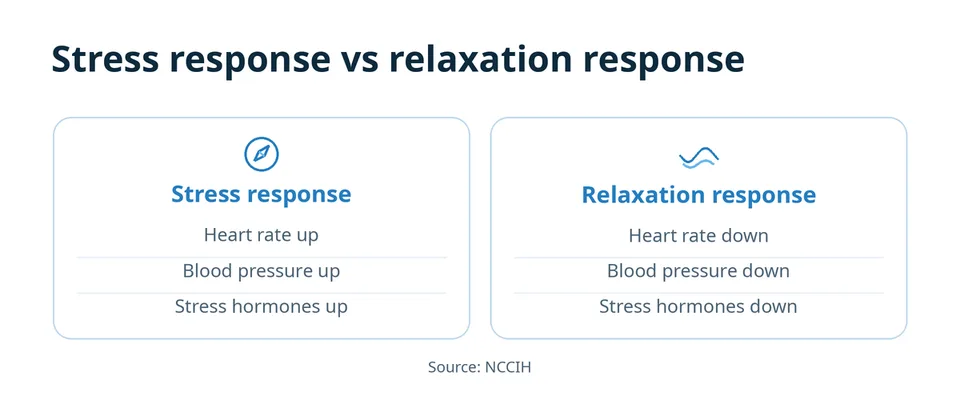
Relaxation techniques work by switching on what researchers call the relaxation response. The National Center for Complementary and Integrative Health explains that the relaxation response slows the heart rate, lowers blood pressure and reduces stress hormones, the opposite of the fight-or-flight stress response.3 These are some of the most common stress relief techniques:
- Slow breathing. Breathe in through your nose for four counts and out for six, letting your belly rise and fall.
- Box breathing. Breathe in for four, hold for four, breathe out for four and hold for four, then repeat.
- Progressive muscle relaxation. Tense one muscle group for five seconds, then release, moving from feet to head.
- Guided imagery. Picture a calm place in detail, using all your senses.
- Meditation or mindfulness. Focus on your breath and gently return your attention when it wanders.
- Gentle movement. Yoga, tai chi or stretching combine movement with steady breathing.
NCCIH notes that relaxation techniques are generally safe, but evidence for specific health conditions is limited. It adds that they may work best when practiced regularly and combined with good nutrition, regular exercise and strong social support. They shouldn't replace medical care for a health condition.
How to Lower Stress With Your Daily Choices
Small daily choices add up. Some raise your stress level without you noticing, and some quietly lower it. The table below shows a few swaps that help many people lower stress over time.
| Instead of | Try | Why It Helps |
|---|---|---|
| Several cups of coffee | One cup in the morning, then water or decaf | NIMH suggests avoiding excess caffeine2 |
| A drink to unwind | A walk, a shower or slow breathing | The CDC advises limiting alcohol1 |
| Checking news all day | Two set times to catch up | The CDC suggests breaks from news and social media |
| Skipping meals when busy | Regular, simple meals | NIMH recommends eating regular, healthy meals |
| Staying in all weekend | Time outdoors and with people you trust | The CDC recommends time outside and staying connected |
Setting Boundaries
Many people carry more stress than they need to because they rarely say no. Boundaries are limits that protect your time, energy and health. They don't need to be harsh. A simple "I can't take that on right now" or "I need to leave by five" is often enough.
Start by noticing where your time and energy go. Ask which commitments drain you without much benefit, and notice who leaves you feeling worse after every conversation. You can't cut out every stressor, but you can usually trim a few. Over time, protecting your limits makes room for rest and the things that restore you.
Thinking Patterns That Raise Stress
Sometimes stress comes less from what's happening and more from how we think about it. Catastrophizing, all-or-nothing thinking and assuming the worst can turn a small problem into a big one. The NIMH recommends identifying and challenging negative and unhelpful thoughts as a way to cope.2
Try asking yourself a few questions when a stressful thought hits. Is this definitely true? What's the most likely outcome, not the worst one? What would I tell a friend in this spot? Writing down the answers can turn a spiraling worry into a manageable problem. A therapist can help you build this skill faster, and virtual therapy in California is a good place to practice it.
Mindfulness for Lower Stress
Mindfulness means paying attention to the present moment without judging it. It helps lower stress by pulling your mind out of worries about the future and regrets about the past. Even five minutes a day of focusing on your breath, your senses or a simple activity like washing dishes can help.
Mindfulness is also a strong tool for people in recovery, because the same skills that calm stress help you ride out cravings. Our chapter on mindfulness based relapse prevention explains how it works and how to practice urge surfing.
Self-Care Is Part of the Plan
Self-care sometimes sounds like a luxury, but it's a core part of reducing stress. It covers the basics of sleep, food and movement, plus rest, fun and time with people who recharge you. When self-care slips, stress rises and your ability to cope drops.
Schedule self-care the way you'd schedule an appointment, so it doesn't get pushed aside. Our post on what self-care really means explains how to build it into a busy week. For the moments when stress spikes anyway, our chapter on healthy ways to cope with stress offers quick tools.
A Simple Weekly Plan to Reduce Stress
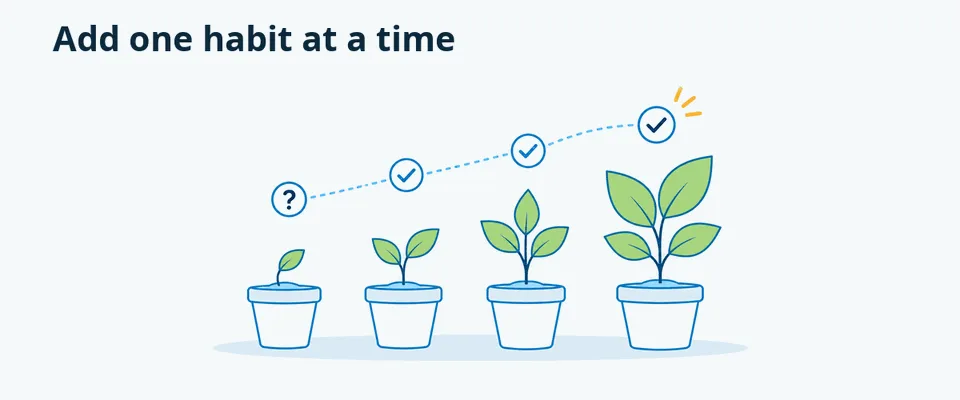
Trying to change everything at once usually backfires. A better approach is to add one habit at a time and give it a week or two to stick. Here's one way to start:
- Week one: Set a regular bedtime and wake time.
- Week two: Add a 10 to 20 minute walk most days.
- Week three: Practice slow breathing for three minutes, twice a day.
- Week four: Set two limits, such as news times and one commitment to drop.
- Week five: Schedule one restorative activity and one call with a friend each week.
Learning how to reduce stress is an ongoing project, so check in at the end of each week. Notice what helped and what didn't, and adjust. Our chapter on what causes stress can help you target the stressors that matter most for you.
Reducing Stress at Promising Outlook
At Promising Outlook, group therapy is where many clients learn and practice these skills. You try a technique, use it during the week and bring back what worked. Groups meet Monday through Friday at 9:00 a.m., 12:00 p.m. and 5:00 p.m., by live video for adults across California.
Individual therapy, family therapy and medication management are built in, and the same team treats substance use when it's part of the picture. Treatment length varies. Clients leave with an aftercare plan and a relapse prevention plan.
Call us and a real person will answer, day or night. Same-day starts are often possible. You can also verify your insurance online. We're in network with Aetna, Blue Shield, Cigna, Health Net, Tricare and United.
Frequently Asked Questions
How can I reduce stress quickly?
Try slow breathing, in for four counts and out for six, for a few minutes. Box breathing, a short walk, stretching or tensing and releasing your muscles also work fast. Stepping outside or calling someone you trust can help too. These tools calm your body so you can think more clearly.
How do I lower stress over the long term?
Build steady daily habits: regular sleep of seven or more hours, about two and a half hours of activity a week, regular meals, less caffeine and alcohol, limits on news and work, a relaxation practice and time with supportive people. Add one habit at a time and give each a week or two.
What are the best stress relief techniques?
Common techniques include slow or box breathing, progressive muscle relaxation, guided imagery, meditation and gentle movement like yoga or tai chi. They trigger the relaxation response, which slows heart rate and lowers blood pressure. They work best when practiced regularly alongside healthy habits.
Does exercise really reduce stress?
Yes. Physical activity helps your body burn off stress hormones and can improve mood. The CDC recommends building up to about two and a half hours of activity a week. Even short walks help, so start with what feels doable and build from there.
Can cutting caffeine reduce stress?
It can help. Caffeine can make you feel jittery and on edge and can disrupt sleep, which raises stress. The National Institute of Mental Health suggests avoiding excess caffeine as part of coping with stress. Try limiting coffee to the morning.
When should I get help for stress?
Reach out if stress interferes with your work, relationships or sleep, if it never seems to lift or if you're drinking or using to cope. A therapist can teach skills in a structured way and help with anxiety or depression that often comes with long-term stress.
Sources
- Centers for Disease Control and Prevention. Managing Stress.
- National Institute of Mental Health. I'm So Stressed Out! Fact Sheet.
- National Center for Complementary and Integrative Health. 5 Things To Know About Relaxation Techniques for Stress.
