


Learning how to stay sober is less about willpower and more about building a life where using makes less sense. That means steady daily habits, people who support you, ways to handle stress and cravings, and ongoing care as you move through the stages of recovery. Each stage brings different risks, so your plan should grow as you do.
This chapter is part of our guide to relapse prevention. Many people build these habits while stepping down from intensive care into a lighter step down program, so they keep support as they return to full daily life.
Key Takeaways
- Staying sober long term means changing your life, not just removing the substance.
- Recovery often moves through three stages: abstinence, repair and growth.
- Emotional and psychological symptoms can come and go for up to two years after stopping.
- Daily structure, self-care, honest relationships and ongoing support lower the risk of relapse.
- NIDA says better outcomes come with longer time in treatment.
What Recovery Really Means
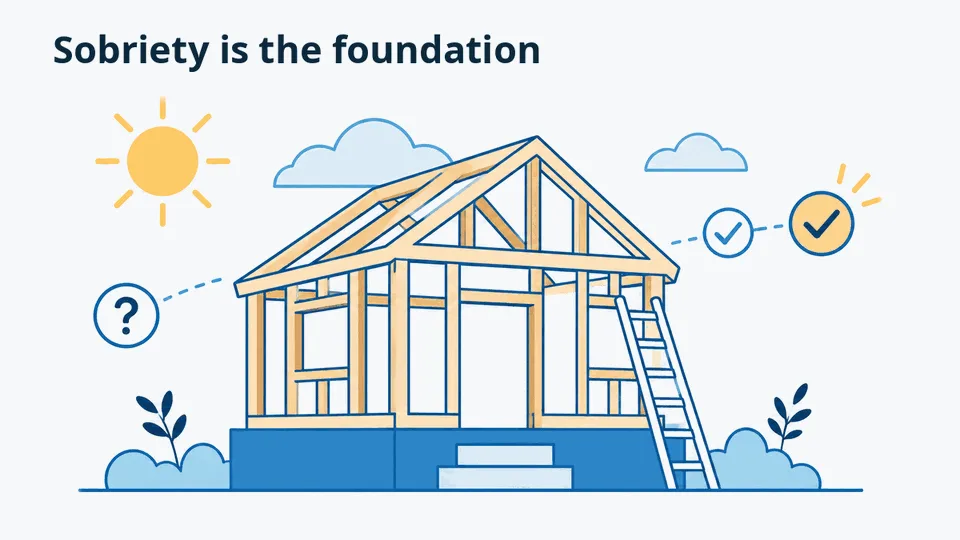
SAMHSA defines recovery as a process of change through which people improve their health and wellness, live a self-directed life and strive to reach their full potential.1 That's a much bigger idea than just not drinking or using. Sobriety is the foundation, and recovery is the life you build on top of it.
SAMHSA describes four dimensions that support a life in recovery. Each one gives you something to work on, and together they make staying sober more natural over time. The table below lays them out.
| Dimension | What It Means | Questions to Ask Yourself |
|---|---|---|
| Health | Managing your condition and making healthy choices, including not using alcohol or drugs | Am I sleeping, eating and taking care of my body and mind? |
| Home | A stable and safe place to live | Does where I live support my recovery? |
| Purpose | Meaningful daily activities, like work, school, volunteering, caregiving or creative projects | What gets me up in the morning? |
| Community | Relationships and social networks that offer support, friendship, love and hope | Who do I talk to when things get hard? |
The Stages of Recovery
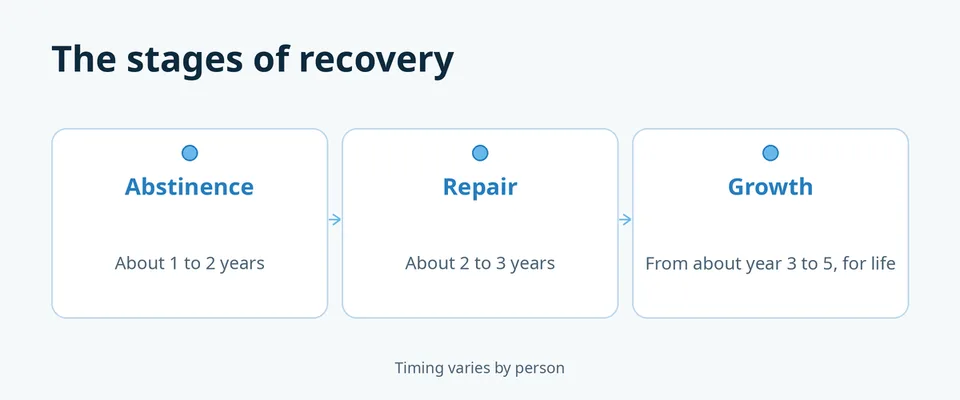
Recovery isn't one long, flat road. Dr. Steven Melemis, writing in the Yale Journal of Biology and Medicine, describes three stages of recovery: abstinence, repair and growth.2 Each stage has its own tasks and its own relapse risks, and knowing where you are helps you focus on the right things.
Melemis notes that the abstinence stage usually lasts one to two years, repair usually lasts two to three years, and growth usually begins three to five years after stopping and continues for life. He also stresses that the timing varies from person to person. Think of these as rough guideposts. Everyone moves at their own pace.
The Abstinence Stage
The abstinence stage starts the day you stop. The main jobs are dealing with cravings, getting through withdrawal safely, building new routines and learning to ask for help. This is when relapse risk is highest, so structure and support matter most.
Melemis describes post-acute withdrawal, a set of mostly emotional and psychological symptoms that can come and go for up to two years after stopping.2 Mood swings, trouble sleeping, low energy and poor focus are common. Knowing they're part of the process can keep a rough week from feeling like proof that recovery isn't working.
Early abstinence is also the time to change the things that made using easy. That might mean changing your phone contacts, your route home or how you spend Friday nights. Our post on how to get sober covers those first steps in more detail.
The Repair Stage
In the repair stage, the focus shifts from simply not using to dealing with the damage addiction caused. That can include relationships, work, money, health and the way you see yourself. Many people feel guilt and shame during this stage, and working through them is part of the job.
A common risk in repair is feeling that you've done enough. Life gets better, cravings fade and it's tempting to cut back on meetings, therapy or other supports. Steady effort through this stage builds the base for everything that comes after. It's also a good time to widen your support system beyond the people who helped in the first months.
The Growth Stage
Growth is about building a life you may never have had. It often means looking at the patterns that set you up for addiction in the first place, like perfectionism, people-pleasing, unresolved trauma or not knowing how to handle feelings. Many people find this is when recovery starts to feel truly rewarding.
Growth continues for life. People in long-term recovery often say they keep learning about themselves for years. They also keep some recovery practices, like a weekly group or regular check-ins, because those practices are part of a life they want to keep.
Tips for Staying Sober Day to Day
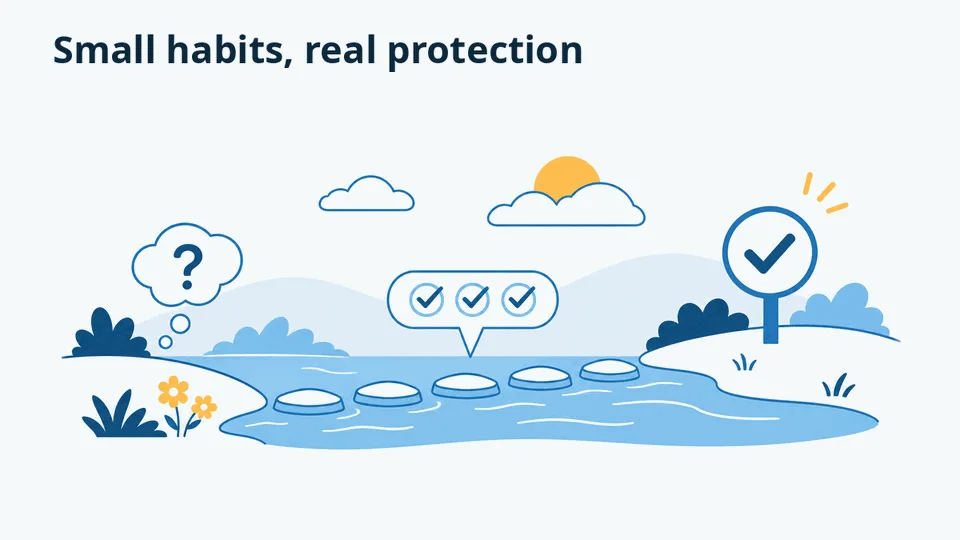
Knowing how to stay sober comes down to ordinary days. Long-term sobriety is built one of them at a time. The habits that seem small, like eating breakfast or texting a friend from group, add up to real protection. These tips for staying sober are the ones people in recovery come back to again and again:
- Keep a regular sleep schedule, even on weekends.
- Eat regular meals and drink plenty of water.
- Move your body most days, even with a short walk.
- Stay connected to at least one recovery group, meeting or AA sponsor.
- Talk to someone in recovery every day, especially early on.
- Plan your evenings and weekends ahead of time.
- Run a quick HALT check when moods dip: hungry, angry, lonely or tired.
- Make room for fun and rest, not just responsibilities.
Self-care is one of the most underrated parts of staying sober. Melemis lists it as one of his five rules of recovery, alongside changing your life, being completely honest, asking for help and not bending the rules.2 Our post on what self-care really means explains what it looks like in practice.
How to Avoid Relapse as Life Changes
Relapse risk doesn't only come from cravings. It often comes from change, both good and bad. A new job, a breakup, a move, a promotion, a new baby or a loss can all shake up routines and stress levels. Knowing how to avoid relapse means planning for those changes before they hit.
Holidays and celebrations are a classic example. Alcohol is everywhere, family stress runs high and routines fall apart. Our post on how to have a sober Thanksgiving walks through one way to plan for it. The same approach works for weddings, work trips and vacations: decide ahead of time where you'll be, who you'll call and how you'll leave if you need to.
Overconfidence is another quiet risk. After months or years of sobriety, it's easy to think one drink won't matter. Melemis warns that bending the rules is a sign of trouble.2 Treat thoughts like that as warning signs worth talking about, not decisions to act on. If a slip does happen, our chapter on what to do after a relapse walks through the next steps.
Staying in Treatment Long Enough
Time in treatment matters. NIDA reports that most people with addiction need at least three months in treatment to significantly reduce or stop their drug use, and that the best outcomes come with longer treatment.3 The agency also notes that recovery from addiction is a long-term process that often needs multiple episodes of care.
That doesn't mean intensive treatment forever. It means stepping down gradually rather than stopping all at once. Many people move from an intensive outpatient program to a lighter outpatient schedule, then to a weekly group or therapy, and keep a connection to support for years.
Medication and Long-Term Sobriety
For many people, medication is part of staying sober. StatPearls, a peer-reviewed medical reference, notes that naltrexone and acamprosate reduce alcohol relapse, and that methadone and buprenorphine treat opioid dependence.4 These medicines can quiet cravings and lower the risk of return to use while you build the rest of your recovery.
Taking medication doesn't mean you're not really sober. It's a medical tool, just like medication for any other chronic condition. A prescriber can help you decide what fits and how long to take it.
Staying Sober at Promising Outlook
Promising Outlook helps adults across California build the skills and habits that keep them sober, by live video. Our virtual addiction treatment includes group therapy, individual therapy, family therapy and medication management, including Suboxone and Vivitrol when they fit. Clients step down from partial hospitalization to IOP to outpatient care without changing teams.
Groups meet Monday through Friday at 9:00 a.m., 12:00 p.m. and 5:00 p.m. Treatment length varies. Every client leaves with an aftercare plan and a relapse prevention plan. Not a pamphlet. A plan.
Call us and a real person will answer, day or night. Same-day starts are often possible. You can also verify your insurance online. We're in network with Aetna, Blue Shield, Cigna, Health Net, Tricare and United.
Frequently Asked Questions
How do you stay sober long term?
Build a life where using makes less sense. Keep steady routines for sleep, meals and movement, stay connected to a recovery group and people you trust, learn skills for stress and cravings, and stay in some kind of treatment long enough. Plan ahead for holidays and big life changes.
What are the stages of recovery?
One common model describes three stages: abstinence, repair and growth. Abstinence focuses on cravings and new routines and usually lasts one to two years. Repair addresses damage to relationships, work and self-worth. Growth starts a few years in and focuses on building a fuller life.
How can I avoid relapse?
Know your triggers and early warning signs, keep up self-care, stay honest with the people who support you and ask for help early. Plan for high-risk times like holidays, and treat thoughts of having just one as warning signs. Ongoing treatment and medication can lower risk too.
What are the best tips for staying sober?
Keep a regular sleep schedule, eat well, move your body, stay connected to a group, talk to someone in recovery every day, plan your evenings and weekends, run a HALT check when moods dip and make time for fun. Small daily habits add up to strong protection.
Does it get easier to stay sober?
For many people, yes. Cravings usually fade with time, and new habits become automatic. Emotional ups and downs can still come and go for up to two years, and big life changes can raise risk. Staying connected to support keeps it easier over the long run.
Is taking medication still being sober?
Yes. Medications like naltrexone, acamprosate and buprenorphine are medical treatments that reduce cravings and lower the risk of return to use. Taking them as prescribed is part of a recovery plan, just like taking medication for any other chronic health condition.
Sources
- Substance Abuse and Mental Health Services Administration. About Recovery.
- Melemis SM. Relapse Prevention and the Five Rules of Recovery. Yale Journal of Biology and Medicine, 2015.
- National Institute on Drug Abuse. Principles of Drug Addiction Treatment: A Research-Based Guide (Third Edition). 2018.
- Guenzel N, McChargue D. Addiction Relapse Prevention. StatPearls, 2023.
