


Stress affects the body by triggering the fight-or-flight response, which speeds up your heart, raises blood pressure, tenses your muscles and triggers the release of stress hormones such as adrenaline and cortisol. In short bursts that's helpful. When stress stays high for weeks or months, it can lead to headaches, back pain, stomach problems, poor sleep and a higher risk of high blood pressure and heart disease.
This chapter is part of our guide to stress management skills. When stress shows up as constant worry, low mood or sleepless nights, our virtual mental health treatment can help, by live video for adults across California.
Key Takeaways
- Stress affects every major system in the body, including muscles, heart, lungs, hormones, digestion and the nervous system.
- Short-term stress helps you respond to a challenge, while long-term stress can harm your health.
- Common physical symptoms of stress include headaches, muscle tension, stomach upset, fatigue and sleep problems.
- Chronic stress is linked to high blood pressure, heart disease, diabetes, depression and anxiety.
- Chest pain with shortness of breath, sweating or pain in the arm or jaw needs emergency care right away.
The Stress Response
When you face a threat, your brain sets off an automatic alarm. The American Psychological Association explains that the sympathetic nervous system drives the fight-or-flight response, signaling the adrenal glands to release adrenaline and cortisol.1 Your heart beats faster, you breathe more quickly, blood flows to your muscles and your blood sugar rises to give you quick energy.
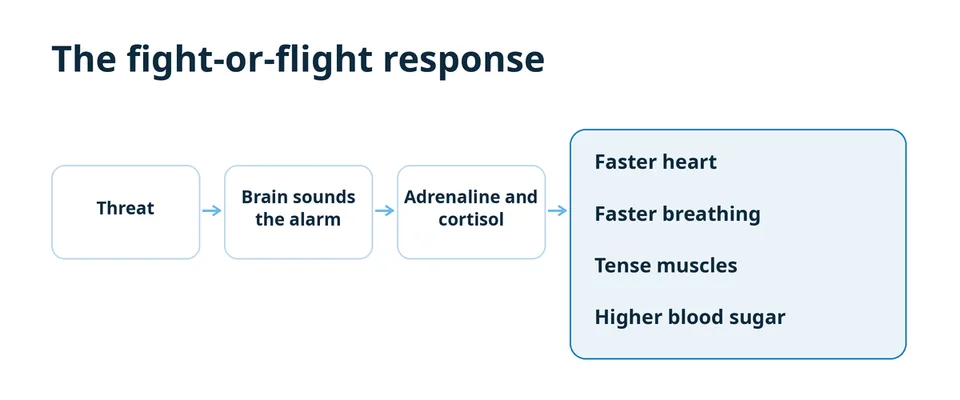
MedlinePlus, from the National Library of Medicine, describes stress as the body's reaction to a challenge or demand, and notes that short bursts can be helpful.2 That's the system working as designed. Once the threat passes, the parasympathetic nervous system helps your body calm down and return to normal.
The problem comes when the alarm never fully shuts off. Ongoing money worries, a hard job, caregiving or unresolved trauma can keep the stress response running day after day. That's when stress starts to wear the body down.
How Does Stress Affect the Body System by System
The APA notes that stress affects all systems of the body, including the musculoskeletal, respiratory, cardiovascular, endocrine, gastrointestinal, nervous and reproductive systems.1 The table below summarizes how short-term and long-term stress affect each one.
| Body System | Short-Term Stress | Long-Term Stress |
|---|---|---|
| Muscles | Muscles tense, then release when stress passes | Ongoing tension linked to tension headaches, migraines and back pain |
| Breathing | Faster breathing and shortness of breath | Can worsen asthma and COPD |
| Heart and blood vessels | Faster heart rate and higher blood pressure | Higher risk of hypertension, heart attack and stroke |
| Hormones | Cortisol rises to supply energy | Linked to fatigue, diabetes, obesity, depression and immune problems |
| Digestion | Stomach pain, nausea, bloating, heartburn | Can worsen irritable bowel syndrome and inflammatory bowel disease |
| Reproductive health | Lower sex drive | Irregular periods, worse premenstrual symptoms, lower testosterone |
All of these effects come from the APA's review of stress and the body. They're more likely when stress is long-lasting and when someone already has a related health condition.
Physical Symptoms of Stress
Many people don't realize their physical complaints are tied to stress. A headache that shows up every afternoon or a stomach that's always upset can be the body's way of signaling overload. MedlinePlus lists these common signs that stress may be affecting you:2
- Diarrhea, constipation or an upset stomach.
- Frequent aches, pains and headaches.
- A stiff jaw or neck.
- Fatigue and low energy.
- Trouble sleeping or sleeping too much.
- Sexual problems.
- Weight gain or loss.
- Forgetfulness and trouble focusing.
- Using alcohol or drugs to relax.
The Mayo Clinic adds chest pain, muscle tension and changes in sex drive to the list of common physical effects.3 Because these symptoms can also come from other health problems, it's worth checking with a provider if they're new, severe or don't improve.
Chronic Stress Symptoms
Chronic stress is stress that lasts for weeks, months or longer. Over time, it can contribute to real health problems. MedlinePlus lists high blood pressure, heart disease, diabetes, obesity, depression or anxiety, skin problems like acne or eczema, and menstrual problems among the conditions linked to chronic stress.2 It also notes chronic stress can make an existing health problem worse.
The heart is a particular concern. The APA explains that long-term increases in heart rate, blood pressure and stress hormones can raise the risk of hypertension, heart attack and stroke, and that ongoing stress may contribute to inflammation in the arteries.1
The National Center for Complementary and Integrative Health adds that over the long term, stress may contribute to or worsen health problems including digestive disorders, headaches and sleep disorders.4 The good news is that the body can recover when stress comes down, which is why stress management belongs in your regular health habits.
How Stress Affects Mood and Behavior
Stress doesn't stop at the body. It also changes how you feel and act. The Mayo Clinic lists anxiety, restlessness, irritability, trouble focusing, feeling overwhelmed and sadness among the effects on mood.3 On the behavior side, it lists overeating or undereating, angry outbursts, drug or alcohol misuse, tobacco use, social withdrawal and exercising less.
Those changes can create a loop. Stress leads to poor sleep, less exercise and more drinking, which in turn make stress harder to handle. Breaking the loop usually starts with small changes in one area, like protecting sleep or replacing an evening drink with a walk.
Stress and trauma can also overlap. When a frightening event keeps the stress response switched on long after the danger is gone, it may be PTSD. Our guide to what PTSD is explains the signs and treatment.
How Stress Affects Daily Life
The effects of stress show up in everyday moments. Mornings feel heavier when you didn't sleep well. Work tasks take longer because it's hard to focus. You snap at your partner over small things, then feel guilty. Plans with friends get canceled because you're too tired.
Over time, those small effects add up. Relationships can feel strained, work performance can slip and hobbies fall away. Many people don't connect these changes to stress until someone points it out. Noticing the pattern is the first step to changing it, and our chapter on how to reduce stress offers practical next steps.
Stress or Panic Attack
Sometimes stress symptoms build into a sudden surge of intense fear, with a racing heart, shortness of breath, dizziness and a sense of doom. That may be a panic attack. MedlinePlus advises contacting your provider if you have panic symptoms such as dizziness, rapid breathing or a racing heartbeat.2
Panic attacks are frightening but treatable. Our post on panic attacks vs anxiety attacks explains the difference and what helps. Ongoing worry and panic often respond well to therapy and, for some people, medication.
When Physical Symptoms Need a Doctor
Some symptoms should never be brushed off as just stress. The Mayo Clinic advises getting emergency help right away for chest pain, especially with shortness of breath, jaw or back pain, pain spreading to the shoulder and arm, sweating, dizziness or nausea, because these may be warning signs of a heart attack.3 Get emergency medical care in these situations rather than waiting to see if it passes.
For non-emergency symptoms, MedlinePlus recommends contacting your provider in these situations:2
- You feel overwhelmed by stress or it's affecting your health.
- You notice new or unusual symptoms.
- You have panic symptoms like dizziness, rapid breathing or a racing heart.
- You can't work or handle daily responsibilities at home.
- You have fears you can't control.
- You keep having memories of a traumatic event.
The Mayo Clinic adds that if you're not sure stress is the cause, or your symptoms continue after you've taken steps to manage stress, you should see your provider. They can check for other causes and help you decide on next steps.
Treatment for Stress-Related Symptoms
When stress affects your health, treatment often combines several approaches. Therapy, especially cognitive behavioral therapy, helps you change the patterns that keep stress going. Daily habits like sleep, exercise and relaxation practices help your body recover. For some people, medication helps with anxiety, depression or sleep problems tied to long-term stress.
If anxiety is a big part of the picture, our virtual anxiety treatment can help. Our psychiatric medication management is built into care for clients who need it, and our chapter on what causes stress can help you pinpoint what to work on first.
Getting Help at Promising Outlook
Promising Outlook treats stress, anxiety, depression and related symptoms by live video for adults across California. Care includes group therapy, individual therapy, family therapy and medication management, and the same team treats substance use when it's part of the picture.
Groups meet Monday through Friday at 9:00 a.m., 12:00 p.m. and 5:00 p.m. Treatment length varies. Clients leave with an aftercare plan and a relapse prevention plan. We're accredited by The Joint Commission.
Call us and a real person will answer, day or night. Same-day starts are often possible. You can also verify your insurance online. We're in network with Aetna, Blue Shield, Cigna, Health Net, Tricare and United.
Frequently Asked Questions
How does stress affect the body?
Stress triggers the fight-or-flight response, releasing adrenaline and cortisol that raise heart rate, blood pressure and blood sugar and tense your muscles. Short-term, that helps you respond. Long-term, it can cause headaches, back pain, stomach problems, fatigue and poor sleep, and raise the risk of high blood pressure and heart disease.
What are the physical symptoms of stress?
Common physical symptoms include headaches, muscle tension, a stiff jaw or neck, stomach upset, diarrhea or constipation, fatigue, sleep problems, chest pain, changes in sex drive and weight changes. Because these can also come from other health problems, check with a provider if they're new, severe or ongoing.
What are the symptoms of chronic stress?
Chronic stress can show up as ongoing fatigue, frequent headaches, muscle pain, digestive problems, trouble sleeping, irritability and trouble focusing. Over time, it's linked to high blood pressure, heart disease, diabetes, obesity, depression, anxiety and skin problems, and it can worsen existing health conditions.
Can stress cause chest pain?
Yes, stress can cause chest tightness or pain. But chest pain can also signal a heart attack. Get emergency care right away for chest pain, especially with shortness of breath, jaw or back pain, pain spreading to the arm, sweating, dizziness or nausea. Don't assume it's just stress.
Can stress make you sick?
It can contribute to illness. Long-term stress affects the immune system and is linked to digestive problems, headaches, sleep disorders, high blood pressure and heart disease. It can also worsen existing conditions like asthma and irritable bowel syndrome. Managing stress supports overall health.
When should I see a doctor for stress symptoms?
See a provider if symptoms are new or unusual, don't improve after you've tried managing stress, or affect your ability to work or handle daily life. Also seek help for panic symptoms, fears you can't control or recurring memories of a trauma. Chest pain with warning signs needs emergency care.
Sources
- American Psychological Association. Stress Effects on the Body. 2024.
- MedlinePlus, National Library of Medicine. Stress and Your Health.
- Mayo Clinic News Network. The Stressors of Stress on Your Body and Behavior.
- National Center for Complementary and Integrative Health. 5 Things To Know About Relaxation Techniques for Stress.
