


You may have anger issues if you get angry often or intensely, have trouble calming down, say or do things you regret, or notice anger hurting your relationships, job or health. Asking "do I have anger issues" is a good sign in itself, because it means you're paying attention. This guide is a self-reflection tool. Only a professional can give you a diagnosis. Only a licensed professional can assess what's really going on.
This chapter is part of our guide to anger management skills. If you recognize yourself here, our online anger management classes can help you build better ways to handle anger, by live video for adults across California.
Key Takeaways
- Anger is normal, but anger that's frequent, intense or out of control can signal a problem.
- Signs include frequent outbursts, trouble calming down, regret afterward and damaged relationships.
- Common drivers include stress, trauma, depression, anxiety, poor sleep and substance use.
- Intermittent explosive disorder is a diagnosable condition involving repeated outbursts far out of proportion to the situation.
- This guide is for self-reflection only. A professional can give you a real assessment.
Normal Anger vs Anger Issues
Everyone gets angry. The American Psychological Association describes anger as an emotion that ranges from mild irritation to intense fury and rage.1 Feeling angry when you're treated unfairly or when plans fall apart is part of being human.
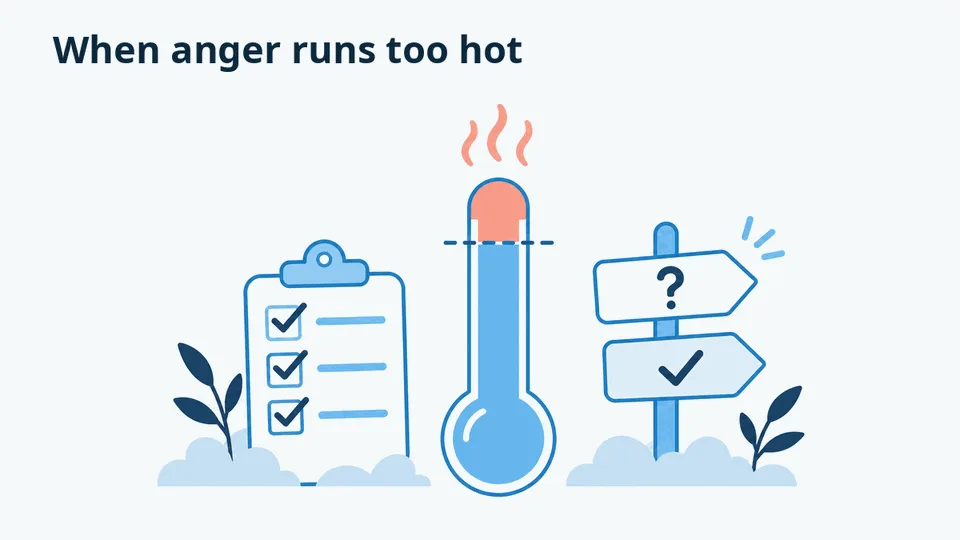
The difference with anger issues is how often anger shows up, how strong it is and what happens next. The APA notes that if you find yourself acting in ways that seem out of control and frightening, you might need help finding better ways to deal with anger. The table below shows some common differences.
| Typical Anger | Possible Anger Issues |
|---|---|
| Fits the situation | Feels far bigger than the situation calls for |
| Fades within a reasonable time | Lingers for hours or days, or keeps coming back |
| Expressed with words, even if firmly | Leads to yelling, threats, breaking things or hurting people |
| Rarely leads to regret | Often followed by guilt, shame or apologies |
| Doesn't scare the people around you | Others walk on eggshells around you |
Signs of Anger Issues
Anger problems show up in thoughts, feelings, behavior and relationships. You don't need to check every box for anger to be a problem. These signs of anger issues are worth paying attention to:
- You get angry several times a week, or most days.
- Small frustrations set you off, like traffic or a slow line.
- It's hard to calm down once you're angry.
- You yell, slam doors, throw things or punch walls.
- You say things in anger that you later regret.
- You hold grudges or replay past slights over and over.
- People close to you seem nervous or careful around you.
- Anger has caused problems at work, at school or with the law.
- You drink or use drugs when you're angry, or get angrier when you do.
- You feel irritable or on edge most of the time.
The APA notes that some people are chronically irritable and grumpy rather than explosive.1 Quiet, simmering anger counts too. It can wear down relationships just as much as outbursts do.
Why Am I So Angry
If you keep asking yourself why am I so angry, there's usually more than one answer. Anger often sits on top of other feelings or conditions. The APA notes that genetics, physiology and family background can all play a role in how easily someone gets angry.1 Other common reasons include:
- Stress. Ongoing pressure at work, at home or with money shortens your fuse.
- Poor sleep. A tired brain reacts faster and tolerates less.
- Trauma. Past abuse or frightening events can leave you on high alert, so small things feel like threats.
- Depression. Irritability and anger can be part of depression, especially in men.
- Anxiety. Constant worry can spill over into frustration and anger.
- Substance use. Alcohol lowers inhibitions, and withdrawal and cravings make people irritable.
- Hurt or fear underneath. Anger can feel safer than sadness, shame or helplessness.
- Learned patterns. Growing up around yelling or violence can make it feel normal.
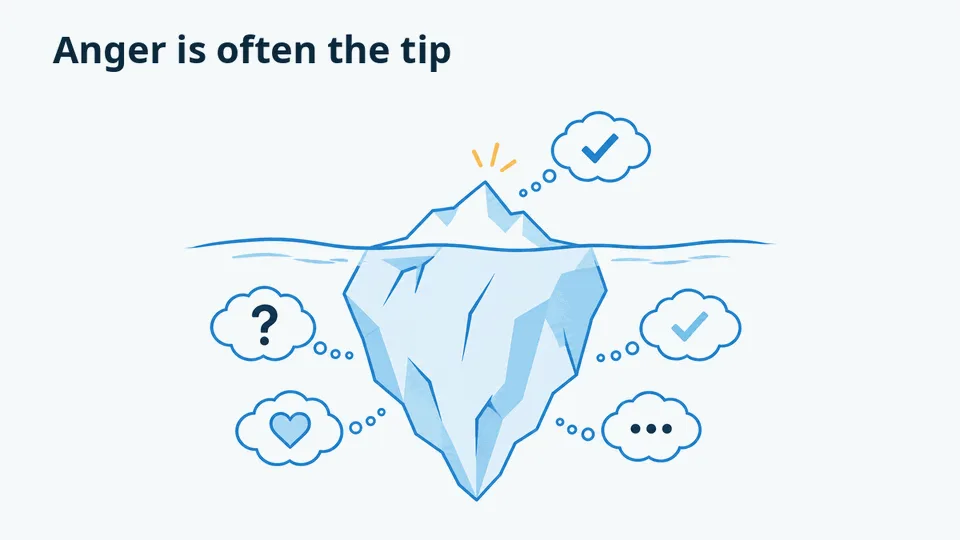
Looking at what's underneath your anger is often the key to changing it. Treating the stress, trauma, depression or substance use can bring anger down in a way that willpower alone can't.
Anger and Trauma
For many people, anger is tied to things that happened long ago. Childhood abuse, bullying, violence at home or other traumatic experiences can teach your nervous system to stay on guard. Then, as an adult, ordinary conflicts set off reactions that feel automatic and hard to stop.
The Mayo Clinic notes that being abused as a child, being bullied or going through other disturbing events can raise the risk of intermittent explosive disorder.2 If this sounds familiar, our chapter on unresolved trauma explains the signs and first steps toward healing.
Anger With Depression and Substance Use
Anger, depression and substance use often travel together. Depression doesn't always look like sadness. For some people it shows up as irritability, a short temper and resentment. Drinking or using drugs can numb those feelings for a while, then make them worse.
The APA notes that anger can contribute to risky behaviors, including drug and alcohol use.3 The Mayo Clinic lists alcohol and drug problems among the risk factors and complications of intermittent explosive disorder.2 Our chapter on depression and substance abuse explains how those conditions feed each other.
What Is Intermittent Explosive Disorder
Most anger problems aren't a formal diagnosis. But some people have a condition called intermittent explosive disorder, or IED. The Mayo Clinic describes it as a long-term condition involving repeated, sudden episodes of anger or aggression that are too extreme for the situation.2
Outbursts in IED usually last less than about 30 minutes and may happen days or months apart, with milder verbal flare-ups in between. They can include temper tantrums, heated arguments, shoving or fights, property damage, and threats or harm to people or animals. Afterward, people often feel relief and tiredness, followed by guilt, regret or embarrassment.
The Mayo Clinic notes that IED can last for years, though outbursts may become less severe with age, and that treatment usually combines talk therapy and medication. A qualified clinician can assess whether your symptoms meet the criteria for IED, so if this description fits, it's worth getting a full evaluation. A doctor can also check for medical or substance-related causes of outbursts.
When Anger Hurts Others
When anger has ever led to threats, intimidation, pushing, hitting or destroying things in a relationship, that's a sign to get help now. Programs for this work help people who have caused harm take responsibility and build safer patterns, while keeping the safety of people who have been harmed at the center.
Our online domestic violence classes provide structured, accountable care for this kind of change. If you're the one being harmed, your safety comes first, and reaching out to someone you trust or a local domestic violence program is a strong first step.
A Quick Self-Check
Take a few minutes to answer these questions honestly. There's no score, and this isn't a diagnosis. The goal is simply to see your patterns more clearly:
- In the past month, how many times did I get angry enough to raise my voice, slam something or say something I regretted?
- How long does it usually take me to calm down?
- Have people I care about told me my anger worries or scares them?
- Has anger caused trouble at work, school or with the law?
- Do I drink or use more when I'm angry, or get angrier when I've been drinking or using?
- Do I feel irritable or on edge most days?
- After I get angry, do I often feel guilty or ashamed?
Several worrying answers are useful information. They don't mean something is wrong with you as a person. They mean you've found something worth working on, and help is available.
When to Get Help
The Mayo Clinic advises talking with a doctor or mental health professional if you recognize yourself in the description of intermittent explosive disorder.2 More broadly, it's a good time to get help if your anger feels out of control, leads to actions you regret, hurts people around you or is damaging your relationships, work or health.
Help works. The APA notes that with counseling, a highly angry person can move closer to a middle range of anger in about 8 to 10 weeks.1 Therapy can teach practical skills and treat the stress, trauma, depression or substance use that often drives anger. Our virtual mental health treatment addresses those underlying conditions, and our chapter on how to manage anger covers techniques you can start today.
Help for Anger at Promising Outlook
Promising Outlook helps adults across California work on anger by live video, through anger management groups, individual therapy, family therapy and medication management. When anger comes with depression, anxiety, trauma or substance use, the same team treats all of it together.
Groups meet Monday through Friday at 9:00 a.m., 12:00 p.m. and 5:00 p.m., with evening options for people who work. Every client leaves with an aftercare plan.
Call us and a real person will answer, day or night. Same-day starts are often possible. You can also verify your insurance online. We're in network with Aetna, Blue Shield, Cigna, Health Net, Tricare and United.
Frequently Asked Questions
How do I know if I have anger issues?
Signs include getting angry often or intensely, struggling to calm down, yelling or breaking things, saying things you regret, and noticing that anger is hurting your relationships, job or health. This is for self-reflection only. A licensed professional can give you a real assessment.
What are the signs of anger issues?
Common signs include frequent anger over small things, trouble calming down, outbursts like yelling or slamming doors, regret afterward, holding grudges, people seeming nervous around you, problems at work or with the law, and drinking or using when angry. Constant irritability is also a sign.
Why am I so angry all the time?
Constant anger often has causes underneath it, like ongoing stress, poor sleep, past trauma, depression, anxiety or substance use. Genetics and family background can play a role too. Looking at what's driving your anger, ideally with a professional, is often the key to changing it.
Is anger a symptom of depression?
It can be. Depression doesn't always look like sadness. For some people, especially men, it shows up as irritability, a short temper and resentment. If your anger comes with low energy, hopelessness or losing interest in things you used to enjoy, talk with a professional.
What is intermittent explosive disorder?
Intermittent explosive disorder is a long-term condition involving repeated, sudden outbursts of anger or aggression that are far out of proportion to the situation. Outbursts usually last less than 30 minutes and are often followed by relief, then guilt. Treatment usually combines therapy and medication.
Can anger issues be treated?
Yes. Anger management, therapy such as cognitive behavioral therapy and treating underlying conditions like depression, trauma or substance use all help. The APA notes a highly angry person can move toward a more typical range in about 8 to 10 weeks with counseling.
Sources
- American Psychological Association. Control Anger Before It Controls You. 2023.
- Mayo Clinic. Intermittent Explosive Disorder: Symptoms and Causes.
- American Psychological Association. Strategies for Controlling Your Anger: Keeping Anger in Check.
