


Depression and substance abuse often show up together, and each one makes the other worse. People drink or use drugs to numb low mood, then the substance deepens the depression once it wears off. Treating both at the same time, with one team, gives you the best chance of breaking that cycle for good.
This chapter is part of our guide to co-occurring disorders. If depression is weighing on you right now, our online depression therapy in California treats it alongside any drinking or drug use, by live video from home.
Key Takeaways
- Depression is the most common mental health condition among people with alcohol use disorder.
- Almost a third of people in treatment for alcohol use disorder met the criteria for major depression in the past year, according to one review.
- Having both is linked to more severe symptoms, a harder recovery and a higher suicide risk.
- Some depression lifts after a few weeks without alcohol, but much of it doesn't.
- Therapy, medication and treating both conditions together all help.
How Common Are Depression and Addiction Together
Depression and addiction overlap far more than chance would predict. A review in the NIAAA journal Alcohol Research: Current Reviews found that depressive disorders are the most common psychiatric disorders among people with alcohol use disorder.1 Among people in treatment for alcohol use disorder, almost 33% met the criteria for major depressive disorder in the past year.
Drugs follow a similar pattern. NIDA lists depression among the mental health conditions that commonly occur with substance use disorders.2 Its research report notes that 43% of people in treatment for misusing prescription painkillers have a mental health diagnosis or symptoms, especially depression and anxiety.3
Having both is more than the sum of its parts. The same review found that the combination is linked to greater severity and a worse outlook than either condition alone, including a higher risk of suicide. That's why it's so important to treat both, not just the one that's easiest to see.
How Depression and Substance Abuse Feed Each Other
The link runs in both directions. Depression can lead to drinking or drug use, and substance use can bring on or deepen depression. Over time, the two lock into a loop where each one keeps the other going.
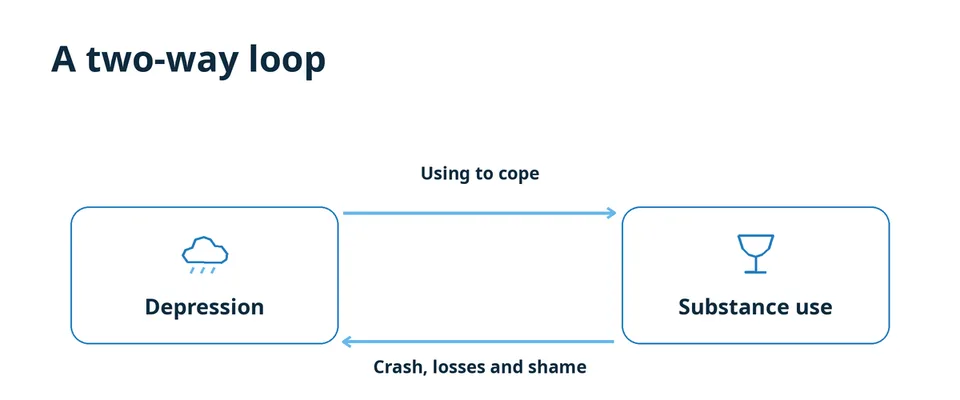
On one side, people with depression may use alcohol or drugs to escape heavy feelings, sleep or feel something besides numbness. NIDA explains that people with depression, anxiety or stress may use drugs to feel better, and that substances can ease symptoms for a while but often worsen them over time.2 The National Institute of Mental Health also lists increased alcohol or drug use as a possible sign of depression.4
On the other side, heavy use changes the brain and the life around it. Alcohol is a depressant, and hangovers, withdrawal and poor sleep all drag mood down. Then come the losses: missed work, strained relationships, money trouble and shame. Each one adds weight to the depression, and the urge to escape it grows.
Which Comes First With Addiction and Depression
Either one can come first, and for many people it's impossible to say for sure. Shared risk factors like genetics, trauma and long-term stress can set the stage for both at once.2 The order can also differ by person, and the NIAAA review notes that in one long-term study, depression predicted later alcohol problems in women but not in men.1
Clinicians do try to sort out one key question, though. Is the depression caused by the substance, or is it an independent condition that would be there anyway? The answer shapes treatment, and it usually takes time to see. The table below shows the difference.
| Type | What It Means | What Usually Happens With Sobriety |
|---|---|---|
| Substance-induced depression | Depression caused by heavy use or withdrawal | Often improves within weeks of stopping |
| Independent depression | Depression that exists apart from the substance | Stays or returns even after a period of sobriety |
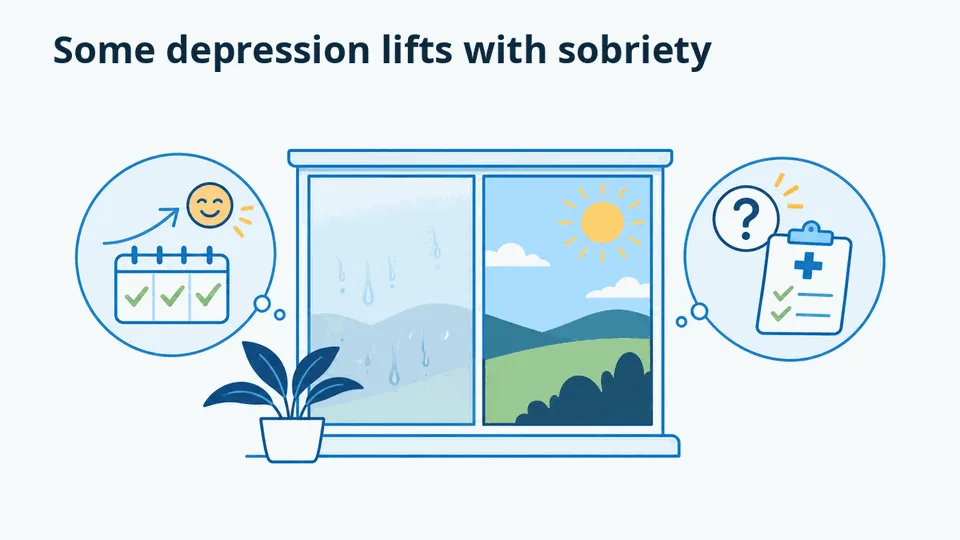
The NIAAA review notes that depressive symptoms often improve after about three to four weeks without alcohol, and that depression that continues after that point is more confidently diagnosed as independent. It also found that many cases first labeled substance-induced were later reclassified as independent. In other words, getting sober helps, but it often isn't the whole answer.
Signs of Depression and Addiction Together
The signs of each condition can hide the other. Someone may think they're just drinking too much, or just going through a low patch, when both are happening. The National Institute of Mental Health lists persistent sadness, hopelessness, loss of interest, fatigue and sleep changes among the common symptoms of depression.4 When they show up together with substance use, look for patterns like these:
- Drinking or using to get through the day, fall asleep or stop feeling sad.
- Low mood, guilt or hopelessness that's worse the morning after drinking or using.
- Losing interest in things you used to enjoy, other than drinking or using.
- Pulling away from friends and family, or hiding how much you use.
- Feeling tired and slowed down most days.
- Sleeping much more or much less than usual.
- Thoughts of death or suicide, especially while drinking or using.
The National Institute of Mental Health notes that a depression diagnosis requires symptoms most of the day, nearly every day, for at least two weeks. You don't need to meet that bar to ask for help, though. If several of these signs fit, a full assessment is a good next step.
If you ever have thoughts of ending your life, especially while drinking or using, get help right away. Depression and substance use together raise that risk, and support is available now.
Depression and Drug Abuse by Substance
Different substances affect mood in different ways. The pattern of depression and drug abuse often depends on what someone uses and how they come down from it. A few common patterns show up again and again:
- Alcohol lifts mood briefly, then lowers it, and heavy drinking is closely tied to depression.
- Opioids can numb emotional pain, and withdrawal often brings intense low mood and anxiety.
- Stimulants like cocaine and meth create a high followed by a crash that can look a lot like depression.
- Cannabis is often used to cope with low mood, and heavy use can blunt motivation and interest.
- Benzodiazepines calm anxiety in the short term but can deepen low mood with regular use.
Mixing substances raises the risks further. NIDA notes that using more than one substance is a growing factor in health risks, including fatal overdose.2 A good assessment looks at everything you use, not only the main substance.
Treatment for Depression and Substance Abuse
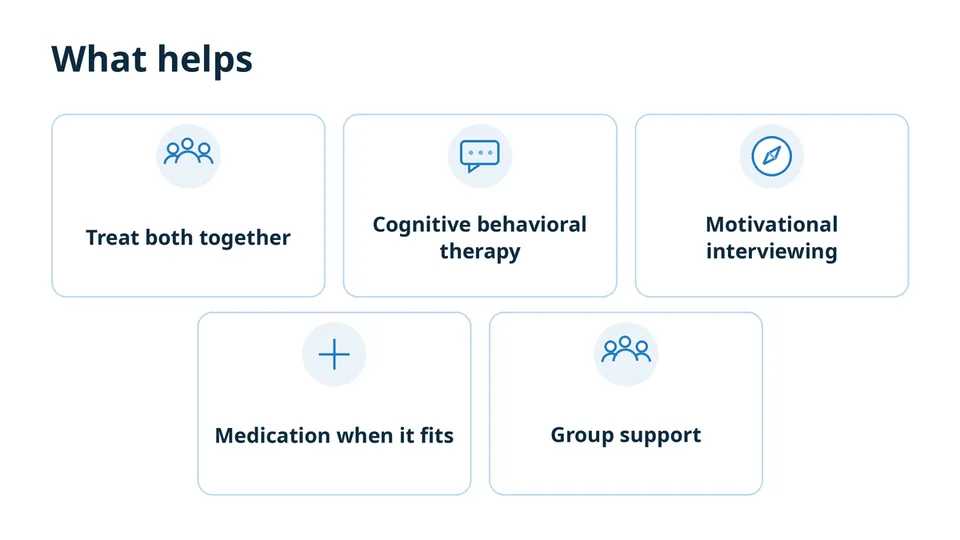
The most important rule is to treat both conditions together. NIDA says it's usually better to treat co-occurring conditions at the same time rather than separately.2 Our chapter on integrated treatment for co-occurring disorders explains what that looks like and why it matters.
Therapy is the foundation. The National Institute of Mental Health describes cognitive behavioral therapy as a way to challenge and change unhelpful thoughts and behaviors, and names it among the proven therapies for depression.4 The NIAAA review found that combining cognitive behavioral therapy with motivational interviewing led to modest improvements in both depression and drinking.1 Our chapter on what cognitive behavioral therapy is explains how it works.
Medication can help too. The NIAAA review found that antidepressants outperform placebo for depression in people who also have alcohol use disorder, with benefits similar to those in depression alone, though their effect on drinking is modest. Naltrexone can help reduce drinking. Depression may still need its own treatment. The National Institute of Mental Health notes antidepressants usually take four to eight weeks to work.
Honest expectations matter here. The same review describes treatment response for this pairing as somewhat modest, especially for drinking. That's a reason to combine approaches and stay in care long enough, not a reason to give up.
Daily Habits That Support Recovery
Therapy and medication do the heavy lifting, but daily habits make a real difference for both mood and cravings. Small, steady changes add up over weeks and months. Sleep, movement and connection are three of the most important.
Regular sleep helps stabilize mood, and staying connected to people who support you makes isolation less likely. Movement matters too. Our post on whether exercise helps mental health covers what the research says. Behavioral activation, which means scheduling small, rewarding activities even when you don't feel like it, is a promising approach the NIAAA review highlights for this pairing.1
Depression and Substance Abuse Treatment at Promising Outlook
At Promising Outlook, one team treats your depression and your substance use together. Our virtual dual diagnosis treatment combines group therapy, individual therapy, family therapy and medication management by live video, for adults across California. Care for your recovery through our virtual addiction treatment sits in the same plan, so nothing falls through the cracks.
Groups meet Monday through Friday at 9:00 a.m., 12:00 p.m. and 5:00 p.m. Suboxone and Vivitrol are available when they fit. Treatment length varies. Clients leave with an aftercare plan and a relapse prevention plan. We don't provide detox, but we'll help you find it if you need it first.
Call us and a real person will answer, day or night. If you're medically stable, you can often start the same day. You can also verify your insurance online. We're in network with Aetna, Blue Shield, Cigna, Health Net, Tricare and United.
Frequently Asked Questions
How are depression and substance abuse connected?
They feed each other. People with depression may drink or use drugs to numb low mood, and substances can bring short relief but often make depression worse over time. Heavy use also changes the brain and causes life problems that deepen depression. Shared risk factors like genetics and trauma raise the risk of both.
Can drinking cause depression?
Yes, it can. Heavy drinking, hangovers and withdrawal can all cause depressive symptoms. Research shows these often improve after about three to four weeks without alcohol. If depression continues after that, it's more likely an independent condition that needs its own treatment alongside care for drinking.
Which comes first, depression or addiction?
Either can come first, and sometimes they develop together. Some people start drinking or using to cope with depression, while others develop depression after heavy use. The order can differ by person. Treatment works best when it addresses both conditions, no matter which started first.
Will my depression go away if I get sober?
It might improve, but it may not go away completely. Depression caused by the substance often lifts within weeks of stopping. Independent depression usually needs its own treatment, such as therapy, medication or both. A clinician can watch your symptoms in early recovery to tell the difference.
Can I take antidepressants if I have a substance use disorder?
Often, yes. Research shows antidepressants can help depression in people who also have alcohol use disorder. A prescriber who knows your full substance use history can choose the safest option, watch for interactions and adjust as you go. Some medicines, like naltrexone, may help with both drinking and mood.
What is the best treatment for depression and addiction?
The best approach treats both together with one team. That usually means therapy such as cognitive behavioral therapy and motivational interviewing, medication when it fits, group support and a plan for staying well after treatment. Daily habits like sleep, movement and connection support that work.
Sources
- McHugh RK, Weiss RD. Alcohol Use Disorder and Depressive Disorders. Alcohol Research: Current Reviews, 2019.
- National Institute on Drug Abuse. Co-Occurring Disorders and Other Health Conditions.
- National Institute on Drug Abuse. Common Comorbidities with Substance Use Disorders Research Report. 2018.
- National Institute of Mental Health. Depression.
