


Unresolved trauma is the lasting effect of a painful or frightening experience that was never fully processed. Years later, it can show up as anxiety, numbness, anger, trouble trusting people, or drinking and using to cope. The event is over, but your mind and body still act as if you need protecting from it.
This chapter is part of our guide to what PTSD is. Trauma that lingers doesn't always meet the criteria for PTSD, but it can still weigh on your life, and a clinician can help you decide what care fits your symptoms and goals. Our online therapy for PTSD helps adults across California work through it by live video.
Key Takeaways
- It isn't a formal diagnosis, but the term describes trauma that still shapes how you feel, think and act.
- About two in three U.S. adults report at least one adverse childhood experience, and about one in six report four or more.
- Common signs include feeling on edge, emotional numbness, shame, anger, relationship trouble and using substances to cope.
- Memories of trauma don't disappear, but their power over your life can fade with the right help.
- Therapy, safe relationships and daily coping skills are the main paths to healing.
What Is Unresolved Trauma
Trauma is the impact of an event that overwhelms your ability to cope, such as abuse, violence, a serious accident or a sudden loss. Most people have strong reactions afterward, and the National Institute of Mental Health notes that most recover from those reactions over time.1 When the reactions don't settle, the trauma is often described as unresolved or unhealed.
You won't find this term as a diagnosis in a manual. Clinicians use it as a plain way to describe trauma that still runs in the background of someone's life. Some people with unhealed trauma meet the criteria for PTSD. Many others don't, yet still feel the effects in their moods, relationships and habits.
It's especially common when the trauma happened in childhood. Kids don't have the words or the power to make sense of what's happening, so they adapt in ways that keep them safe at the time. Those same patterns, like staying hypervigilant or shutting down feelings, can cause real problems in adult life.
How Common Is Childhood Trauma
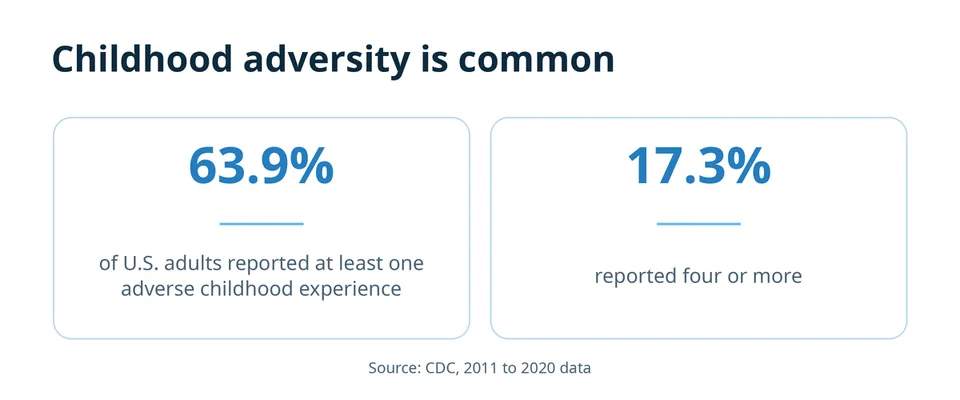
Painful childhood experiences are far more common than many people think. The CDC defines adverse childhood experiences, or ACEs, as potentially traumatic events that happen before age 18.2 In a CDC analysis of U.S. adults surveyed from 2011 to 2020, 63.9% reported at least one ACE and 17.3% reported four or more.
The CDC report measured eight kinds of ACEs. They are physical, emotional and sexual abuse; witnessing violence between parents or partners; living with someone who misused substances; living with someone with mental illness; parental separation or divorce; and having a household member go to jail. If any of those sound familiar, you're far from alone.
The effects can last. The CDC explains that toxic stress from ACEs can change brain development and affect how the body responds to stress, and it links ACEs to mental health problems and substance misuse later in life.3 In a separate analysis, the CDC estimated that up to 44% of adult depression cases in the surveyed states were attributable to ACEs. That estimate depends on the study's assumptions.
Signs of Unresolved Trauma in Adults
These signs can be easy to mistake for personality, stress or bad habits. They often show up in your body, your emotions and your relationships at once. Many people recognize several of these signs in themselves:
- Feeling on edge, jumpy or unable to relax, even when you're safe.
- Emotional numbness, or feeling cut off from people you love.
- Strong reactions that seem bigger than the situation calls for.
- Trouble sleeping, nightmares or waking in a panic.
- Deep shame, guilt or a sense that something is wrong with you.
- Avoiding certain places, people, topics or memories.
- Trouble trusting others, or staying in relationships that repeat old harm.
- Anger that flares quickly and is hard to control.
- Drinking, using drugs, overworking or other ways of numbing out.
- Physical complaints like headaches, stomach problems or constant tension.
None of these signs alone proves trauma is the cause. Together, and especially when they trace back to a painful period in your life, they're worth taking seriously. A therapist can help you sort out what's driving them.
How Unhealed Trauma Shows Up in Daily Life
Unhealed trauma often hides inside ordinary moments. A raised voice at work sends your heart racing. A partner running late triggers a wave of panic. A friendly question about your childhood makes you change the subject fast. These reactions make sense once you see them as old ways your mind learned to protect you.
Two of the most common ways it surfaces are anger and guilt. Anger can be a shield that keeps people at a distance, while guilt and shame can stick around long after the event, even when you did nothing wrong. Our chapters on whether you have anger issues and how to deal with guilt in recovery go deeper on both.
Substance use is another. Alcohol and drugs can quiet memories and calm a body stuck on high alert, at least for a while. Over time, though, they usually make trauma symptoms worse and add a second problem. Our chapter on trauma and addiction explains that cycle.
Unresolved Trauma vs PTSD
The two overlap, but they aren't the same thing. PTSD is a specific diagnosis with clear criteria, while the other is a broader, informal description. The table below shows the main differences.
| Feature | Unresolved Trauma | PTSD |
|---|---|---|
| Formal diagnosis | No, it's a descriptive term | Yes, with set criteria |
| Symptoms | Varies widely, from mild to severe | Re-experiencing, avoidance, arousal and mood changes |
| How long symptoms last | Can last for years, often in the background | More than one month, severe enough to disrupt daily life1 |
| Common sources | Childhood adversity, loss, ongoing stress, single events | A traumatic event that was lived through, witnessed or learned about |
| Helps with treatment | Yes | Yes |
You don't need a PTSD diagnosis to deserve help. If trauma is affecting your life, that's reason enough to talk to someone.
Does Trauma Ever Go Away
The honest answer is that the memory doesn't disappear, but the pain and the hold it has on you can fade a great deal. Healing means the memory becomes something that happened to you, not something that keeps happening. You can think about it without your body reacting as if you're in danger again.
Treatment makes a real difference. The National Center for PTSD notes that many people with PTSD recover and no longer meet the criteria for it after treatment.4 The National Institute of Mental Health adds that therapy for PTSD typically lasts 6 to 12 weeks, though it can take longer.1
Without help, these patterns can stick around for decades. Some people find their symptoms flare during big life changes, like becoming a parent, losing a loved one or getting sober. That's not a sign you've failed. It's a sign the trauma needs attention now.
First Steps Toward Healing
Healing from trauma usually happens step by step. You don't have to start with the hardest memories, and you shouldn't. Most healing begins with safety and skills, then moves toward the trauma itself when you're ready. These first steps help many people:
- Name what's happening, even just to yourself, and recognize it as a response to trauma.
- Build safety and routine with steady sleep, meals and daily structure.
- Learn a few grounding skills, like slow breathing or naming what you see, for hard moments.
- Cut back on alcohol and drugs, which keep trauma symptoms going.
- Reach out to one trusted person and let them know you're struggling.
- Find a therapist who is trained in trauma.
Therapy is often the turning point. Trauma-focused therapies help you process what happened and change the beliefs it left behind. The National Institute of Mental Health describes cognitive behavioral approaches that include gradually facing trauma reminders and rethinking what happened in a more realistic way.1 Working with a therapist through online therapy in California gives you space to go at your own pace.
What Healing Looks Like
Healing rarely feels like a single breakthrough. More often, it shows up as small changes you notice over weeks and months. Sleep comes more easily. You catch yourself before snapping at someone. A memory comes up and you can sit with it instead of reaching for a drink.
Relationships often change too. Feeling safer inside yourself makes it easier to trust the right people and set limits with the wrong ones. Many people describe feeling more like themselves than they have in years. That's what healing looks like: not forgetting, but getting your life back.
Help for Unresolved Trauma at Promising Outlook
Promising Outlook helps adults across California work through trauma by live video, whether or not it meets the criteria for PTSD. Care includes group therapy, individual therapy, family therapy and medication management. If drinking or drug use has become part of how you cope, the same team treats both.
Groups meet Monday through Friday at 9:00 a.m., 12:00 p.m. and 5:00 p.m. Treatment length varies. Clients leave with an aftercare plan and a relapse prevention plan. We don't offer EMDR at Promising Outlook, and our clinicians use cognitive behavioral and skills-based therapies instead.
Call us and a real person will answer, day or night. If you're ready, you can often start the same day. You can also verify your insurance online. We're in network with Aetna, Blue Shield, Cigna, Health Net, Tricare and United.
Frequently Asked Questions
What is unresolved trauma?
Unresolved trauma is the lasting effect of a painful or frightening experience that was never fully processed. It isn't a formal diagnosis. It describes trauma that still shapes how you feel, think and act, often through anxiety, numbness, anger, shame, relationship trouble or using substances to cope.
What are the signs of unresolved trauma?
Common signs include feeling on edge or unable to relax, emotional numbness, strong reactions to small triggers, nightmares, shame or guilt, avoiding reminders, trouble trusting people, quick anger, physical tension and drinking or using to cope. Several signs together, especially tied to a painful period, are worth exploring with a therapist.
Does trauma ever go away?
The memory doesn't disappear, but its hold on your life can fade a great deal. With treatment, many people with PTSD recover and no longer meet the criteria for it. Healing means you can think about what happened without your body reacting as if the danger is still there.
Can unresolved childhood trauma affect adults?
Yes. The CDC links adverse childhood experiences to changes in brain development and stress response, and to mental health problems and substance misuse later in life. Patterns that helped a child stay safe, like staying on guard or shutting down feelings, can cause problems in adult relationships and work.
Is unresolved trauma the same as PTSD?
No. PTSD is a formal diagnosis with specific symptoms that last more than a month and disrupt daily life. Unresolved trauma is a broader, informal term. Some people with lingering trauma have PTSD, and many don't, but both respond to therapy and support.
How do you start healing from trauma?
Start with safety and routine, learn a few grounding skills, cut back on alcohol and drugs, and reach out to someone you trust. Then find a therapist trained in trauma. Good trauma therapy moves at your pace and builds skills before working directly with painful memories.
Sources
- National Institute of Mental Health. Post-Traumatic Stress Disorder.
- Centers for Disease Control and Prevention. Prevalence of Adverse Childhood Experiences Among U.S. Adults, Behavioral Risk Factor Surveillance System, 2011 to 2020. Morbidity and Mortality Weekly Report, 2023.
- Centers for Disease Control and Prevention. Vital Signs: Adverse Childhood Experiences.
- U.S. Department of Veterans Affairs, National Center for PTSD. How Common Is PTSD in Adults?
