


Trauma and addiction often go together because alcohol and drugs can quiet the fear, memories and constant alertness that trauma leaves behind. The relief doesn't last, and over time substance use makes trauma symptoms worse while adding problems of its own. The way out is treating both at the same time, not waiting to fix one before the other.
This chapter is part of our guide to what PTSD is. If trauma and substance use are tangled together for you, our virtual dual diagnosis treatment treats both with one team, by live video for adults across California.
Key Takeaways
- People with PTSD are more likely than others to have problems with alcohol and drugs, and the reverse is also true.
- More than 1 in 4 veterans in VA care with PTSD also has a substance use disorder.
- Many people use substances to dampen anxiety, nightmares and hyperarousal from trauma.
- Having both is linked to worse outcomes and a higher risk of relapse.
- Research shows PTSD and addiction can be treated at the same time with good results.
How Common Are PTSD and Addiction Together
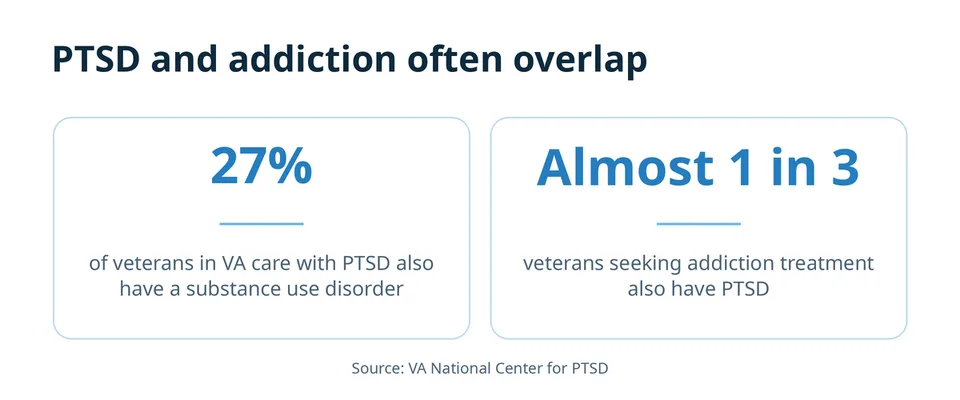
The overlap between PTSD and addiction is large and well documented. The VA's National Center for PTSD reports that 27% of veterans in VA care diagnosed with PTSD also have a substance use disorder, and that almost 1 in 3 veterans seeking treatment for a substance use disorder also has PTSD.1
The link goes well beyond the military. NIDA reports that one analysis estimated more than 30% of adults with a substance use disorder experienced childhood trauma.2 The CDC also ties adverse childhood experiences, such as abuse, violence and growing up with a parent who misused substances, to substance misuse later in life.3
These numbers matter because they change what good treatment looks like. If a large share of people seeking help for addiction also carry trauma, programs that ignore trauma will miss what's driving many people's use. Trauma doesn't have to meet the criteria for PTSD to fuel drinking or drug use, either, and our chapter on unresolved trauma explains how older, unhealed wounds can shape adult life.
Why Trauma and Addiction Go Together
There are a few reasons the two show up together so often, and they can all be true for the same person. NIDA and the NIAAA describe several pathways that link trauma and substance use:4, 5
- Self-medication. People with PTSD may use substances to reduce anxiety, block memories or get to sleep.
- Shared risk factors. Stress, trauma and genetics can raise the risk of both conditions at once.
- Substance use leading to trauma. Heavy use raises the odds of accidents, assaults and other dangerous situations.
- Brain changes. Both trauma and long-term substance use affect the brain systems that handle stress, fear and reward.
NIDA's research report states plainly that people with PTSD may use substances in an attempt to reduce their anxiety. A review in the NIAAA journal Alcohol Research: Current Reviews adds that drinking can dampen the hyperarousal of PTSD, which helps explain why alcohol is such a common choice.
The Self-Medication Trap
Self-medication works just well enough to be dangerous. A few drinks can blunt a racing heart, soften a flashback or knock you out before the nightmares start. For someone who hasn't felt calm in years, that relief can feel like a lifeline.
The trap is what happens next. As tolerance builds, it takes more to get the same effect. Withdrawal and hangovers bring their own anxiety, irritability and poor sleep, which look a lot like PTSD symptoms. Relying on alcohol or drugs for relief can also make it harder to develop other ways to cope with trauma symptoms.
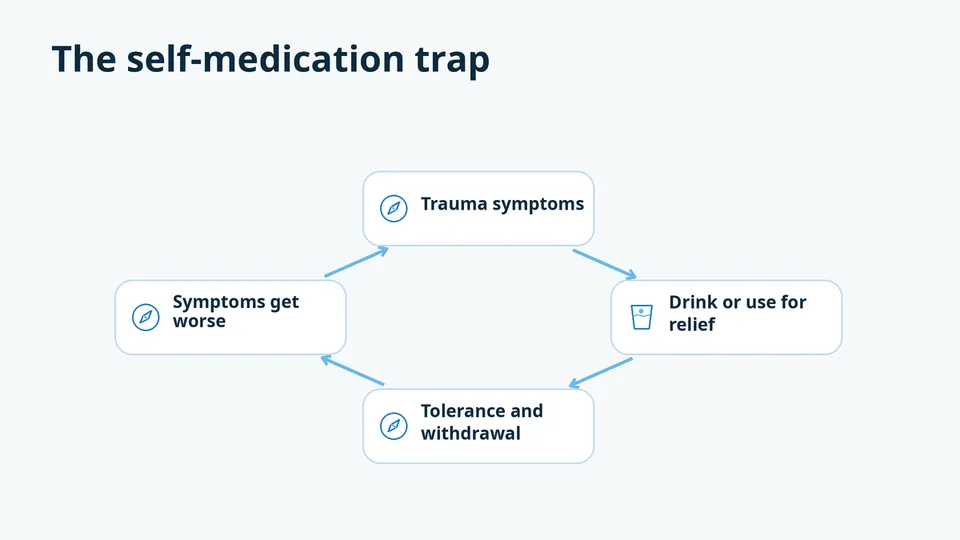
Here's how it often looks. A man who survived a violent assault starts drinking every night to fall asleep without reliving it. Two years later, he drinks most of the day, his sleep is worse, he's angry and jumpy at work, and he's isolated from his family. The drinking that once eased his PTSD now feeds it, and he has a second problem to treat.
How PTSD and Substance Abuse Make Each Other Worse
When PTSD and substance abuse occur together, each one makes the other harder to treat. The NIAAA review reports that people with both alcohol use disorder and PTSD respond less favorably to treatment for their drinking and face a higher risk of relapse.5
Trauma reminders can also drive cravings directly. A 2025 research brief from Case Western Reserve University reports that PTSD symptoms can significantly amplify substance cravings, especially when trauma cues and substance cues show up together.6 That's why someone can do well for weeks, then relapse after an anniversary, a news story or an argument that echoes old harm.
The table below shows how the two conditions feed each other day to day.
| PTSD Symptom | How Substances Seem to Help | What Happens Over Time |
|---|---|---|
| Nightmares and insomnia | Alcohol or sedatives knock you out | Sleep quality gets worse and withdrawal adds restlessness |
| Hyperarousal and anxiety | Drinking or using calms the body briefly | Rebound anxiety grows, and more is needed to get relief |
| Intrusive memories | Substances blur or block them | The trauma stays unprocessed and keeps returning |
| Emotional numbness | Stimulants or drinking create a feeling of energy or connection | Relationships strain and isolation deepens |
| Anger and irritability | Use takes the edge off | Intoxication lowers control and raises conflict |
Signs That Trauma Is Driving Substance Use
Not everyone with addiction has trauma, and not everyone with trauma has addiction. Some patterns suggest the two are connected, though, and they're worth noticing. These signs point to trauma playing a role in substance use:
- Drinking or using mostly to sleep, calm down or stop memories.
- Using more around anniversaries, reminders or stressful conflicts.
- Nightmares, flashbacks or feeling on guard that get worse when you try to cut back.
- Strong shame or guilt tied to a past event, alongside heavy use.
- Past attempts to quit that fell apart when trauma symptoms surged.
If several of these fit, it's worth telling a clinician about both your trauma and your use. Treatment that addresses only one is less likely to hold.
Treating PTSD and Addiction at the Same Time
For years, many people were told to get sober first and work on trauma later. Research has moved away from that idea. The NIAAA review concludes that for most people, PTSD and alcohol problems can be treated at the same time with good results.5 It also found that combined trauma-focused treatments performed as well as or better than usual care for reducing symptoms of both.
Federal guidelines agree. The 2023 VA/DoD clinical practice guideline advises that a co-occurring substance use disorder should not by itself keep someone from trauma-focused therapy.7 The Case Western brief reports that researchers strongly advise against postponing PTSD treatment until someone is abstinent.6 The VA's National Center for PTSD sums it up: treating PTSD and a substance use disorder at the same time works to treat both.1
Our chapter on integrated treatment for co-occurring disorders explains how this kind of care is set up, and our guide to co-occurring disorders covers the bigger picture.
What Treatment Usually Includes
Good treatment for trauma and addiction combines several kinds of care. The VA lists trauma-focused therapies for PTSD, along with relapse prevention, cognitive behavioral therapy and contingency management for substance use, and notes that medication options exist too.1 A strong plan typically includes most of these parts:
- An assessment that screens for both trauma and substance use.
- Skills for safety and coping, like grounding and managing cravings.
- Trauma-focused therapy, such as cognitive processing therapy, when you're ready.
- Cognitive behavioral therapy and relapse prevention for substance use.
- Medication for alcohol or opioid use disorder, and for PTSD symptoms, when it fits.
- Group support with people who understand both struggles.
- An aftercare plan that covers triggers for both conditions.

Medication can help on both sides. The NIAAA review notes that acamprosate and naltrexone reduce return to drinking, and for PTSD, the VA/DoD guideline recommends specific antidepressants: sertraline, paroxetine and venlafaxine.5 It also cautions that benzodiazepines haven't been shown to treat PTSD on their own.
Protecting Your Recovery From Trauma Triggers
Trauma reminders are a common cause of relapse, so a recovery plan should name them directly. That means listing the people, places, dates and feelings that tend to stir up trauma symptoms, then planning what you'll do instead of drinking or using. Anniversaries, holidays and court dates often deserve their own plan.
A solid plan also covers sleep, because nightmares and insomnia are some of the strongest pulls back to substances. Our guide to relapse prevention explains how to build a plan that covers both trauma triggers and substance triggers.
Treatment for Trauma and Addiction at Promising Outlook
At Promising Outlook, one team treats your trauma and your substance use together. Our virtual PTSD treatment and virtual addiction treatment run as one plan, with group therapy, individual therapy, family therapy and medication management by live video. Suboxone and Vivitrol are available when they fit.
Groups meet Monday through Friday at 9:00 a.m., 12:00 p.m. and 5:00 p.m. Treatment length varies. Clients leave with an aftercare plan and a relapse prevention plan. We don't offer EMDR at Promising Outlook, and we don't provide detox, but we'll help you find detox if you need it first.
Call us and a real person will answer, day or night. If you're medically stable, you can often start the same day. You can also verify your insurance online. We're in network with Aetna, Blue Shield, Cigna, Health Net, Tricare and United.
Frequently Asked Questions
How are trauma and addiction connected?
Many people use alcohol or drugs to calm the anxiety, nightmares and constant alertness that trauma leaves behind. Shared risk factors like stress and genetics raise the risk of both, and heavy use can lead to new trauma. Over time, substances make trauma symptoms worse, and the two feed each other.
How common are PTSD and addiction together?
Very common. The VA reports that 27% of veterans in VA care with PTSD also have a substance use disorder, and almost 1 in 3 veterans seeking addiction treatment has PTSD. NIDA notes that one analysis found more than 30% of adults with a substance use disorder experienced childhood trauma.
Do I have to get sober before treating my trauma?
No. Research shows PTSD and substance use can be treated at the same time with good results, and the 2023 VA/DoD guideline says a substance use disorder shouldn't by itself keep someone from trauma-focused therapy. If you need detox, that comes first, but trauma work doesn't have to wait for years.
Why does PTSD make cravings worse?
Trauma reminders trigger the same stress response that substances were used to quiet, so they can spark strong cravings. Research shows PTSD symptoms can significantly amplify cravings, especially when trauma cues and substance cues appear together. That's why recovery plans should name trauma triggers directly.
What is the best treatment for PTSD and substance abuse?
The best approach treats both together with one team. That usually means coping and safety skills, trauma-focused therapy like cognitive processing therapy, cognitive behavioral therapy and relapse prevention for substance use, medication when it fits, group support and an aftercare plan that covers both conditions.
Can medication help with PTSD and addiction?
Yes. Naltrexone and acamprosate can reduce return to drinking, and medications like Suboxone treat opioid use disorder. For PTSD, the VA/DoD guideline recommends specific antidepressants: sertraline, paroxetine and venlafaxine. A prescriber who knows your full history can choose options that are safe for both conditions.
Sources
- U.S. Department of Veterans Affairs, National Center for PTSD. Understanding PTSD and Substance Use.
- National Institute on Drug Abuse. Co-Occurring Disorders and Other Health Conditions.
- Centers for Disease Control and Prevention. Vital Signs: Adverse Childhood Experiences.
- National Institute on Drug Abuse. Common Comorbidities with Substance Use Disorders Research Report. 2018.
- Allen JP, Crawford EF, Kudler H. Nature and Treatment of Comorbid Alcohol Problems and Post-Traumatic Stress Disorder Among American Military Personnel and Veterans. Alcohol Research: Current Reviews.
- Case Western Reserve University, Ohio Substance Use Disorders Center of Excellence. Integrated Treatment for Co-occurring Mental Health and Substance Use Disorders: Research Brief. 2025.
- Defense Health Agency. Psychotherapy for Treatment of Posttraumatic Stress Disorder, summarizing the VA/DoD Clinical Practice Guideline for PTSD, 2023.
