Problem solving techniques are simple, repeatable steps for working through a problem instead of avoiding it or reacting on impulse. The basic process is to define the problem, set a goal, list options, weigh them, pick one, try it and check how it went. Learning to do this on purpose can lower stress and help with depression, and it gives people in recovery a way to handle hard moments without drinking or using.
These steps are a core part of cognitive behavioral therapy. If problems feel like they're piling up faster than you can handle them, our online CBT can help you practice them with a therapist, by live video for adults across California.
Key Takeaways
- Problem solving is a skill. You can learn it and get better with practice.
- Most methods follow the same steps: define, set a goal, brainstorm, weigh, choose, act and review.
- Problem solving therapy is a type of CBT that teaches these steps and helps treat depression.
- How you approach a problem matters as much as the steps you use.
- In recovery, unsolved problems that pile up are a common trigger for relapse.
Why Problem Solving Skills Matter
Everyone has problems. What makes them heavy is when they stack up without a plan. Problem solving therapy is built on a stress model: how well a person handles day-to-day difficulties shapes how much stressful events affect their well-being.1 When problems go unsolved, stress grows, and so do low mood, worry and the pull toward quick escapes.
That last part is why problem solving skills matter so much in recovery. When a bill, a fight or a work deadline feels impossible, drinking or using can look like a way out. Our relapse prevention guide explains how stress like this can lead back to use. Having a clear method gives you something else to do with that pressure. It turns a vague sense of dread into a short list of next steps.
Start With Your Mindset
Before the steps, there's the attitude you bring to them. A meta-analysis of problem solving therapy for depression found it worked better when it trained a positive problem orientation, not only the skills themselves.2 In plain words, that means seeing problems as a normal part of life that you can work on, rather than proof that you're failing.
A few shifts help:
- Treat problems as normal, not as a sign something is wrong with you.
- Look at the problem as a challenge to work on, not a threat to avoid.
- Expect that solving it will take some time and effort.
- Notice strong feelings as a signal that a problem needs attention.
- Stop and think before reacting, especially when you're upset.
How to Solve Problems Step by Step
These problem solving techniques come from therapy, which usually walks through seven stages.3 The same steps work for everyday problems at home or at work. Here's how to use each one.
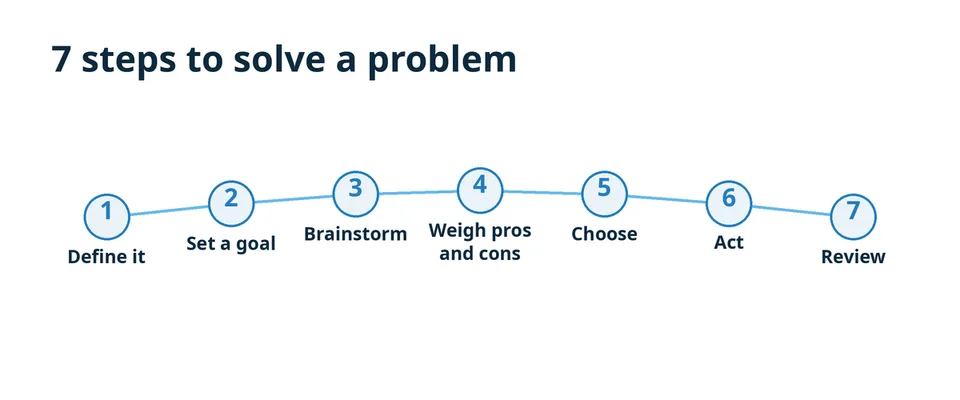
1. Define the Problem
Be specific. "My life is a mess" is too big to solve. "I'm behind on rent by $400 and it's due in two weeks" is a problem you can work on. Stick to facts, and separate what you know from what you're assuming. If one big problem has several parts, split it into smaller ones and start with one.
2. Set a Realistic Goal
Decide what a good outcome looks like. Keep it realistic and within your control. "Make my boss like me" isn't something you can control. "Ask for a clear list of what's expected by Friday" is. A small, clear goal makes the next steps easier.
3. Brainstorm Options
List as many possible solutions as you can without judging them yet. Aim for quantity. Silly or unlikely ideas sometimes lead to good ones. If you get stuck, ask what a friend would suggest, or what you've done in similar situations before.
4. Weigh the Pros and Cons
For each option, ask a few questions. Will it reach my goal? What will it cost me in time, money or stress? How will it affect other people? How will I feel about it in a week? A short pros and cons list on paper works well here.
5. Choose a Solution
Pick the option with the best balance of benefits and costs. It doesn't need to be perfect. Sometimes the best choice combines two ideas. If nothing looks good, go back and brainstorm again or adjust your goal.
6. Make a Plan and Act
Break the solution into small steps, and decide when you'll do each one. Write it down. Think ahead about what might get in the way and how you'll handle it. Then take the first step, even if it's small.
7. Review How It Went
After you act, check the result. Did it solve the problem or move you closer to your goal? If yes, give yourself credit. If not, figure out what got in the way, then try the next best option. Each round teaches you something for next time.
A Quick Example
The table below shows the steps applied to a common problem in early recovery: old friends who still drink keep inviting you out.
| Step | What It Looks Like |
|---|---|
| Define | Two friends invite me to the bar most Fridays, and I feel left out when I say no. |
| Goal | Stay connected with them without being around drinking for now. |
| Brainstorm | Suggest breakfast instead, invite them to a game night, explain my sobriety, go to a meeting on Fridays, see them less for a while. |
| Weigh | Breakfast keeps the friendship and avoids the bar. Explaining helps but feels hard. Seeing them less is safe but lonely. |
| Choose | Explain briefly and suggest Saturday breakfast. |
| Act | Text them Thursday with the plan. Have a Friday night plan ready. |
| Review | One friend said yes. Keep breakfast going and plan something else for Fridays. |
What Is Problem Solving Therapy
Often called PST, problem solving therapy is a type of cognitive behavioral therapy that teaches practical skills for handling stressful events.1 You and a therapist work together to name specific problem areas and break them into small tasks you can manage with problem solving and coping skills. Programs usually run 4 to 12 meetings.3
The research is solid but modest. A 2018 meta-analysis of 30 trials with 3,530 people found that PST is probably an effective treatment for depression, with effects about the same as other talk therapies.4 The VA/DoD depression guideline suggests PST for mild to moderate depression. A clinician can advise whether to use PST on its own or alongside other care.
Our chapter on what cognitive behavioral therapy is explains how problem solving fits into CBT as a whole.
Problem Solving vs Coping With What You Can't Change
Not every problem can be solved. A loss, a diagnosis or someone else's choices may be out of your hands. For those, the goal shifts from fixing the problem to handling your reaction to it. That might mean calming your body, talking it through or finding meaning in it.
A useful question is whether you can change the situation. If yes, use the steps above. If no, focus on coping. Most hard situations have a bit of both, so you may solve the parts you can and cope with the rest. Our chapter on ways to cope with stress covers the coping side.
Common Mistakes to Avoid
Even good problem solvers fall into a few traps, especially when stressed. Watch for these:
- Jumping to the first solution without looking at other options.
- Defining the problem too broadly to act on.
- Avoiding the problem and hoping it goes away.
- Making big decisions while very angry, tired or craving.
- Giving up after one try instead of reviewing and adjusting.

How Promising Outlook Teaches Problem Solving
At Promising Outlook, problem solving shows up throughout care. In group therapy, clients bring real problems and practice the steps together. In individual therapy, a therapist helps you apply them to the issues that matter most to you, from work stress to family conflict. We also offer family therapy and medication management, by live video for adults across California.
Groups meet Monday through Friday at 9:00 a.m., 12:00 p.m. and 5:00 p.m. Treatment length varies. Clients leave with an aftercare plan and a relapse prevention plan.
Call us and a real person will answer, day or night. Same-day starts are often possible. You can also verify your insurance online. We're in network with Aetna, Blue Shield, Cigna, Health Net, Tricare and United.
Frequently Asked Questions
What are problem solving techniques?
They're step-by-step methods for working through a problem. Most follow the same pattern: define the problem, set a goal, brainstorm options, weigh pros and cons, choose one, act on it and review how it went.
What are the steps of problem solving?
Problem solving therapy uses seven stages: define the problem, set a realistic goal, come up with options, use decision guidelines, choose a solution, put it into action and check the outcome. You can use the same steps for everyday problems.
What is problem solving therapy?
Problem solving therapy is a type of cognitive behavioral therapy that teaches practical skills for handling stressful problems. A therapist helps you break problems into small, manageable tasks. It's used to treat depression and usually runs 4 to 12 meetings.
Can you improve your problem solving skills?
Yes. Problem solving is a skill, and it gets better with practice. Using the same steps on small problems makes them feel natural, so they're easier to use when something big or stressful comes up.
How does problem solving help in recovery?
Unsolved problems create stress, and stress is a common relapse trigger. Having a clear method for handling problems gives you a healthy response to pressure, so drinking or using doesn't look like the only way out.
What if a problem can't be solved?
Some problems are out of your control. In those cases, focus on coping with your reaction instead, such as calming your body, talking to someone you trust or getting support. Many situations call for both solving what you can and coping with the rest.
Sources
- Psychological Health Center of Excellence, Defense Health Agency. Problem-Solving Therapy for Major Depressive Disorder. 2023.
- Bell AC, D'Zurilla TJ. Problem-solving therapy for depression: a meta-analysis. Clinical Psychology Review, 2009.
- Suicide Prevention Resource Center. Problem-Solving Therapy (PST). 2017.
- Cuijpers P, de Wit L, Kleiboer A, Karyotaki E, Ebert DD. Problem-solving therapy for adult depression: An updated meta-analysis. European Psychiatry, 2018.