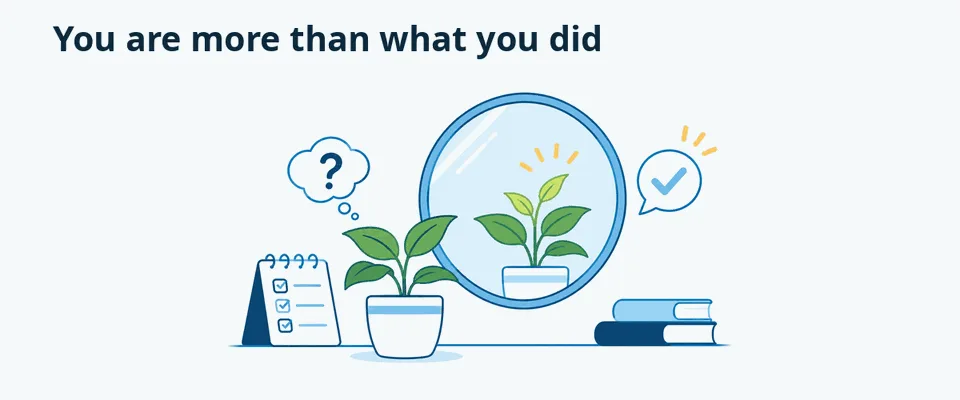
To deal with guilt in recovery, start by separating guilt from shame. Guilt says "I did something wrong," and it can push you to take responsibility and make things right. Shame says "I am bad," and it tends to make people hide, give up or drink and use again. Working through guilt means naming what happened, owning your part, repairing what you can and letting go of what you can't change.
You don't have to sort through these feelings alone. In individual therapy, you and a therapist can look at what you feel guilty about, untangle it from shame and build a plan to move forward, by live video for adults across California. For many people, naming these feelings out loud for the first time takes away some of their weight.
Key Takeaways
- Guilt is about what you did. Shame is about who you think you are.
- Some studies have linked shame with more substance use problems or a greater risk of returning to use.
- Healthy guilt can lead to repair, like apologizing and changing behavior.
- Some guilt is misplaced, especially guilt about things that weren't in your control.
- Overcoming guilt and shame takes honesty, support and time, not punishment.
Guilt vs Shame
Guilt and shame feel similar, but they work very differently. Psychologist June Tangney, who has studied these emotions for decades, explains that shame focuses on the self and can leave people feeling powerless, worthless or exposed, while guilt focuses on behavior and is more likely to lead to action.1
| Guilt | Shame | |
|---|---|---|
| Focus | A specific action | Your whole self |
| Inner voice | "I did a bad thing." | "I am a bad person." |
| Common urge | Apologize, fix it, do better | Hide, withdraw, deny, lash out |
| Linked with | Empathy and taking responsibility | Anger and avoiding responsibility |
| Effect on recovery | Can support change | Can raise the risk of relapse |
Tangney's research found that guilt tends to go with empathy, while shame goes with anger. In one long-term study she described, children who were prone to guilt were less likely to use drugs or alcohol later on, while children prone to shame started drinking at a younger age.
Why Shame in Recovery Is So Risky
Shame in recovery can work against everything you're trying to build. A study from the University at Buffalo and George Mason University looked at college students and jail inmates. It found that a tendency to feel shame was linked with alcohol and drug problems, while a tendency to feel guilt was largely unrelated to them.2
Another study followed people who had recently stopped drinking. Researchers at the University of British Columbia found that people who showed more shame when describing their last drink were more likely to relapse, and drank more heavily if they did.3 Researchers measured visible signs of shame while participants discussed past drinking. The researchers concluded that shaming people for behaviors that are hard to stop may be exactly the wrong approach.
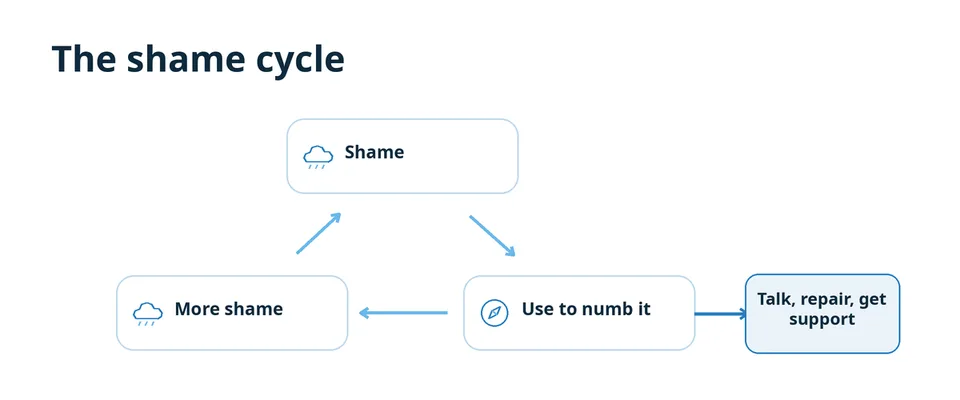
That fits what many people in recovery describe. Shame feels unbearable, and drinking or using is a fast way to numb it. Then the use creates more shame, and the cycle repeats.
Why Guilt Shows Up in Recovery
Guilt and shame in recovery are common, and they often get stronger once you're sober. Substances numbed the feelings, and now they're back at full volume. Some of the most common sources include:
- Hurting family, partners or children through words, absence or broken promises.
- Lying, hiding use or taking money or things that weren't yours.
- Losing jobs, missing important events or letting people down.
- Things you did while drunk or high that you only partly remember.
- A slip or relapse after a period of sobriety.
- Guilt about the addiction itself, as if it were simply a choice or a weakness.
Part of this guilt points to real harm that you can work to repair. Some of it is misplaced, like blaming yourself for having a health condition or for things other people did to you.
How to Deal With Guilt Step by Step
There's no fast fix, but these steps help many people move from stuck to moving forward.
1. Name What You Feel
Write down what you feel guilty about, as specifically as you can. Vague guilt grows. Specific guilt is something you can work with. Then ask whether each item is guilt about an action or shame about who you are.
2. Turn Shame Into Guilt
When you catch a shame thought like "I'm a terrible person," try rewording it as a statement about behavior: "I did something that hurt my sister." This isn't making excuses. It puts the focus on something you can actually change.
3. Sort Real Harm From Misplaced Guilt
Ask yourself a few questions. Did I actually cause this? Was it within my control? Would I blame a friend for the same thing? Real harm calls for repair. Misplaced guilt calls for letting go, often with help from a therapist.
4. Make Amends Where You Can
Repair can mean a sincere apology, paying back money, keeping promises now or simply showing up differently over time. Many 12-step programs include making amends as part of recovery. Be careful not to make amends in ways that would hurt someone else, and remember you can't control how people respond.
5. Change the Behavior
The best amends are often living amends, meaning the way you act now. Each day of honesty, keeping your word and staying sober is a form of repair. Over time, your actions start to rebuild trust in a way words alone can't.
6. Practice Self-Compassion
Self-compassion means treating yourself the way you'd treat a good friend who made mistakes and is trying to do better. It isn't letting yourself off the hook. It's what makes it possible to face what you did without falling into shame.
7. Talk About It
Shame grows in secret. Saying what you feel out loud to a therapist, a sponsor, a group or a trusted friend often takes away much of its power. Hearing others share similar stories is a reminder that you're not uniquely bad. Our chapter on building a support system covers how to find people you can be honest with.
Guilt With Family and Rebuilding Trust
Much of the guilt people carry in recovery is about family. Loved ones may still be hurt or angry, and that can stir up more guilt. Rebuilding trust usually takes time, consistency and honest conversations.
Family therapy can make those conversations safer and more productive. Our online family therapy gives everyone a place to talk about the past, set boundaries and figure out how to move forward together.
Guilt After a Relapse
A relapse can bring a flood of guilt and shame. It's easy to think "I've ruined everything" or "I'll never get this right." That kind of shame thinking makes it more likely the slip turns into a longer relapse.
A relapse is a reason to adjust your plan, not proof that you've failed. Reach out quickly, be honest about what happened and look at what led up to it. Our chapter on how to handle a relapse walks through what to do in the first days.
When Guilt Is Tied to Trauma
Sometimes guilt and shame come from things that happened to you, not things you did. People who went through abuse or other trauma often carry shame that was never theirs to carry. That kind of shame can drive substance use for years.
Working through it usually takes trauma-informed therapy. Our chapter on unresolved trauma explains the signs and how healing works.
Getting Help With Guilt and Shame at Promising Outlook
At Promising Outlook, overcoming guilt and shame is part of recovery. In group therapy, clients hear from others who carry similar feelings. In individual and family therapy, they work through specific regrets and rebuild relationships. We also offer medication management, all by live video for adults across California.
Groups meet Monday through Friday at 9:00 a.m., 12:00 p.m. and 5:00 p.m. Treatment length varies. Clients leave with an aftercare plan and a relapse prevention plan.
Call us and a real person will answer, day or night. Same-day starts are often possible. You can also verify your insurance online. We're in network with Aetna, Blue Shield, Cigna, Health Net, Tricare and United.
Frequently Asked Questions
How do you deal with guilt in recovery?
Name what you feel guilty about, separate guilt from shame, sort real harm from misplaced guilt, make amends where you safely can and change your behavior going forward. Talking it through with a therapist, sponsor or group helps you avoid carrying it alone.
What is the difference between guilt and shame?
Guilt is about a specific action: "I did something wrong." Shame is about your whole self: "I am bad." Guilt tends to lead to apologies and change, while shame tends to lead to hiding, anger and, for many people, more drinking or using.
Can shame cause relapse?
Research suggests it can raise the risk. One study of people newly sober from alcohol found that those who showed more shame were more likely to relapse and to drink more heavily when they did. The finding came from a small observational study.
Is it normal to feel guilty in recovery?
Yes. Many people feel guilt once they're sober because substances no longer numb their feelings. Guilt can be useful if it leads to repair and change. If it turns into shame or feels overwhelming, it's a good time to get support.
How do you stop feeling guilty about the past?
Make amends where you can, change the behavior that caused harm and practice treating yourself with the same understanding you'd offer a friend. For guilt about things you couldn't control, therapy can help you let go of blame that isn't yours.
What are living amends?
Living amends means repairing harm through how you live now, not only through an apology. Staying sober, keeping your word and showing up for people consistently are all forms of living amends.
Sources
- Holloway JD. Guilt can do good. Monitor on Psychology, American Psychological Association, November 2005.
- University at Buffalo. Shame, Not Guilt, Related to Substance-Abuse Problems. August 2005. Reporting on a study led by Ronda Dearing, Addictive Behaviors, 2005.
- Association for Psychological Science. Shame About Past Alcoholism Predicts Relapse and Declining Health in Recovering Alcoholics. February 2013. Reporting on research by Jessica Tracy and Daniel Randles, Clinical Psychological Science, 2013.