


The difference between detox vs rehab comes down to what each one treats. Detox helps your body get through withdrawal safely after you stop drinking or using drugs, and it usually lasts days. Rehab treats the addiction itself, with therapy, skills and support over months, so you can stay stopped once your body is clear.
This chapter is part of our guide to inpatient vs outpatient rehab. If you're through withdrawal or never needed detox, virtual addiction treatment lets you start rehab from home, often the same day you call.
Key Takeaways
- Detox manages withdrawal, while rehab treats substance use disorder and helps you build skills and support for recovery.
- NIDA calls medically assisted detox only the first stage of treatment, and says that by itself it does little to change long-term use.
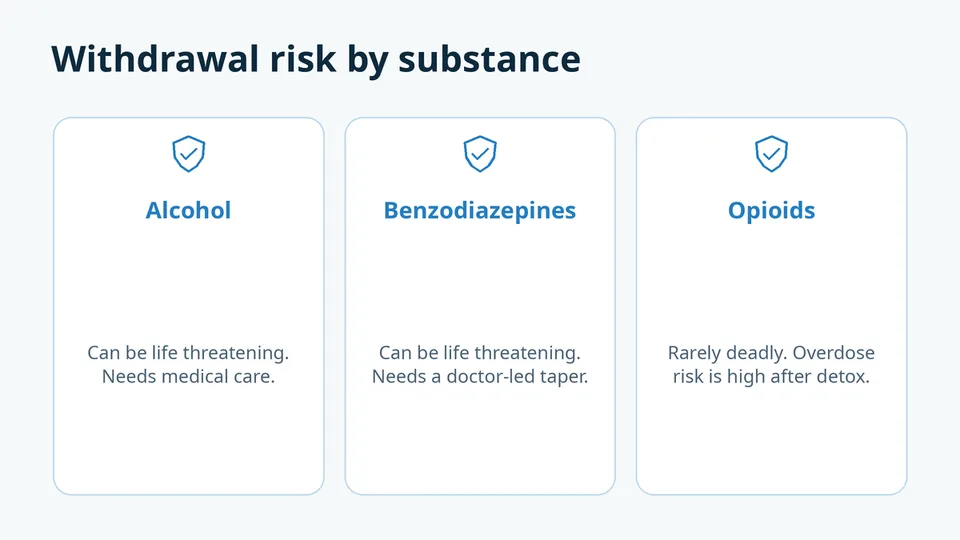
- Alcohol and benzodiazepine withdrawal can be life threatening and should be medically supervised.
- Opioid withdrawal is rarely deadly, but the overdose risk right after detox is high.
- Promising Outlook does not provide detox, and we help people find a detox program first when they need one.
What Is Detox
Detox, short for detoxification, is the process of clearing alcohol or drugs from your body while withdrawal symptoms are managed. In a medical detox program, doctors and nurses watch your vital signs, treat symptoms and give medicine when needed. The aim is to get you through withdrawal safely and comfortably.
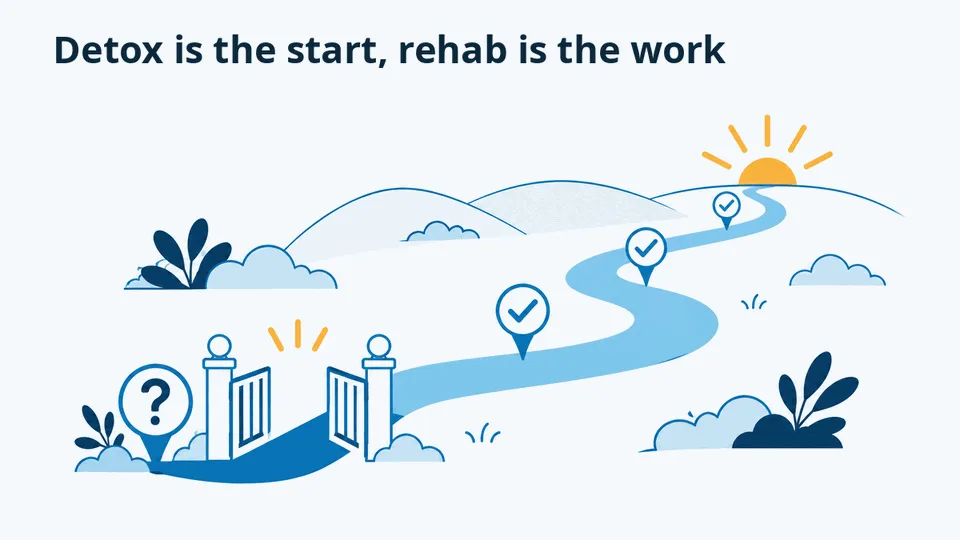
Detox is not the same as treatment for addiction, and that's the key point in the detox vs rehab question. The National Institute on Drug Abuse says medically assisted detox is only the first stage of addiction treatment and by itself does little to change long-term drug use.1 Your body may be clear, but the cravings, triggers and habits are still there.
How Does Detox Work
Detox works by giving your body time to adjust to life without the substance while a medical team keeps you safe. When you use alcohol or drugs heavily for a long time, your brain and body adapt to them. Stopping suddenly throws that balance off, and withdrawal is the result.
Medical detox usually follows a few steps. The exact plan depends on the substance, how much you used and your health, but most programs include these parts:
- An evaluation with a medical history, a physical exam and often blood or urine tests.
- Regular checks of blood pressure, heart rate and temperature.
- Medicine to ease symptoms and prevent complications like seizures.
- Fluids and nutrition to treat dehydration.
- A plan for what comes next, ideally a direct handoff into rehab.
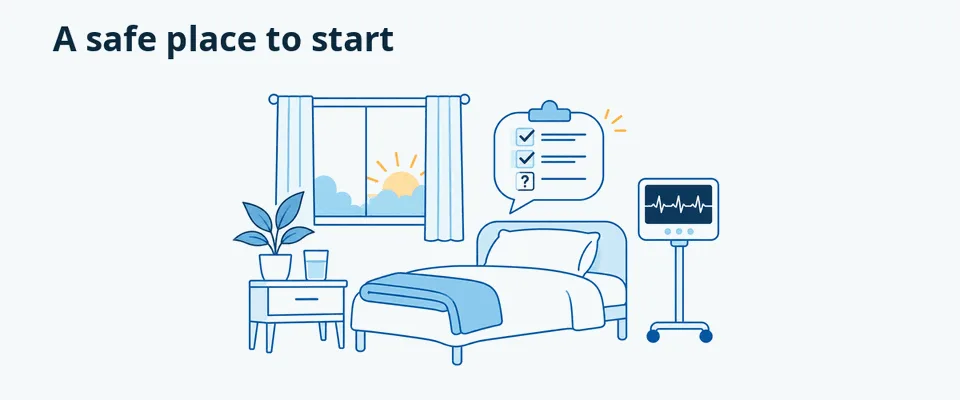
MedlinePlus, from the National Library of Medicine, notes that people with moderate to severe alcohol withdrawal may need inpatient care, where they're watched closely for hallucinations and other signs of delirium tremens.2 People with milder symptoms can sometimes be treated as outpatients, but they need someone to stay with them and usually visit a provider daily until they're stable.
Why Some Withdrawal Needs Medical Supervision
Not all withdrawal carries the same risk. Alcohol and benzodiazepines are the two that most need medical care, because stopping them suddenly can cause seizures and other dangerous problems. Never quit either one cold turkey after heavy or long use without talking to a doctor first.
With alcohol, MedlinePlus explains that delirium tremens is a severe form of withdrawal that can cause sudden confusion, fever, hallucinations and seizures.2 Most people recover fully, but death is possible, especially if delirium tremens occurs. The NIAAA also urges anyone who has had withdrawal seizures or similar symptoms to get medical help before stopping.3
Benzodiazepines such as Xanax, Klonopin and Valium carry a similar warning. The FDA says stopping them abruptly or lowering the dose too fast can cause withdrawal reactions, including seizures, which can be life threatening.4 The FDA also notes physical dependence can develop after several days to weeks of steady use, even as prescribed, and advises a gradual taper planned with a doctor.
Opioid withdrawal is different. MedlinePlus describes it as very uncomfortable but not life threatening in itself.5 The bigger danger comes after: overdose risk rises after detox because tolerance drops. A dose someone previously used can become deadly. That's one more reason detox should lead straight into treatment.
How Long Does Detox Take
How long detox takes depends mostly on the substance, how much and how long you used, and your overall health. Short-acting drugs bring on withdrawal sooner, while long-acting ones start later and can last longer. The table below gives the general pattern from federal health sources.
| Substance | When Withdrawal Starts | How Long It Tends to Last | Medical Risk |
|---|---|---|---|
| Alcohol | Usually within 8 hours of the last drink, sometimes days later2 | Peaks by 24 to 72 hours, some symptoms can last weeks | Can be life threatening; needs medical supervision |
| Benzodiazepines | Depends on the drug and dose | Tapers are planned one person at a time, with no standard schedule4 | Can be life threatening; needs a doctor-led taper |
| Heroin and short-acting opioids | Usually within 12 hours of last use5 | Usually days, and it varies by person | Painful but rarely deadly; high overdose risk afterward |
| Methadone | Usually within 30 hours of last dose | Can run longer because methadone is long-acting | Painful but rarely deadly; high overdose risk afterward |
These are general patterns, and your own path may look different. A detox team will tell you what to expect based on your history, and some people need more time.
What Rehab Does That Detox Can't
Rehab is where the work of recovery happens. Detox gets the substance out of your system, but it doesn't teach you how to handle a craving at 9 p.m., repair a strained marriage or cope with the anxiety that drinking used to numb. Those are the reasons many people go back to using, and rehab is built to address them.
NIDA reports that behavioral therapies, including individual, family and group counseling, are the most commonly used forms of drug abuse treatment.1 In rehab, those therapies are usually combined with other care. A good rehab program typically covers most of these areas:
- Group therapy, where you practice skills with people working on the same things.
- Individual therapy to work through what's behind your use.
- Treatment for depression, anxiety or trauma that shows up alongside addiction.
- Medication for opioid or alcohol use disorder when it fits.
- Family therapy so the people at home can help.
- A relapse prevention plan and an aftercare plan before you finish.
Rehab also takes longer than detox. NIDA says most people with addiction need at least three months in treatment to significantly reduce or stop their use, and that better outcomes come with longer treatment. Rehab can be inpatient or outpatient, and our chapter on what outpatient treatment is explains the outpatient side.
Detox vs Rehab Side by Side
Seeing the two next to each other makes the difference clear. Detox and rehab do different jobs, and people who need withdrawal management can then transition into ongoing addiction treatment. The table below compares them on the points people ask about most.
| Question | Detox | Rehab |
|---|---|---|
| What it treats | Physical withdrawal | The addiction, plus related mental health needs |
| Typical length | Days, sometimes longer | Months |
| Main care | Medical monitoring and medicine | Therapy, groups, skills and medication when needed |
| Where it happens | Hospital, detox unit or closely supervised outpatient care | Residential, partial hospitalization, intensive outpatient or outpatient |
| Is it enough on its own | No, per NIDA1 | It's the treatment, followed by aftercare |
Do You Need Detox Before Rehab
Not everyone does. You likely need detox first if you drink heavily every day, use benzodiazepines regularly, have had shaking, sweating, hallucinations or seizures when you stopped before, or have serious health problems. In those cases, a medical team should manage withdrawal before outpatient rehab starts.
Many people can start rehab directly, though. If you use stimulants like cocaine or meth, use alcohol or opioids less heavily, or have already stopped, an assessment may find you're ready for outpatient care now. For opioids, medicine like Suboxone can ease withdrawal and support recovery, and a doctor can help decide whether that's the right path.
Here's a quick example. A person who drinks a fifth of vodka a day and gets the shakes each morning needs medical detox before anything else. Someone who uses cocaine on weekends and wants to stop can usually begin rehab this week. Our guide to how to get sober walks through more of these first steps.
What Happens After Detox
The days right after detox are a vulnerable time. Cravings can still be strong, sleep may be off and the old routines are waiting. That's why the best detox programs plan the next step before you leave, and why a gap between detox and rehab is risky.
Ideally, you move from detox straight into a rehab program with no break in between. Many people step into a residential program or a partial hospitalization program, then down to intensive outpatient care, then to standard outpatient care. Our guide to relapse prevention explains how to protect your recovery through each of those steps.
How Promising Outlook Fits In
Promising Outlook does not provide detox or residential care. If you need medical detox, we'll help you find a program and plan your start with us for when you finish. Many clients join our groups within days of leaving detox, which helps close the gap that makes early recovery so risky.
Once you're medically stable, you can begin partial hospitalization, intensive outpatient or outpatient care by live video from home anywhere in California. Our virtual medication management includes Suboxone and Vivitrol when they fit your plan. Groups meet Monday through Friday at 9:00 a.m., 12:00 p.m. and 5:00 p.m., and clients leave with an aftercare plan and a relapse prevention plan.
Call us and a real person will answer, day or night. Our same-day admission process means that if you're ready, you can start today. You can also verify your insurance online. We're in network with Aetna, Blue Shield, Cigna, Health Net, Tricare and United, and the next chapter covers how to get into rehab step by step.
Frequently Asked Questions
What is the difference between detox and rehab?
Detox manages the physical withdrawal that happens when you stop drinking or using drugs, and it usually takes days. Rehab treats the addiction itself through therapy, groups, skills and sometimes medication over several months. Detox gets your body stable, and rehab helps you stay stopped once it is.
What is detox?
Detox is the process of clearing alcohol or drugs from your body while a medical team manages withdrawal symptoms. It usually includes an evaluation, regular checks of vital signs, medicine to ease symptoms and prevent complications, and a plan for treatment afterward. NIDA calls it only the first stage of addiction treatment.
How long does detox take?
It depends on the substance and how much you used. Alcohol withdrawal usually starts within eight hours of the last drink and peaks by 24 to 72 hours, though some symptoms last weeks. Opioid withdrawal starts within about 12 to 30 hours. Benzodiazepine tapers are planned individually and can take longer.
Can you detox at home?
It isn't safe for everyone. Alcohol and benzodiazepine withdrawal can cause seizures and can be life threatening, so heavy or long-term users should detox under medical care. People with milder alcohol withdrawal are sometimes treated as outpatients, but they need someone with them and regular visits with a provider.
Is detox enough to get sober?
No. Detox clears the substance but doesn't change the cravings, triggers and habits that lead back to use. NIDA says detox alone does little to change long-term drug use. Most people need at least three months of treatment afterward to significantly reduce or stop their use.
Does Promising Outlook offer detox?
No. Promising Outlook does not provide detox or residential care. If you need medical detox, our team will help you find a program and plan your start with us afterward. Once you're medically stable, you can begin our virtual outpatient care from home in California, often within days.
Sources
- National Institute on Drug Abuse. Principles of Drug Addiction Treatment: A Research-Based Guide (Third Edition). 2018.
- MedlinePlus, National Library of Medicine. Alcohol withdrawal.
- National Institute on Alcohol Abuse and Alcoholism. Treatment for Alcohol Problems: Finding and Getting Help.
- U.S. Food and Drug Administration. FDA Requiring Boxed Warning Updated to Improve Safe Use of Benzodiazepine Drug Class. 2020.
- MedlinePlus, National Library of Medicine. Opiate and opioid withdrawal.
