A sober Thanksgiving starts with a plan you make before you walk in the door. Decide what you'll drink, who you'll call, what you'll say when someone offers you a glass, and when you'll leave. People who head into the day with those answers already in hand have far fewer hard moments to figure out on the spot.
This post walks through that plan from the night before to the drive home, with words you can use at the table. If you're early in recovery and the holiday feels like too much, you don't have to handle it alone. Our virtual IOP for substance use meets over live video, so you can keep going to group through the holiday weeks if you're in a location where your program can provide care.
Key Takeaways
- Thanksgiving mixes alcohol, family stress and a broken routine, which is why it can be a hard day in recovery.
- Your plan should cover what you'll drink, who you'll call, what you'll say and when you'll leave.
- Alcohol can be part of plans the night before Thanksgiving, so plan for Wednesday too.
- A short "no, thanks" works better than a long explanation.
- If you drink, call someone that day. One drink does not have to turn into a weekend.
Why Thanksgiving Is Hard in Recovery
Thanksgiving is hard in recovery because it stacks several triggers on top of each other in one day. Drinks are poured freely, family members can bring up old resentment or guilt, and work parties and travel throw off your normal routine.1 Any one of these can stir up an urge to drink, and the holiday often hands you all of them at once.
The American Psychiatric Association notes that people drink more during the holidays. For people living with alcohol use disorder, the risk of relapse goes up too.2 That isn't a reason to dread the day. It's a reason to treat it the way you'd treat any high-risk situation in recovery: you name what could go wrong and decide ahead of time what you'll do about it.
These are the pressures many people in recovery tell their counselor about before the holiday:
- Wine or beer on the table and a relative who keeps offering
- Old family arguments that come back as soon as everyone is in one room
- A change in sleep, meals and daily routine
- Memories of past holidays when drinking was part of the day
- Loneliness, for people who are spending the day without family
Plan for Wednesday Night Too
The National Highway Traffic Safety Administration says the night before Thanksgiving has been promoted on social media as "Blackout Wednesday," and it links the holiday weekend with binge drinking.3 From 2020 to 2024, 910 people died in drunk-driving crashes over the Thanksgiving holiday period, more than a third of all traffic deaths during those days, counted from 6 p.m. Wednesday to early Monday morning.4
For someone in recovery, that means the hard part may start a day early. Old friends are back in town, the hometown bar is full, and the invitation feels harmless. If Wednesday night used to be a drinking night for you, make a different plan for it now. Have dinner with a sober friend, go to a recovery meeting, see a movie, or go to bed early before a long Thursday.
How to Build a Sober Thanksgiving Plan
A sober Thanksgiving plan is a short list of decisions you make before the day, so you aren't deciding under pressure. Write it down or put it in your phone. Then share it with one person who will check on you.
Work through these steps in the days before the holiday:
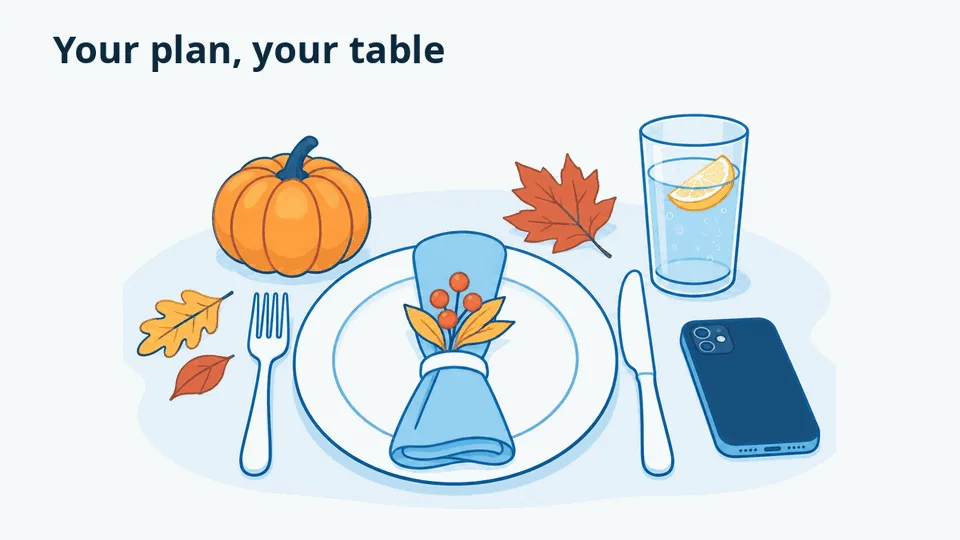
- Pick your drink. Bring your own sparkling water, soda or tea so you always have a glass in your hand.
- Choose two people to call or text if a craving hits, and tell them ahead of time that you might.
- Decide how long you'll stay, and arrive in your own car or with a ride you control.
- Know your exit. Plan where you can step outside or take a short walk if things get tense.
- Write your "no, thanks" line so it's ready (more on that below).
- Schedule something for Friday morning, such as a meeting, a workout or a call with your sponsor.
Psychiatrists who write about holiday sobriety give the same core advice: plan ahead, lean on support, steer clear of the people and places tied to your drinking, and take care of your rest and stress.2 Your plan is how those ideas turn into things you'll actually do on Thursday. For the longer view of how a plan like this fits into recovery, see our guide to relapse prevention.
What to Say When Someone Offers You a Drink
The best answer to "Can I get you a drink?" is short and calm. The National Institute on Alcohol Abuse and Alcoholism suggests keeping a polite, firm "no, thanks" ready and making sure alcohol-free drinks are on hand.5 You don't owe anyone a reason, and a long explanation usually invites more questions.
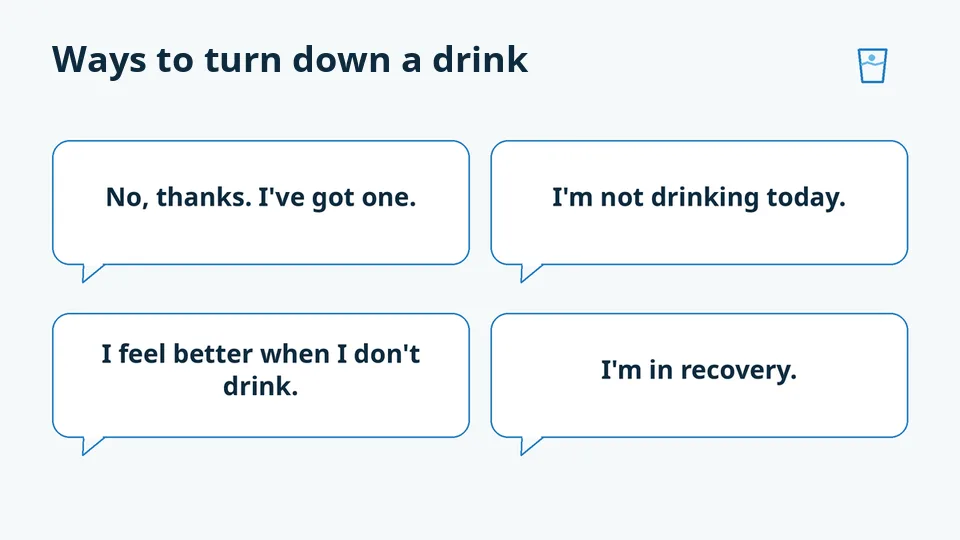
Here are a few lines people use, from simplest to most direct:
| Situation | What You Can Say |
|---|---|
| A casual offer | "No, thanks. I've got one." |
| A relative who asks again | "I'm good, really. I'm not drinking today." |
| Someone who wants a reason | "I feel better when I don't drink." |
| Someone who keeps pushing | "I'm in recovery, and I'd appreciate your help with that." |
How much you share is your choice. Some people tell the whole family they're sober, and some tell one trusted person and keep it simple with everyone else. Either one is fine, as long as someone at the table knows and has your back.
Getting Through the Meal and the Afternoon
The hours around the meal are where most of the pressure builds. Stay close to the people who support you, keep your own drink in your hand, and step away for a few minutes when you feel an urge or an argument rising. A short walk or a phone call gives an urge time to pass without you acting on it.
Old family tension deserves its own plan. If a parent, sibling or in-law tends to bring up the past, decide ahead of time how you'll respond and when you'll leave the room. Harvard Health suggests options like limiting your time at the gathering, bringing a sober friend, or skipping the event when it's too much.1 Skipping one dinner to protect your recovery is a fair trade.
A quick example: someone eight weeks sober sits down to dinner, and an uncle starts in on the money they borrowed last year. Instead of arguing or reaching for the wine, they excuse themselves, step outside and text the friend they lined up that morning. Ten minutes later they're back at the table, still sober, and the uncle has moved on to football.
Staying Sober During the Holidays Beyond Thursday
Staying sober during the holidays means planning for the whole holiday season. Thanksgiving opens about five weeks of office parties, family visits, travel and New Year's Eve. The same plan works for each event: know your drink, your call list, your exit and your line.
Routine helps more than people expect. Keep your sleep, meals and recovery meetings as close to normal as you can, because a broken routine is one of the reasons holidays feel so heavy. Our chapters on how to stay sober and ways to cope with stress cover the daily habits that carry you through the rest of the season.
Sober holidays also go better with people around you who know what you're working on. If your circle is thin right now, start building it before December gets busy. Our chapter on how to build a support system walks through who belongs in one and how to ask.
If You Drink on Thanksgiving
If you drink on Thanksgiving, tell someone the same day. A slip feels huge in the moment, but it doesn't erase the work you've done, and it doesn't have to become a weekend of drinking. The National Institute on Drug Abuse says relapse is common with addiction, much like other long-term health conditions. It's a sign to go back to treatment or change it, not proof that treatment failed.6
Call your counselor, your sponsor or one of the people on your list. Then get back to your routine on Friday. Our chapter on what to do after a relapse walks through the first hours and days step by step, without shame.
How Promising Outlook Helps Over the Holidays
At Promising Outlook, we treat the holidays as part of the work of recovery. Groups meet Monday through Friday over live video, with a morning group at 9:00 a.m., a midday group at 12:00 p.m. and two evening groups at 5:00 p.m. Each one starts with a check-in, and the group asks how a hard day went. That means the week after Thanksgiving, someone will notice if you're not there and will ask how the holiday went.
Before you leave our care, you'll have an aftercare plan and a relapse prevention plan built with your counselor. Clients who are stable can step down to our outpatient program and keep the same structure and group through the season. If alcohol is the main thing you're working on, our page on online alcohol treatment explains what that care includes.
If this holiday is the one that tells you it's time for help, you can start now. Call us. A real person will answer, day or night, and admission can happen the same day you're ready. We're in network with Aetna, Blue Shield, Cigna, Health Net, Tricare and United, and you can verify your insurance online in a few minutes.
Frequently Asked Questions
How do you have a sober Thanksgiving?
Plan the day before it arrives. Bring your own drink, pick two people to call if a craving hits, decide when you'll leave and arrive in your own car. Have a short "no, thanks" ready, step outside when you need a break, and schedule something steady for the next morning.
Why are the holidays hard for people in recovery?
Holidays put alcohol, family stress, travel and a broken routine into the same few weeks. Old memories of drinking at past gatherings can add to the pull. Each of those can trigger an urge, which is why planning for each event ahead of time makes such a difference.
Should I go to Thanksgiving dinner if my family drinks?
You can go if you have a plan and someone on your side, and you can skip it if the risk feels too high. Many people in recovery shorten their visit, bring a sober friend or host their own meal. Protecting your recovery is a good enough reason to change your plans.
What should I say when someone offers me a drink?
Keep it short. "No, thanks, I've got one" works in most situations, especially with a glass already in your hand. You don't have to explain. If someone keeps pushing, you can say you're not drinking today or, if you choose, that you're in recovery.
What do I do if I drink on Thanksgiving?
Tell someone you trust that same day, such as your counselor, sponsor or a sober friend. Stop where you are rather than writing off the whole weekend. Get back to your routine the next morning, and talk with your treatment team about what happened and what to change.
Can I keep going to treatment over the holidays?
Virtual treatment may fit your holiday plans. If you're traveling, ask your program whether it can provide care where you'll be staying and which groups are available that week.
Sources
- Grinspoon P. Navigating the holidays in recovery. Harvard Health Publishing, 2017.
- Fromson JA. Hazards of Holiday Drinking and Tips for Maintaining Sobriety. American Psychiatric Association, 2023.
- National Highway Traffic Safety Administration. NHTSA Advises Motorists to Drive Sober This Thanksgiving. 2018.
- National Highway Traffic Safety Administration. Thanksgiving: Buzzed Driving Is Drunk Driving. Traffic Safety Marketing.
- Koob GF. Kicking off the new year with Dry January? Here are six tips for success. National Institute on Alcohol Abuse and Alcoholism, 2025.
- National Institute on Drug Abuse. Drugs, Brains, and Behavior: The Science of Addiction, Treatment and Recovery. 2020.