


Integrated treatment for co-occurring disorders means one team treats your mental health condition and your substance use at the same time, in one plan. Instead of going to one program for depression and another for drinking, you get therapy, medication and support for both together. NIDA says this approach is generally better than treating each condition separately.
This chapter is part of our guide to co-occurring disorders, which covers definitions and common pairings. If you're looking for care now, our virtual dual diagnosis treatment brings both sides together by live video for adults in California.
Key Takeaways
- A dual diagnosis means having a mental health condition and a substance use disorder at the same time.
- Integrated treatment addresses both in one plan, delivered by one coordinated team.
- NIDA says treating both at once can make all the treatments more effective.
- Integrated care usually combines therapy, medication when it fits and help with daily life.
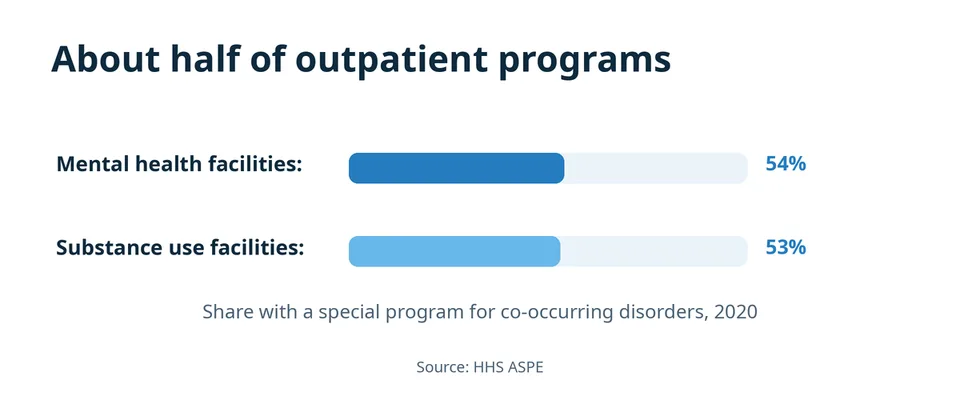
- About half of outpatient facilities in 2020 had a special program for co-occurring disorders.
What Is Dual Diagnosis
Dual diagnosis is the everyday term for having a mental health condition and a substance use disorder at once. Depression with alcohol use disorder, anxiety with benzodiazepine misuse and PTSD with opioid use are common examples. Clinicians and federal agencies often call it co-occurring disorders instead, and the two terms mean the same thing.
The conditions don't just sit side by side. NIDA notes that co-occurring conditions can interact and affect a person's symptoms and health outcomes.1 Its research report adds that people with both often have symptoms that are more persistent, severe and resistant to treatment than people with either one alone.2 That's why the way care is set up matters so much.
What Is Dual Diagnosis Treatment
Dual diagnosis treatment is care designed for people who have both conditions. The National Institute of Mental Health describes integrated care as combining mental health and substance use treatment, which may include therapy, medication, care management or a mix of these.3 The goal is to treat the whole person rather than one diagnosis at a time.
Not every program that treats both does it in the same way, though. Over the years, three main approaches have been used. The table below compares them, because knowing the difference helps you judge any program you're considering.
| Approach | How It Works | The Common Problem |
|---|---|---|
| Sequential | Treat one condition first, then the other | The untreated condition often drives relapse before the second phase starts |
| Parallel | Two programs treat each condition at the same time | Separate teams may give mixed messages and rarely coordinate |
| Integrated | One team treats both conditions together in one plan | Takes clinicians trained in both areas, which not every program has |
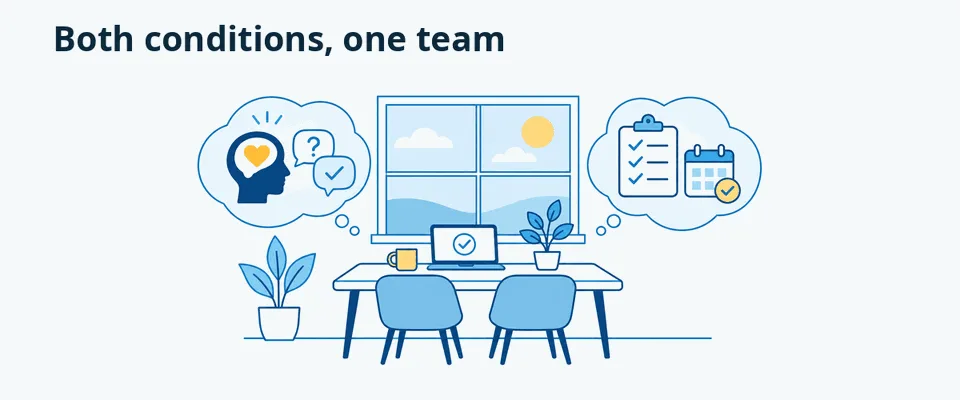
Integrated dual diagnosis treatment is the third approach. Your clinicians coordinate mental health and substance use care and adjust a shared plan as your needs change.
Why Integrated Treatment Works Better
The basic reason is simple: the two conditions feed each other, so treating only one leaves the other free to undo progress. Someone whose anxiety goes untreated may keep reaching for alcohol to calm down. A person whose drinking goes untreated may find their depression won't lift no matter how good the therapy is.
The research backs this up. A 2018 NIDA research report states that integrated treatment for co-occurring drug use disorders and mental illness has been found to be consistently superior to treating each disorder separately.2 NIDA's current guidance says treating these conditions at the same time can make all the treatments more effective and improve health outcomes.1
It's fair to say the evidence has some nuance. A 2025 research brief from Case Western Reserve University found that one Cochrane review showed no clear difference between integrated and standard care, while other reviews found integrated care led to greater drops in psychiatric symptoms and better overall outcomes.4 The same brief describes integrated treatment as widely regarded as the gold standard, and it reports that researchers strongly advise against putting off PTSD treatment until someone is sober.
A study of veterans included in that brief found integrated therapies worked better than sequential treatment, where one condition waits for the other. For many people, that matches common sense. Waiting months to address trauma or depression while trying to stay sober asks a lot of anyone.
What Integrated Treatment Includes
A strong integrated program pulls several kinds of care into one plan. The exact mix depends on your diagnoses, your substance, your history and how severe things are right now. Most integrated treatment for co-occurring disorders includes these parts:
- A full assessment that screens for both conditions, even if you came in for only one.
- Group therapy that covers mood, anxiety and trauma alongside cravings and triggers.
- Individual therapy to work through what's driving both conditions.
- Medication management for depression, anxiety and other conditions.
- Medication for opioid or alcohol use disorder when it fits.
- Family therapy or family education.
- A relapse prevention plan and an aftercare plan that cover both conditions.
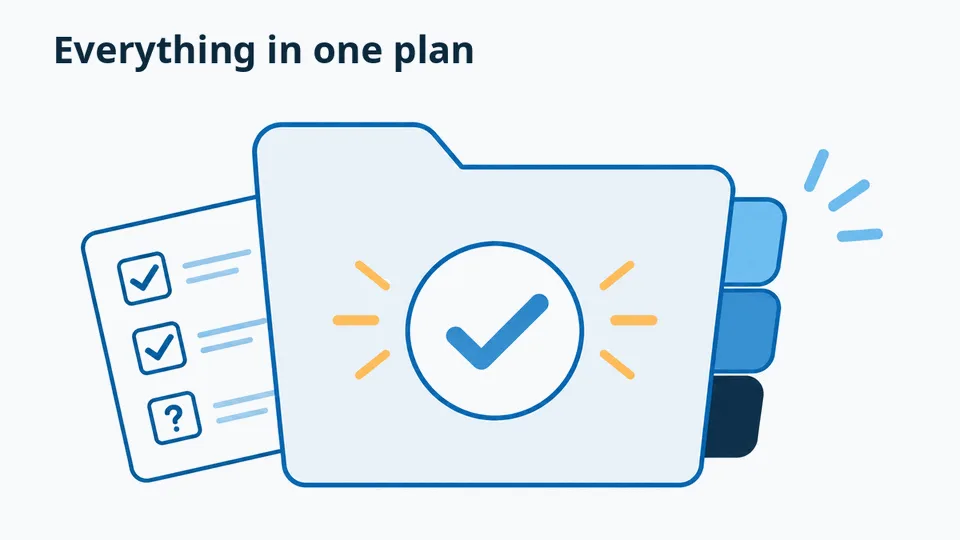
Screening for both is the first step that separates integrated care from everything else. NIDA recommends that people entering treatment for one condition be screened for the other.1 Without that, a program can miss half of what you're dealing with.
Therapies Used in Integrated Care
Several proven therapies work well for both sides of a dual diagnosis. The National Institute of Mental Health names cognitive behavioral therapy, contingency management and motivational interviewing as behavioral therapies that help people build coping skills and manage co-occurring conditions.3 Each one does a slightly different job.
Cognitive behavioral therapy helps you notice the thoughts that drive both low mood and cravings, then practice different responses. Motivational interviewing helps you sort through mixed feelings about change. Contingency management rewards progress, such as negative drug tests, to reinforce new habits. Our guide to common types of therapy explains how each one works.
Family involvement can help too. The National Institute of Mental Health lists family-based approaches among the treatments for co-occurring conditions, particularly for younger people. For adults, family therapy often focuses on rebuilding trust and helping loved ones understand both conditions.
The Role of Medication
Medication is often a key part of integrated care. The National Institute of Mental Health notes that medications can effectively treat addiction to opioids and alcohol and lessen the symptoms of many other mental disorders, and that some may help with more than one condition.3 NIDA adds that effective medications are available for opioid use disorder.1
In an integrated program, one prescriber looks at all your medicines together. That matters, because some medicines for anxiety or sleep carry their own risk of misuse, and some substances interact with psychiatric medications. Our psychiatric medication management is built into treatment, so your prescriber and therapists share the same plan.
How to Tell If a Program Is Truly Integrated
Integrated care isn't available everywhere. A federal analysis found that in 2020, 54% of outpatient mental health facilities and 53% of outpatient substance use facilities had a special program for co-occurring disorders.5 That means roughly half did not. Asking a few direct questions can tell you a lot:
- Does the same team treat my mental health and my substance use?
- Will someone on staff prescribe and manage psychiatric medication?
- Do your groups cover depression, anxiety and trauma, not just addiction?
- Will I be expected to get sober before you address my mental health?
- What happens if I relapse or have a mental health crisis during treatment?
Listen for clear, specific answers. When a program tells you to get sober first and deal with your depression later, that's a sequential approach, not an integrated one. If it refers you elsewhere for medication or therapy, ask how often those providers actually talk.
Levels of Care for Integrated Treatment
Integrated care can happen at any level of treatment, from residential to weekly outpatient visits. Many people who are medically stable and safe at home do well in an intensive outpatient program, which offers several group days a week plus individual therapy. Our guide to what IOP is explains that level in detail.
People who need medical detox, have severe symptoms or face safety risks may need a higher level of care first. The important thing is that both conditions stay in the same plan as you move between levels. Our chapter on depression and substance abuse shows what that looks like for one of the most common pairings.
Integrated Treatment at Promising Outlook
At Promising Outlook, one clinical team treats both your mental health and your recovery. Our virtual IOP in California brings group therapy, individual therapy, family therapy and psychiatric medication care together by live video. Suboxone and Vivitrol are available when they fit.
Groups meet Monday through Friday at 9:00 a.m., 12:00 p.m. and 5:00 p.m., and clients in IOP attend three days a week. Treatment length varies. Clients leave with an aftercare plan and a relapse prevention plan built around both conditions. We're accredited by The Joint Commission, and we don't provide detox or residential care, but we'll help you find them if you need them first.
Call us and a real person will answer, day or night. If you're medically stable, you can often start the same day. You can also verify your insurance online. We're in network with Aetna, Blue Shield, Cigna, Health Net, Tricare and United.
Frequently Asked Questions
What is integrated treatment for co-occurring disorders?
It's care in which one team treats a mental health condition and a substance use disorder at the same time, in one plan. Instead of separate programs, you get therapy, medication when it fits and support for both together. NIDA says this is generally more effective than treating each condition separately.
What is dual diagnosis?
Dual diagnosis means having a mental health condition and a substance use disorder at the same time, such as depression with alcohol use disorder or PTSD with opioid use. It's the same as co-occurring disorders. The conditions often affect each other, which is why treatment works best when it covers both.
What is dual diagnosis treatment?
Dual diagnosis treatment is care designed for people with both a mental health condition and a substance use disorder. The best programs use an integrated approach, meaning one team treats both together through therapy, medication for mental health, medication for addiction when it fits, family involvement and aftercare planning.
Why not treat addiction first and mental health later?
Because the untreated condition often drives relapse. Untreated anxiety or depression can push someone back to drinking or using, and continued use can keep mental health symptoms from improving. Research reviewed by NIDA found integrated treatment consistently better than treating each disorder separately.
What therapies are used in integrated treatment?
Common therapies include cognitive behavioral therapy, motivational interviewing and contingency management, which the National Institute of Mental Health names for co-occurring conditions. Many programs also use dialectical behavior therapy skills, trauma-informed care and family therapy, combined with psychiatric medication when needed.
Can integrated treatment happen in outpatient care?
Yes. Many people receive integrated care in partial hospitalization, intensive outpatient or outpatient programs while living at home. It fits best when you're medically stable and safe at home. People who need detox or have severe symptoms may start at a higher level and step down.
Sources
- National Institute on Drug Abuse. Co-Occurring Disorders and Other Health Conditions.
- National Institute on Drug Abuse. Common Comorbidities with Substance Use Disorders Research Report. 2018.
- National Institute of Mental Health. Substance Use and Co-Occurring Mental Disorders.
- Case Western Reserve University, Ohio Substance Use Disorders Center of Excellence. Integrated Treatment for Co-occurring Mental Health and Substance Use Disorders: Research Brief. 2025.
- Office of the Assistant Secretary for Planning and Evaluation, HHS. Availability and Correlates of Integrated Treatment for People with Co-Occurring Disorders in Outpatient Behavioral Health Treatment Facilities.
